Spicy beef saté noodle soup is a cross between phở and bún bò huế. It is not as well known as the two, but requires the same bone based broth. Spicy beef saté noodle soup uses pork neck bones and a surprising ingredient of chunky peanut butter. The spiciness comes from the chili oil where you can modify the heat according to your tolerance. This is a delightfully complex yet simple noodle soup that will have you sweating and enjoying the broth at the same time. This soup is especially good on a cold day.
This recipe is rated medium and requires approximately 2 hours to make. This recipe serves approximately 6 bowls of noodle soups.
Ingredients
2 lb. of pork neck bones
1.5 lb. of beef (eye round or top round)
1 package of pho of flat rice noodles (fresh if available)
3 tablespoons of fish sauce
¼ cup ground chili in soya bean oil (There are many different brands that have different level of heat.)
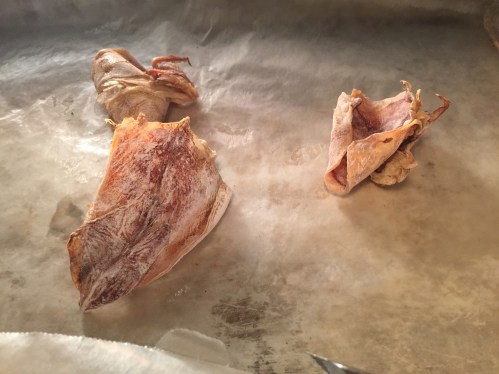
Turn the oven to broil and place 3 pieces of dried squid on a tray. Broil each side for 2 minutes and remove from the oven.
before broiling
after broiling for 2 minutes on each side
Rinse ½ cup of dried shrimps with water, drain and set aside.
Clean pork bones by boiling the bones in a pot of water for 5 minutes until the impurities (brown stuff) rise to the top. Dump out the water and rinse the pot and the bones.
In a large pot, brown 2 cloves of minced garlic in 1 tablespoon of oil. Add 16 cups of water to the pot.
Smashed 1 stalk of lemongrass and add to the pot.
Boil the bones for 1 hour under a low boil. (This is a small boil, not a full bubbling pot). Continue to add water as needed since the water will evaporate during this process. For this demonstration, we used a dutch oven with 5.5 quarts capacity.
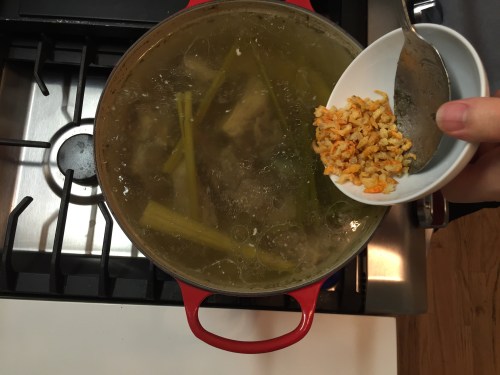
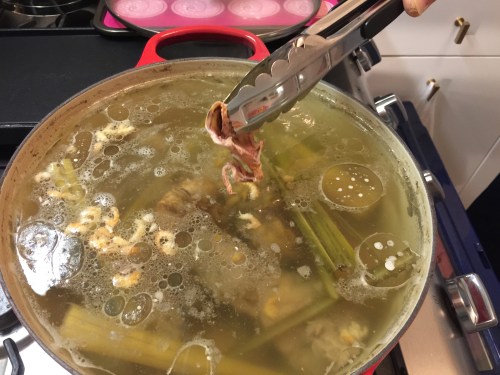
After 1 hour, add the dried shrimps and roasted cuttlefish to the pot.
Add ¼ cup of ground chilli in soya bean oil to the pot. I suggest starting with ⅛ cup first and then increasing the amount of chili to your preference. The spiciness depends on the chili brand as well.
Add 2 tablespoons of sea salt, 2 tablespoons of sugar, 1 tablespoon of rock sugar and 9 star anise (in a tea bag). Let the broth boils on low for another 15 minutes. Continue to skim off any fat that rises to the top.
Add 3 tablespoons of fish sauce and ½ cup of chunky peanut butter.
Continue to boil the broth on low for another ½ hour to incorporate all the ingredients. The broth will look like the picture below when it is finished.
Prepare the toppings:
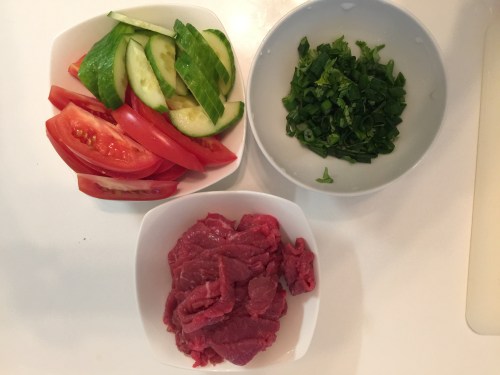
Remove any excess fat from the beef. Thinly slice the beef against the grain.
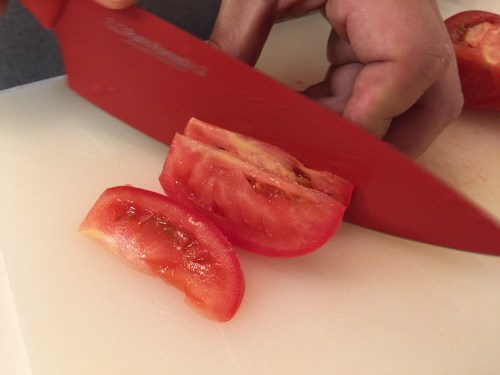
Cut the tomatoes into thin wedges.
Thinly slice the cucumber on a diagonal. Make sure the slices are not too thin.
Rough chop the cilantro and scallions for garnish
Prepare the noodles according to the package instructions:
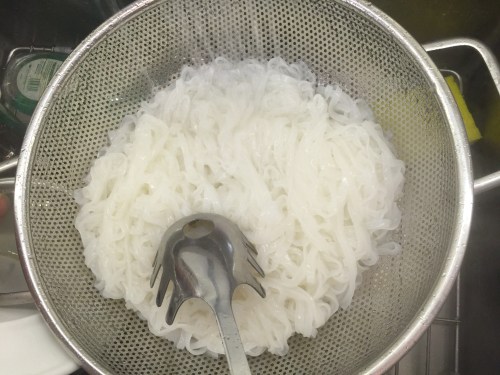
Place a package of pho noodles in a pot of boiling water. Turn off the heat and let the pho noodles cook until the noodles are soft. Drain and rinse with water.
Prepare the condiment plate:
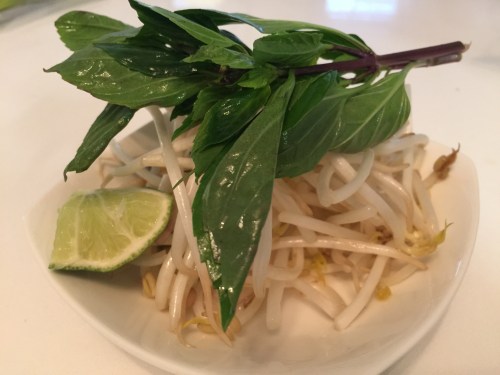
Rinse the bean sprouts and basil. Cut the limes into large wedges.
plate per serving
Serve:
Place a handful of noodles into a bowl. Add a few slices of beef, tomatoes and cucumbers. Pour the boiling broth over the ingredients and garnish with cilantro and scallions.
Enjoy this spicy noodle soup with friends and family on a brisk day.
A popular street food among the locals, especially children, is pandan waffle or bánh kẹp lá dứa. This waffle is flavored with pandan and incorporates coconut milk in the batter. It is usually eaten plain since the waffle is already sweeten. This dish makes an excellent breakfast or snack.
This recipe is rated easy and makes approximately three waffles (6 inches in diameter).
Ingredients
3 eggs
3 tablespoons of unsalted butter melted
2 cups of flour
1 cup of coconut flake
½ cup of sugar
½ teaspoon of baking powder
⅛ teaspoon of salt
⅛ teaspoon of pandan syrup
⅛ teaspoon of vanilla extract
¾ cup of instant evaporated milk
½ cup of coconut milk
Directions
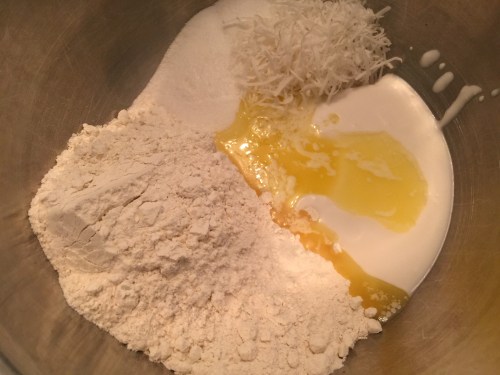
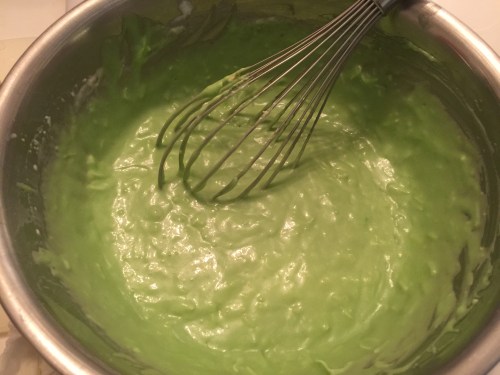
In a bowl, combine all the ingredients and mix thoroughly.
Heat the waffle maker. Pour the batter evenly and cook the waffle to the waffle maker’s directions. For our waffle maker, it takes 3 minutes per waffle, 1.5 minutes on each side.
Finding a good place for haircut or manicure can be daunting in Hanoi when you are only visiting for a few days. During our multiple stays in Hanoi, we tested several locations to find places that have a combination of quality service and fair price.
This is one of my favorite spa and hotel in Hanoi. The design highlights the luxurious interiors with French Indochina aesthetics. The spa continues with the same decor but emphasizes more on relaxation as shown in the photo above. I sampled both facial and full body massage here which left me sleeping like a baby. The spa uses high end products including Clarins. The treatment costs approximately $80-$100. This is a splurge for those days when a touch of luxury is needed.
Lavender Spa
Price: Budget ($20+) 60 minutes massage is VND 520,000 vnd or approximately $23
Address: 28 Nguyễn Du Street
Phone: 0433 899 999 (requires a reservation 1 hour in advance)
This mid-range spa was recommended by my Hanoi friend. This no frill spa is known for good massages. Each massage room has its own shower so that each guest can freshen up after the session. The massage was good, and the price is very reasonable. The only issue is that staff’s English is weak so this may be a problem for non-Vietnamese speakers. I would suggest having the hotel concierge call and make the reservation specifically requesting the services beforehand.
Elle Glamour Hair Salon
Price: Expensive for local standard ($5+ for a blowout)
Short hair blowout is VDN 100,000 or approximately $4.50
Long hair blowout is VND 120,000 or approximately $5.5o
Address: 8 Ngô Quyền, Lý Thái Tổ, Hoàn Kiếm
Phone: +84 4 3824 8262 (Walk in welcome)
Another friend recommended this hair salon when I needed a place to get my hair blown out. If you never had your hair washed in Vietnam, it is an interesting experience. Hair washing is a normal service that includes a head massage. The quality of the blowout justifies the higher price. The owner is trained in France, and the stylists know how to properly blow out hair that will last in a humid environment. This is my go-to place for blowout every time I am in Hanoi.
Hiền Quỳnh Nail
Price: Budget ($3-$5 for basic manicure and pedicure)
Address: 30 Bùi Thị Xuân
This nail shop is your typical local nail shop and is very different from the US nail salons. There are no fancy massage chairs, and it has a very limited color selection. The manicure consists of cutting, trimming and painting nails for 15 minutes. Foreigners may be scared that the store is not as “pristine” as in the US. The nail technicians do keep their instruments clean. Overvall, the service is good for the price. I noticed the upscale clientele at the salon so in this case, appearances can be deceiving. The only drawback is the limited to nonexistent English from the staff.
These are my go-to places to get a quick beauty fix when I am in Hanoi for a long stretch of time. Don’t worry about the limited English proficiency from the locals as beauty services are universal.
Everyone loves fried chicken wings. Coming from a Vietnamese household, we created our own version with nouc mam or fish sauce. The crispy wings are tossed with a salty and sweet glaze made from fish sauce and butter. The wings are addictive and guarantee to be a hit at your next football party. We paired these wings with pandan waffle to make a delectable Sunday brunch dish.
The recipe is rated easy and takes approximately 30 minutes to prepare.
Ingredients
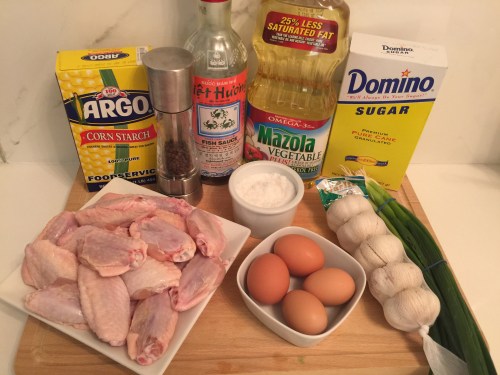
2 lb of chicken wings
1 cup of cornstarch
1 egg
2 scallions (white end parts), chopped
8 cloves of galic, minced
¼ of a yellow onion, diced
1 ½ tablespoons of butter
¼ cup of sugar
¼ cup of nouc mam or fish sauce for the glaze and 1 teaspoon for the marinade
sea salt
cracked pepper
vegetable oil for deep frying
Directions
Wash the chicken wings with 1 tablespoon of sea salt to clean the smell and any slime off the skin. Mix well and rinse with water.
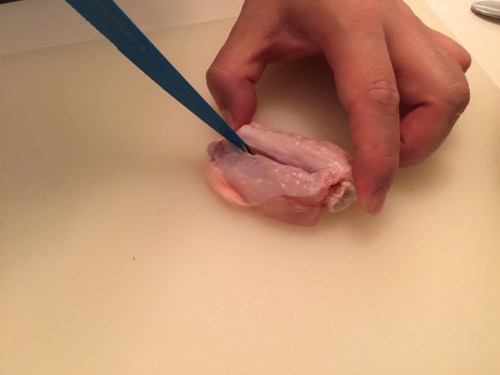
Cut a slit through each chicken wing. This will help the marinade absorb the meat much quicker and also for shorter cooking time.
Add 1 teaspoon of cracked pepper, ½ teaspoon of sea salt and 1 teaspoon of fish sauce to the chicken. Mix well to incorporate the marinade.
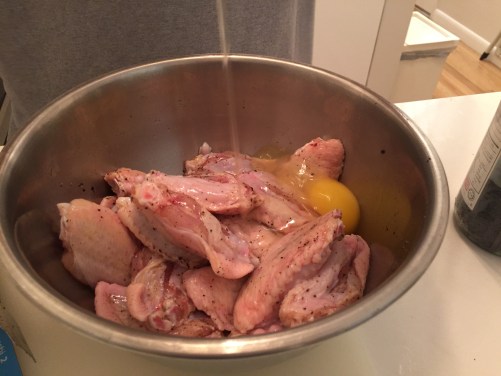
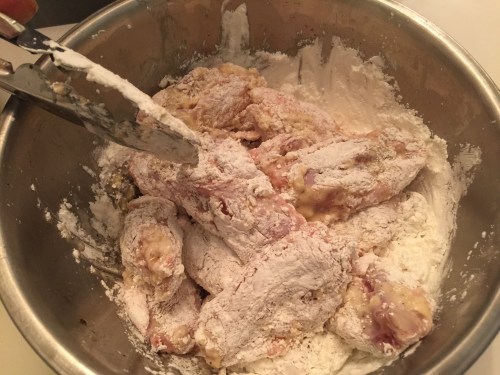
Add 1 whole egg to the chicken and mix.
Add 1 cup of cornstarch and mix well. The corn starch will help make the chicken crispier. Let the chicken rest in the fridge for at least ½ hour.
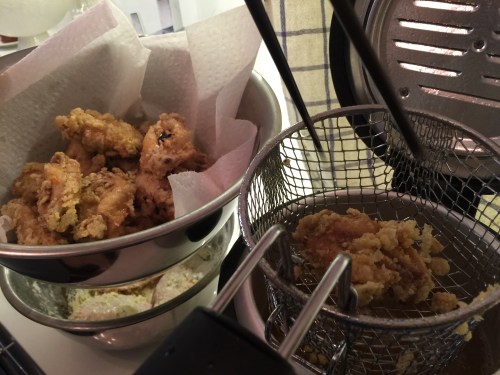
Shake off the excess flour and fry the chicken wings until they are crispy. This took about 10 minutes in our deep fryer.
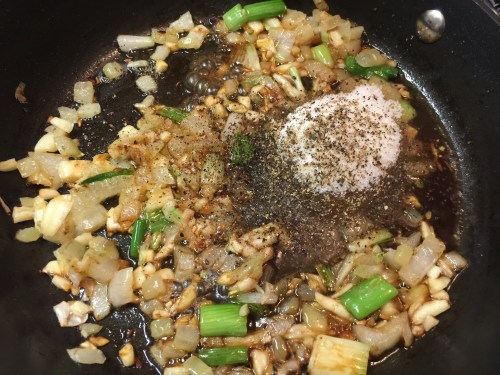
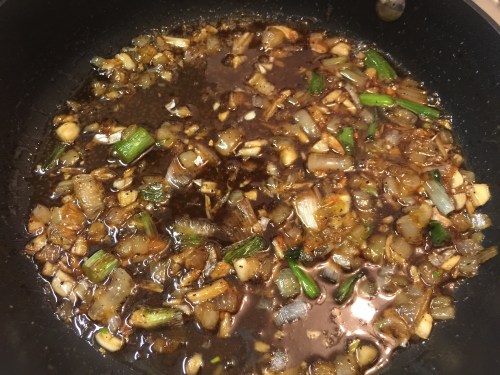
Create the sauce by melting 1 and ½ a tablespoons of butter in a pan on medium heat. Brown the onions, garlic and scallions in the melted butter.
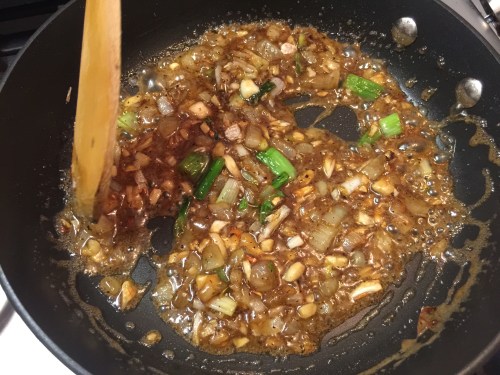
Add ¼ cup of fish sauce, ¼ cup of sugar and 1 teaspoon of cracked pepper. Stir to melt the sugar and turn off the heat.
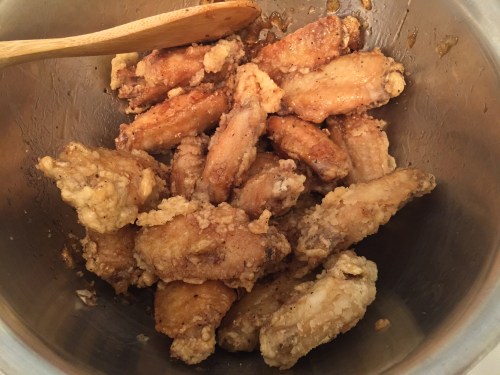
Toss the fried chicken wings with the sauce to evenly coat the wings.
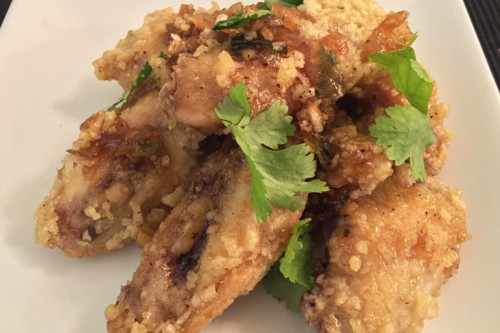
Serve immediately.
When paired with pandan waffle, the fried chicken wings make an excellent chicken and waffle dish for breakfast. Check back next week for the pandan waffle recipe.
In part 2 of my article on Siem Reap, I will explore the attractions outside of the city. A private car is necessary to get to the attractions as tut tut will not make the trek outside of the city area. It is also a wonderful way to see the Cambodian countryside and the locals’ daily lives. For the trip to Koulen Mountain, you will need to pack your swimsuit and a towel so you can swim under a waterfall.
Surrounding Area of Siem Reap
Day 3: Banteay Srei, Koulen Mountain, Banteay Samre and sunset at Phnom Bakheng
Start the day at 9:00 am and head to Banteay Srei. This temple complex is also known as the “Citadel of Women” or “Citadel of Beauty”, presumably referring to its size and delicate carvings. Unlike the major sites of Angkor, Banteay Srei was not a royal temple. It was built not by kings, but by Brahmin priests. The temple is significantly smaller than the temples at Angkor, but the decorations on the outside are much more detailed. This site will only need 30 minutes to 1 hour to complete the visit.
Afterward, head to Koulen Mountain to see the famous sleeping Buddha and swim under a beautiful waterfall. The ticket is $20 per person to enter the mountain. From the base of Koulen Mountain to Preah Ang Thom, a 16th-century Buddhist monastery with Cambodia’s largest sleeping Buddha, requires 45 minutes of driving on a terrible bumpy dirt road filled with pot holes. The Buddha is housed in a temple high up the mountain and is a serene sight to see. Light some incenses and offer some prayers. Don’t forget to leave a small donation for the monastery as it is a proper thing to do.
After visiting the small monastery, head over to Kbal Spean. You will only need 15 minutes to see the sight. Kbal Spean is an area referred to as the valley of a 1,000 Lingas (phallic symbol of Hindu god Shiva) depicted as neatly arranged bumps that cover the surface of a sandstone bed rock, and lingam-yoni designs. It is an interesting sight to see the carvings lying at the bottom of the river bed.
Next, head over to the two waterfalls on Koulen Mountain. The first is between four and five meters high and 20 to 25 meters wide. The second waterfall is 15 to 20 meters high and 10 to 15 meters wide. Head to the second waterfall to swim in the refreshing water underneath the waterfall. There are chests that you can rent to lock your belongings for a small fee and a small shack to change. The swim is the highlight of the trip to Koulen Mountain, especially on a hot day.
1st Level of the falls
2nd Level of the falls where most people swim
After spending time on Koulen Mountain, take a lunch break at a nearby restaurant that your driver can take you. Head back to Angkor to visit Banteay Samre. This is a small temple complex that is also one of the most complete complexes at Angkor and was restored using the archaeological method. The method entails complete deconstruction of the building, numbering all of its components and then painstakingly reconstructing and reinforcing the temples. After seeing all the temples, this one only requires a short visit as temples starts looking alike. If you are short on time, you can skip this temple.
End the day with sunset at Phom Bakheng. You will need to have your shoulders and knees covered otherwise you will not be let up to the temple. The important thing is to get to bottom of the hill by 4:00 pm and be one of the first 50 to be able to go to the top of the temple. You will have to walk up a path for 15 minutes to the temple. Phom Bakheng is a very popular spot with Chinese tour groups. The sunset was beautiful as it sets over the temple, but you will have to deal with unruly tourists. The alternative is to go to Pre Rup which I did on Day 4. Sunset is around 5:30 in the winter. Head back to the hotel to be refreshed after.
The Lotus Blanc Resort concierge recommended visiting Changreash, a popular local eatery, after I insisted on not eating at touristy places. The waiters had very limited English but the menu had pictures and English descriptions. The food was delicious, cheap and it was nice not to be surrounded by tour groups.
Day 4: Chong KhneasFloating Village, Beng Mealea, Roulous Group and Pre Rup
Head out at 9:00 am to Chong Khneas, a famous floating village at the edge of Tonle Sap Lake. The lake is located at the southern part of Siem Reap town about 15 Km, and takes approximately 30 minutes by vehicles to the boat dock. You will need to buy a ticket to go on a boat tour for $30 per person. The boat trip through the floating village takes approximately two hours. You will explore the different of Khmer, Muslim and Vietnamese floating households and the floating markets, fisheries, clinics, schools, basketball course, pigsty and other boatloads of tourists. If you have never seen a floating village, this will be an interesting experience.
I had visited the Mekhong Delta in Vietnam and that was a much more interesting and authentic experience. Beware that the boat captain may take you to a “store” to buy overpriced gifts for the school children if you want to visit the school. My driver warned me that not all of the gifts that are bought will make it to the children and a lot of time, the store is owned by the boat captain. I did that and my boat captain refused to let me visit the school. In addition, he also suggested I give him an outrageous tip which is not normal. You can tip the captain for his service if it was good but generally they won’t suggest a certain dollar amount.
After the boat tour, head to Beng Mealea, also known as the jungle temple. The entrance fee for this temple is $5. This temple was built in mid-12th century, with later additions in the ring of the Suryavarman II. The temple is in a ruinous state and is not over run by tourists. You can actually climb on parts of the ruins and it is a different look at an unrestored temple and the power of nature taking over it.
If you are not sick of temples at this point, visit Roulous Group. This is a collection of monuments representing the remains of the Hariharalaya, the first major capital of the Angkoreian-era Khmer empire. There weren’t many things to see after 3 days of visiting different temples at this particular complex.
For a different sunset viewing, head to Prasat Pre Rub. This is a smaller temple and more favored by western tourists for sunset viewing. It is still crowded but everyone is respectful of the temple and fellow tourists. I had a much better time at this venue than at Phom Bakheng. You will also not need to have your shoulders or knees covered at this temple.
For the last night, I chose to have an upscale dinner and attend an apsaras dance performance. There are a few options out there and this site has a good list. I went with an upscale dinner and dance performance at the Borei Angkor Resort for $36 per person. This includes a 30 minute cocktail session with soft drinks, chilled juices and beer and a set meal with the apsara dance performance. The performance that night had about 10 guests total so it was very intimate. The food and service were good. However, wear pants or bring a lot of bug sprays. I spent the whole time wiping off bugs that were falling from the trees onto the table and spraying myself with bug spray. The staff was nice enough to light an incense under my table and to give me a bottle of bug spray.
A negative for me was the misleading pricing for drinks when you are at the performance. Be warned that there are no complementary drinks included with your meal beside tap water. I was unaware of this and the Borei Angkor charged me $20 for a bottle of sparkling water! If they have made it known that drinks were not included in the dinner, then I would not felt like I got ripped off. When you are paying $20 bottle of water for a $36 cocktail, meal and dance, it becomes outrageous. Other than the surprise bill at the end, the overall experience was good.
I had a wonderful time in Siem Reap. The locals are the nicest and most helpful people you can meet on your travels. I was glad to have the opportunity to visit history and to be in awe of what people and nature can do together.
My driver, Sophal, can be reached at sophal.lotus@gmail.com for his chauffeur services.
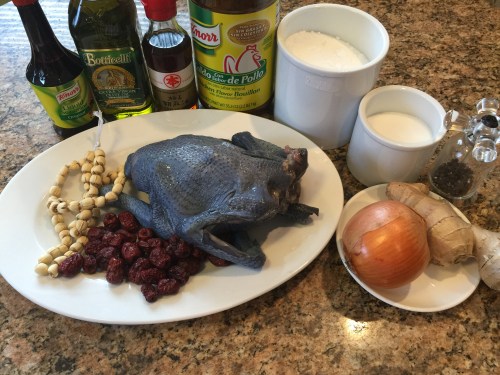
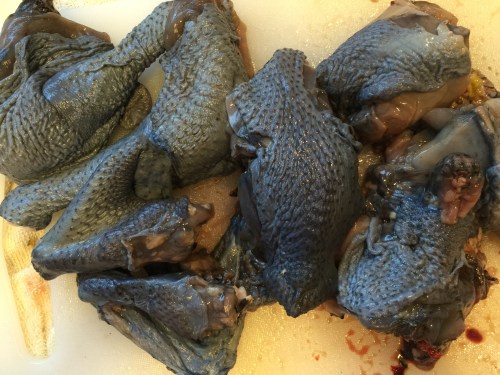
Herbal black chicken soup is the equivalent of a very healthy Vietnamese chicken soup. This particular soup is made with black chicken or a breed called silkie. Silkies have black skin, bones and grayish-black meat which are tougher than the typical chicken. Silkie’s meat creates a sweeter broth and is the basis of this soup. This is my mom’s quick version of the herbal soup and a great way to beat the winter blues.
Ingredients
2 lb of black chicken
5 large slices of ginger
2 ½ tablespoons of diced onion
¼ teaspoon of Chicken Bouillon Powder (CBP)
¼ teaspoon of sesame oil
1 tablespoon of olive oil
½ cup of dried jujube or chinese red plums
½ cup of dried lotus seeds
1 teaspoon of soy sauce
1 can of 14.5 oz of unsalted chicken broth
3 cups of water
¼ teaspoon of sea salt
½ teaspoon of sugar
¼ teaspoon of ground pepper
Directions
Cut the chicken into smaller parts.
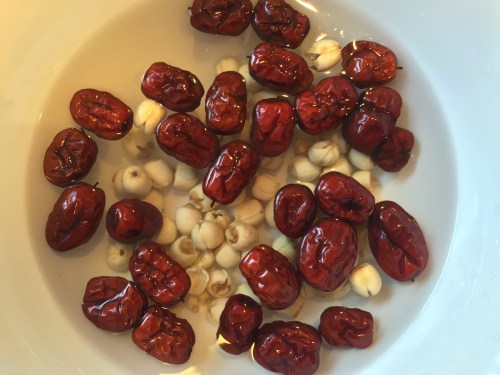
Soak ½ cup of jujubes and ½ cup of lotus seeds with 1 cup of water for 1 hour.
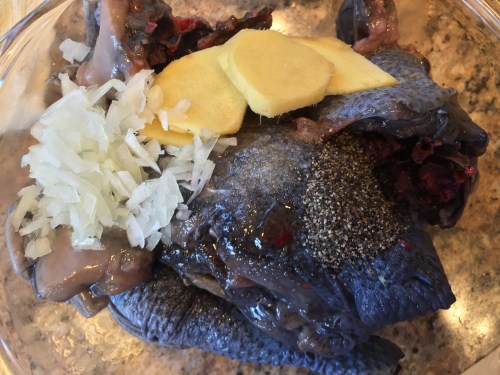
Marinate the chicken for 15 minutes with the following:
¼ teaspoon of salt,½ teaspoon of sugar, ¼ teaspoon of ground pepper, 5 large slices of ginger, 1 ½ tablespoons of diced onions and ¼ teaspoon of sesame oil
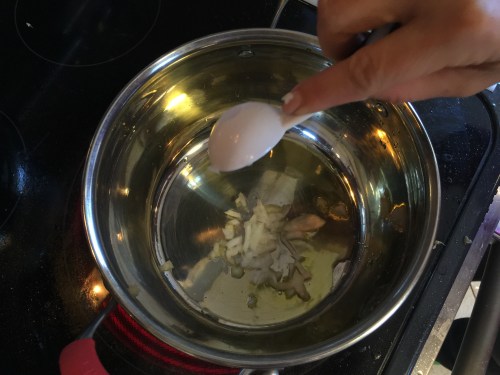
Add 1 tablespoon of olive oil to the pot and brown 1 tablespoon of diced onions.
Sear the chicken.
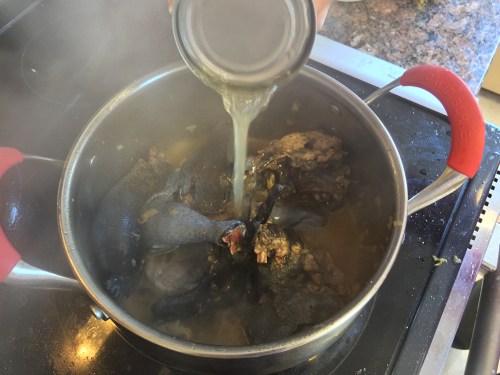
Add 1 can of chicken broth and 3 cups of water.
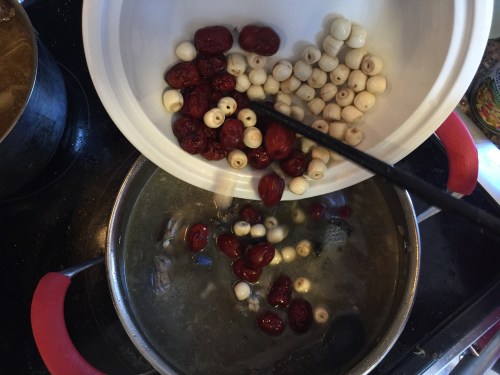
Add the jujubes and lotus seeds.
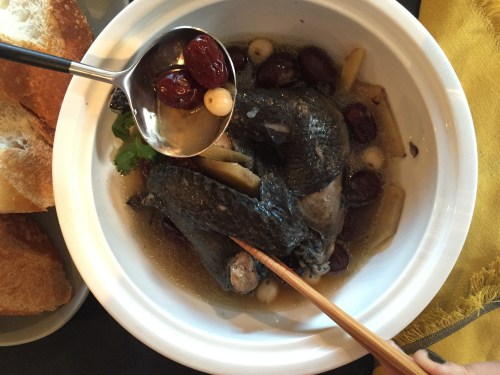
Season the broth with ¼ teaspoon of CBP and 1 teaspoon of soy sauce. Turn the heat on high and let the soup boils for 15 minutes. Turn the heat to medium for the remaining 30 minutes.
Siem Reap, Cambodia, was my first solo trip to a non-western country. I was nervous about traveling as a girl in a country that had limited English. To ensure that I would have a good time and be safe, I had a guide and/or a driver with me at all time. I was not bothered by the locals peddling goods. Additionally, the guide/driver also provided translations and enjoyable conversations to learn more about local life in Cambodia.
Siem Reap and Angkor Wat
Tips:
A. I recommend getting a tour guide for Angkor Wat on Day 2 (approximately $45 + tip) and hiring your own driver for Day 2 to Day 4 to make the most of your time there. I hired a private car which was approximately $45 for Day 2, $80 for Day 3 and $100 for Day 4. The rates depend on your distance. It was very hot and dusty in Siem Reap in November so I was happy to splurge on an air conditioned car.
B. I would also recommend visiting Siem Reap during the week as it is less crowded than the weekends.
C. Remember to bring a fan, face wipes, tissues, water and sunscreen with you as the sun is very strong. The fan was a life saver and I went through 2 packs of tissues from constantly wiping away sweat. The face wipes will help you feel refreshed since there are a lot of dusts flying around.
D. When visiting the temples at Angkor Wat (Day 2) and the sunset at Phnom Bakheng (Day 3), you will need to make sure your shoulders and knees are covered, otherwise you will not be allowed to go up to the top of temples.
E. Cambodia is on cash basis and the preferred currency is USD. Make sure to carry enough each day.
F. Cambodia requires a tourist visa. Don’t worry if you do not have one prior to arrival as you can get it at the airport simply by filling out a tourist visa form. There is an extra charge if you also need to have your picture taken for the visa. I was one of the first to get off the plane so I had my visa completed in 15 minutes.
Day 1: Angkor National Museum and Siem Reap City Center
Most of the flights arrive in Siem Reap around noon. Once you have checked in to your hotel, ask the concierge to hire a tut tut for the day. Head to the Angkor National Museum to learn about the history of Cambodia and Angkor Wat. You will need 2 hours for the museum and I would recommend getting an audio guide to make the most of your visit.
After the museum, you can head to the Siem Reap Old Market where vendors sell clothes, knick knacks and food. It is nice to walk through to see a mixture of tourists and locals weaving their way through the market.
On the outskirt of the market, you will find two local food stalls that serve delicious Cambodian food. One is called Rina Rino Restaurant. My tut tut driver took me there to eat with him and I saw many locals buying food to go from this place. You pick out the food you want from the cart and they will serve it at the table. We had this popular Cambodian dish resembling an egg and pork omelet. We also had a fish soup with the stem of the banana leaves and a plate of fried fish with rice. The food was delicious and cheap at approximately $2-3 per dish.
Afterward we headed to Blue Pumpkin, a nearby bakery and desert place that served delicious ice cream. This place is very popular with tourists and locals.
We then walked to nearby Pub Street where all the tourists hang out. It is a fun street to walk around populated with numerous bars, shops and massage parlors.
We also checked out Angkor Night Market and Angkor Art Market which were clean and very touristy. If you want to get some souvenirs, this place is not a bad spot to do so. Siem Reap is very small so there is not much to do at night.
Day 2: Angkor Wat
*You will need to have your knees and shoulders covered for the temples if you want to reach the top level of Angkor.
Leave the hotel at 5:00am for sunrise at Angkor Wat via a tut tut or car arranged by your hotel. You will arrive with the hordes of tourists. You will need a flashlight as it is pitch black. Follow the tourists to the pond in front of the Angkor Wat. Go to the south left side of the pond for the best pictures. A secret spot that my guide showed me later is a tiny sand bar right by the left side of the pond that gives you the best reflection photo as shown in the first photo of the article.
The sunrise will take place around 6am. You will see that a lot of the tour groups will immediately head inside the temple. Resist the urge to follow because you will now have the best view of the sunrise for pictures with a lot less people. Once you have had enough of the scenery, head back to the hotel to freshen up and eat a hearty breakfast for the long day ahead.
Head to Angkor Thom at 9:00 am with a tour guide through the monumental south gate called the Avenues of Gods. Angkor Thom is comprised of Bayon Temple, Baphoun, Elephant Terrace and Terrace of the Leper King. This is when the tour guide will make the most of the experience by explaining the history of the stone carvings and various temples. As a bonus, the guide is usually the best photographer as well. Mine knew exactly where the best spot to take pictures as well as the best angles.
The Bayon or State temple of Javavarman VII is one of the most enigmatic and powerful religious structure in the world. It is a unique mass of “face towers” which created a stone mountain of ascending peaks. There were originally 54 towers of which 37 are still standing today. Most are carved with four faces on each cardinal joint. This is my favorite part of the Angkor complex as there is a magical quality about this particular temple that is just majestic.
Baphoun is a vast temple situated in the mountain near the center of Angkor Thom. It’s currently under restoration. There is a huge reclining Buddha on the west side of the temple. We decided not to climb to the top as it was a hot day, and we just came from the Bayon.
The Elephant Terrace is the heart of Angkor Thom and looks out over the Royal Square. It marks the entrance to the Royal Palace and was the focal point for royal receptions. The carvings of elephants along its wall give its modern name. We made a quick stop to check out the elephant carvings. Beyond that, there was nothing else interesting to see.
Terrace of the Leper King is a massive terrace named after the 15th century sculpture that was discovered on top of it. It is likely dated back to the reign of Jayavarman VII. We did not go inside as my guide did not think it was worth our time, and it was very hot that day.
Next we headed over to my favorite temple, Ta Phrom, also known as the Tomb Raider temple. Ta Phrom was built in the 12th century by Jayavarman VII as a royal monastery. It was dedicated to the King’s mother. This temple was chosen to be left in its natural state as an example of how most of Angkor looked, upon its rediscovery in the 18th century. This is a temple where nature took over as you can see the parasitic trees slowly swallowing the temple complex. It is a marvel of nature beauty and violence. After you have completed the tour of Ta Phrom, it should be around 1pm and a good time to take a break for lunch and from the heat.
Head to Angkor Wat around 2:30pm. Angkor Wat was built between the 9th and 14th century, the temples of Angkor are among the grandest monuments ever constructed. The entire complex covers approximately 164 square miles with over 200 temples. Angkor Wat is the largest Hindu temple in the world. Conceived by Suryavarman II in the early 12th century, Angkor Wat took an estimated 37 years to build. Unlike most other Khmer Temples, it faces west. The most likely reason is that the temple was dedicated to Vishnu, who is sometimes associated with the West.
Angkor Wat is the most touristic place of the whole complex. We were constantly jostling for space and trying unsuccessfully to avoid the giant groups of tourists. There are not that many interesting architecture details in the temple itself. It is still a magnificent place to visit and be in awe of history.
My driver, Sophal, can be reached at sophal.lotus@gmail.com for his chauffeur services.
My English speaking tour guide, Phiarom Chhuong, can be reached at phiaromchhoung@yahoo.com or (855) 92 41 43 41
Link for part 2 of my adventures in Siem Reap and the surrounding area.





























 La Vie Partagée
