Latest Posts

The Beginner Gardener Series: How I develop a passion for growing my own food and gardening.

I have been meaning to write about my journey from being a city slicker to a nature lover.  I moved to Boston from NYC when I got married several years ago.  After a few years of city living in tight quarters, my husband and I decided to move to a suburb north of Boston to start our family.  We could finally have a backyard and fresh air!  Three summers ago, I came home from an overseas work trip to discover that my mother-in-law had created a small vegetable garden in my backyard.  She planted tomatoes, cucumbers, and a bunch of onions – the usual ingredients in Bosnian cuisine.  Since I normally worked from home when I was not traveling, it was my responsibility to maintain this nascent garden for the summer.  I started learning slowly by watering the seedlings with timid expectations of a blooming mini farm. As each day passed, I became more inspired to try growing some kitchen herbs, which necessitated numerous trips to the nearby Home Depot. As the summer progressed, the vegetables grew and bore their edible gifts and the herbs’ fragrance filled the air. The blooming atmosphere made me more relaxed, while weeding and tending to my small garden eased me into a meditative state.  By the time fall came around that year, I was really sad to say goodbye to my miniature garden.

Over that winter, I started to daydream about how to plant a proper Pinterest-worthy garden next spring.  I would watch countless YouTube gardening videos, brows the numerous gardening plans online, and mark up seed catalogs… which turned a little creepy as plant catalogs just started showing up at my door one day.  In the second year, my husband and I, using a basic garden plot layout, created a formal, enclosed garden out of leftover construction materials (no need to be fancy here). This has since expanded to a better and more productive potager garden in our third year.  We even managed to start a flower garden last year, in which our young daughter loved to run around to discover and smell the variety of blooms. With each step, I continue to be impressed by what nature can do with some nurturing and hard labor.

We are now in our 4th year, and as a self-taught gardener, I have learned a lot from my trials and errors. Gardening feels especially relevant in today’s quarantine situation, and when going to a grocery store can be a health risk. This makes it an ideal time to try your hand at growing your own food.

Gardening provides multiple benefits, including the real meaning of “farm to table”, growing an organic food supply so that you don’t have to leave your house, exercise, fresh air, and the list goes on.  My methods are simple and include lessons gleaned from experience.  I am still learning and by no means can call myself an expert on this topic.  Let’s take this journey together and see how building a vegetable garden can improved each other’s lives.

Author: Madison

Review: Japan Airlines Sky Suite 787 Business Class from New York to Tokyo

Over the years, I have faithfully flown Japan Airlines whenever I traveled to Japan or any destination in Southeast Asia. JAL has one of the best services of any airline and the cleanest bathroom even after a 14-hour flight. I had opportunities to fly on their business class a few times and have finally sat down to write this review.

Value: Above Average

Japan Airlines’ round trip on business class from NY to Tokyo will run approximately $7,000 and prices go up from there. I did a price comparison to ANA’s business class and for the same dates, the fare was around $9,000. You can also buy a premium economy ticket and upgrade with points to business class as an alternative to the full fare.

Seat: Above average

JAL’s product is called Sky Suite, a fully flatbed seat with direct aisle access that is very spacious. The seat configuration on my recent flight was in a 2-3-2 layout with privacy partition between adjoining seats, so you do not have to see your neighbor except for take-off and landing. The most private seats are the window and middle seats, where once the privacy partition goes up, you are in your own “cabin”. There is a massive ottoman where you can place your feet with enough room for your bags underneath. Each seat has a panel with seat controls and an entertainment controller on the side making them easily accessible. The best part is the lie flat bed where you also can request an Airweave mattress topper making it even more comfortable. Each seat also has a 23-inch LCD monitor and a large swivel table for meals.

The official photos:

My photos:

Priority Boarding: Above Average

Business class boards after first class quickly and efficiently. It’s a Japanese airline after all.

Lounge Access: Above Average

We had access to the Lufthansa’s business class lounge at JFK, which was a much needed upgrade from the overcrowded and basic Air France lounge that you get with JAL business class ticket. (Look out for our in-depth review of the Lufthansa’s lounge). On the flight back to NY, we had access to the Sakura lounge at Narita, which can be overcrowded during peak season. Overall, it’s still one of my favorite lounges as it has great food and amenities with very polite service. (See our review on JAL Sakura’s Lounge).

Amenities: Above Average

As soon as we were seated, we were served with champagne and given a hot towel before take-off. It was a nice touch to ease into the 14-hour flight. The amenity kit contains the conventional products plus the high-tech Japanese items like a “gentle steam eye mask” and a “moisture mask”. The gentle steam mask heats up your eye area to help get your circulation going while the moisture mask looks like a surgical mask with a moisture sheet insert. The moisture mask keeps your nose “moist” while in flight as the air up there can be extremely drying. As a bonus, I wore the mask straight out off the plane all the way to my hotel hiding my no make-up face. Since it’s normal for Japanese to wear mask in public…no one looked at me like I have SARS. Why can’t all my kits come with these?!  Pajamas are not available; however, you can request a lightweight cardigan for the flight. There is also the standard noise cancelling headphones, which works fine. I usually bring my own Bose QC35 headphones, so I never use them.

img_0551

In-flight dining: Excellent

This is where JAL really excels. The food is fresh and delicious, considering that you lose 30% of your taste sensitivity in-flight. For lunch, we were offered a Japanese menu or a Western menu. Both menus look like something you would get a very nice restaurant and it tasted really delicious.

This slideshow requires JavaScript.

If you are still hungry during the flight, there is an “Anytime You Wish” menu with a variety of hot and cold snacks or meals. I couldn’t resist and tried a few since the portions were small and they did not disappoint.

Before we landed, we were served a traditional Japanese breakfast set which was healthy and light on the stomach. I could have easily eaten any of the meals on land. It was that good.

img_0607

Cleanliness: Exceptional

One reason why I love flying with JAL is that the plane is very clean. The main thing for me is that the bathroom remained spotless throughout most of the flight. I constantly see the flight attendants clean the toilets. If you have been on long haul flights, the bathroom can become a toxic wasteland a few hours in and that is never the case with JAL. The bathrooms are on the smaller side and has a Japanese style toilet with a bidet if you are into that. They have additional Shiseido toiletries to make the flight pleasant for their guests.

img_0602

Cabin Service: Exceptional

JAL is known for service and their flight crew does not disappoint. They check up on you as needed and are very quick to respond to requests. They also helped put up your luggage in the overhead bin, which I find increasingly rare among the different western airlines.

Overall, there is a reason why I consistently fly JAL to Asia even when it’s not within my Sky Team network and forgo the points accumulation. Their service offering continues to be one of the top in Asia and makes my 14+ flight actually enjoyable.

For related articles, visit the TRAVEL page or the World Travel Index.

Author: Chau Hoang

A Gastronomic Weekend in Lyon, France

On my quick trip to France, I was enticed to come to Lyon by its gastronomic reputation even among my non-foodie friends. The best way to explore this charming city is with a local guide, and I just happen to have one in the family. My cousin, NT, planned our never-ending walk around town to explore Lyon in 1.5 days, which turned out to be much-needed exercise from all the delicious food that we ate. In this post, I will share our walking and eating tour of this charming and unassuming city.

Day 1: Dinner at Restaurant M

After arriving from Aix-en-Provence in the late afternoon, I only had enough time for dinner. NT introduced me to her favorite low-key restaurant in Lyon, Restaurant M. This is a contemporary French restaurant helmed by Julien Gautier, from Léon de Lyon – a 2 Michelin star restaurant. With a Michelin pedigree, the price was shockingly cheap. The menu is only 39 euros for entrée, plat and dessert. The atmosphere is of your neighborhood bistro and the restaurant is often packed with locals. The food was creative and delicious – a wonderful introduction to the dining culture in Lyon.

Day 2: Endless Walking Tour of Lyon

We started the day early at the Basilica of Notre Dame de Fourvière, which is situated atop the Fourvière Hill and is the most visible symbol of Lyon. The interior is well–preserved and showcases both Romanesque and Byzantine architecture. The views of the city and the Rhone River below are magnificent and worth the trek up the hill alone. Since we had to meet up with my other cousins in Vieux Lyon, we only stayed long enough for an Instagram photo.

We had reservations to try cuisine lyonnaise at Les Lyonnaise Saint-Jean for lunch, which was a preferable time for the heavy meal. The regional cuisine centers around cheese, wine, fish from the Rhone River, and vegetables from the surround area. This restaurant caters to both locals and tourists with some cheeky charm that evoked a cross between a Brooklyn hipster and French cartoon waiter with a sarcastic humor. My favorite dish was Meurette egg in red wine sauce and pike souffle from Little Craftsman in a lobster sauce – a delicious and caloric treat.

Next on the agenda was a stroll through Rue du Boeuff, where locals dined and shop versus the adjacent Rue du St. Jean where most tourists congregate. Our post lunch destination was the hidden café on the rooftop of Musée des Arts de la Marionnetee for an afternoon coffee. Most people will miss this gem unless they know to look for it. The rooftop has a garden, and chairs are provided for guests to relax and nap. There is also a café to waste the day away. We had a short break before heading onto the Musée Miniatures et Cinema. This museum showcases miniaturist and founder Dan Ohlmann’s two passions: the magic of film special effects and the art of miniatures. The lobby has a few free exhibits that should satisfy one’s curiosity if short on time. Otherwise, one can spend at least an hour here marveling at the Hollywood wizardry and the amazing details highlighted in the miniature sets. These miniatures can be easily mistaken for life-size sets.

As we roamed the nearby streets and alleyways, we found ourselves arriving at St. Jean Baptist Cathedral. In the back of the cathedral is an astrological clock that has been around since 1383. The clock is one of the oldest in Europe and has an astrolabe that indicates the date, the position of the moon, the sun, and the earth, as well as the stars in the sky over Lyon. It’s worth a visit just to see this engineering marvel from medieval time. Look out for the dabbing saint behind the clock if you find yourselves at this church.

This slideshow requires JavaScript.

Next on the afternoon agenda was to cross the bridge to the opposite side of the river and check out the Presqu’ile, the shopping mecca and town center of Lyon. It is a good place to people watch and to see the buzz of activity any time of the day. Strolling past the Presqu’ile, we found ourselves witnessing a street brawl outside the municipal building. We skirted that situation and ended up walking along Berges du Rhone. After what seemed like hours of walking at this point, we took a wine break at Modulo, one of the numerous boat restaurants banked along the Rhone river. This is a happening area at night as numerous bar/boats are filled with people drinking and eating the night away.

The last thing on the agenda before dinner was to visit Les Halles Paul Bocuse, a gastronomic food hall by the famous Lyonnaise chef  – Chef Paul Bocuse. There are numerous stalls selling everything from sweets to raw shelfish. This is a must-do destination for any foodie. The main thing to get at the Sève counter or any patisserie in Lyon is the Tartes a la Praline. It’s so tasty!

This slideshow requires JavaScript.

For dinner, we went to the local farm-to-table restaurant called Le Bistrot du Potager in the Stalingrad neighborhood. The menu is only 35 to 45 euro for entrée, plat and dessert, a definite steal for the quality that we got. My favorite dish was the peach and haricot vert salad, which had a light citrus vinaigrette with a surprising amount of depth. The other dish that I loved was the pork with roasted eggplant with a lot of other in-season ingredients. For a neighborhood restaurant, I was pleasantly surprised by the caliber and complexity of the cuisine that I typically would see at a fancier restaurant in Paris or NY at a much higher price point. This was a satisfying end to day two.

Day 3: Morning of Lazing Around in the Autumn Sun

My last day in Lyon began with another long stroll through the famous Parc de la Tete D’or, which reminded me of NYC’s Central Park. As I walked along the path dotted with falling leaves and take in the brisk autumn air, I admired the serenity that places like this offers to city dwellers. We only had an hour to explore the park as we had a lunch reservation at A La Piscine on the other side of town, so we started another 45-minute walk along the Berges du Rhone (where we were yesterday) to the restaurant. The sun was shining brightly so everyone took advantage of the unseasonably warm weather to sun bathe, picnic or hang out along the river. It was a scene straight out of the Seurat painting.

A La Piscine has rotating guest chefs, who created some very interesting and innovative cuisine at an affordable price point. The outdoor seating is great during the day and that was where we sat for lunch. Entrée, plat and dessert was only 26 euro – a steal for such a feast. This is a place you come for a casual meal that just happens to be triple the price anywhere else in the world. After what seemed like a 2-hour lunch, we took our coffee (a requirement after a meal for the French), soaked in the sun and watched the merriment in the community pool below. I still can’t believe that my weekend in Lyon was over; however, it only made me want to come back and try more restaurants that this charming city has to offer. The gastronomy reputation of Lyon did not disappoint–if anything, it understates the true foodie culture that thrives here.

This slideshow requires JavaScript.

Check out our list of Must Do’s: The Top 10 Must Do’s in Lyon, France

For related articles, visit the TRAVEL page or the World Travel Index.

Author: Chau Hoang


Journey to the Bucolic Japanese Alps – Shirakawa-go and the Gifu Prefecture (Part 2)

Waking up to birds chirping in the garden from my Japanese futon somehow felt surreal. This was a strong contrast from the night before, where I slept in a small modern hotel room in the center of Tokyo. As I watched the sun streams in through the paper windows, a sense of serenity enveloped me. It was mostly due to the time difference that I was awake this early to enjoy this moment. It was joyful to listen and observe nature doing its morning song and dance. I could’ve stayed in bed much longer but another day of exploring the Gifu region beckoned me to get up and start my day.

I still had 30 minutes before breakfast, so my sister and I took advantage of the quiet morning and rode our bikes around the village. As it was very early, and no one was out and about yet, we had the roads to ourselves to leisurely admire the mountain scenery around us. There was a sense of freedom and playfulness that we don’t often feel in today’s serious and fast paced world. It was nice to let loose and ride our bikes like we were children exploring the nooks and crannies of this charming village. Unfortunately, it was time for breakfast and we didn’t dare to delay the staff considering all their effort. 


As we made our way to another room overlooking a small pond, we were welcomed with a feast. I’m not sure if the previous night’s dinner was fully digested but the spread on the table was too tempting not to devour. A luxurious breakfast is part of the ryokan experience and this one was no less amazing. We learned that Takuya had foraged herbs and vegetables from the nearby mountain to add to our local cuisine. Just another personal touch to this extraordinary experience so far. After our meal, we said goodbye to the wonderful family and hospitality. I would highly recommend staying at Shiroyamakan for an unforgettable village experience  if you happen to be in Shirakawa-go.

This slideshow requires JavaScript.

Our first stop of the day was a visit to the Ainokura Village, which has 23 Gassho-zukuri houses where 60 people still live an ordinary life. This village is much more rustic than Shirakawa-go and doesn’t offer that much more insight. We wandered around and left after an hour as there was no real difference than what we had already seen in Shirakawa-go. I would suggest visiting this first, then Shirakawa-go or if there is a time constraint, I would skip Ainokura Village altogether.

Our next stop was the Suganuma Village, where there are nine Gassho-zukuri houses and a Shinmeishi Shrine. I was afraid that we’ll be disappointed after the Ainokura Village, but I was pleasantly charmed by this attraction. This village is set up as a folk museum, so it provided more insight through informative placards. The houses are better maintained and the whole set up was just very quaint. We stopped by a small snack shop  where an older aunt grilled mochi for us. It was such a simple snack, but the chewy texture with the lightly charred outer crust made for a delicious afternoon treat. Somehow my mom managed to chat up the neighborhood uncle with his nonexistent English and they were having a blast. That’s country life at its best.

This slideshow requires JavaScript.

As it was getting late, we headed to Takayama, a well preserved historic town, and where our next lodging was located. Along the way, we stopped at the Hida Folk Village, an open air museum which has over 30 houses from the Hida region built between 1603 – 1867. The Hida Folk Village relocated these houses to the current location to showcase the subtle different architecture and rural life in Japan. Each house had an interesting history, while the building techniques, materials and purposes were very intriguing to learn about. We spent over 2 hours here and would’ve stayed longer if we had more time. The Hida Folk Village gives a glimpse into the lives of farmers and common folks in the country before electricity and modern machinery changed farming forever. In addition, the museum had workshops where you can see people make paper, carve wood, etc. It was very interactive, although we went on a weekday so not as many stalls were open.

This slideshow requires JavaScript.

As the weather was starting to threaten rain, we drove to our inn in Takayama. We were heading to Zenkoji Temple, which also had a relatively new Japanese style guest house attached to it. We had booked the only room with a private bathroom and it had a wall facing a small well-lit garden. It was what I expected a country inn to be and the modern bathroom was a great addition. After settling in, we walked around the historic downtown area of Takayama. Since the town wasn’t bombed out during WWII, many of the buildings have retained their ancient charm. Unfortunately, everything closes at 5pm so we couldn’t explore as much as we would have liked. 

This slideshow requires JavaScript.

For dinner, we had shabu-shabu of Hida beef at Hidagyu Maruaki, which was a nice way to unwind from a long day of driving. The A-5 Hida beef was very expensive but the quality justified the sky high prices. The marbling on the thinly sliced wagyu is something you can only find in Japan; and as the fat melted into the beef as it cooked, the tenderness of each slice is something that can only be tasted to be believed. Since we had another long day ahead of us for the drive back to Toyama for our next stay in Kyoto, we made it an early night sleeping to the rain falling outside our room. This was a jam-packed countryside itinerary, yet it was a very relaxing experience taking in the everyday life of the ordinary Japanese mountain folk. I would highly recommend exploring the rural parts of Japan as it is a unique experience and a stunning contrast to the bustling metropolis for which the country is renowned.

This slideshow requires JavaScript.


Itinerary

Day 1:

  • Train ride from Tokyo Station to Toyama
  • Pick up the car in Toyama and drive to Shirakawa-go
  • Explore Shirakawa-go including Wada House, Shirakawa Hachiman Shrine, Myozenji Temple Museum, and view of the village from Tenshukaku (castle keep) Observatory 
  • Stay at Shiroyamakan and book the Hida beef dinner
  • Bath at the onsen next door

Day 2:

  • Ainokura Village
  • Suganuma Village
  • Hida Folk Village
  • Explore Takayama
  • Stay at Zenkoji temple    
  • Eat dinner at Hidagyu Maruaki

Click here for part 1 of our trip to the Gifu region.

For related articles, visit the TRAVEL page or the World Travel Index.

Author: Chau Hoang

Journey to the Bucolic Japanese Alps – Shirakawa-go and the Gifu Prefecture (Part 1)

Over the past year, I have been lusting for Ogimachi Village in Shirakawa-go, a Unesco village nestled in the Japanese Alps and where time has seemingly left the region untouched. This mountainous area is known for its historic A-frame houses, also known as gassho-zukuri, which were made with a traditional building method without utilizing any nails. These gassho houses have withstood the test of time and continue to attract new generations of admirers. The next destination of our trip was a visit to the Gifu region where these houses are located today.

Our trip started early in the morning with the high-speed train ride from Tokyo to Toyama, where we then picked up the rental car for a 1-hour drive to Shirakawa-go. Once we entered the picturesque village and checked into Shiroyamakan Inn that was established in 1884, we knew we were in for a special visit. The inn keeper’s daughter, Nana, greeted us and took us to our room where we were served tea and snacks. We were also given 3 bikes to use while we were staying in the village, which was a godsend since it was a pedestrian only zone from 9am to 4pm. Cars are not allowed inside the historic area, but we could bike around the village and really explore the different parts that many tourists could not get to in a short time. Most visitors to Shirakawa-go arrive on tour buses from Tokyo.

We precariously biked along the Shirakawa Kaido Street as we were trying to stay upright and dodge tourists. We biked all the way to the end of the main street where dozens of volunteers were replacing a roof on a gassho house. This was a laborious process as it had to be done with the ancient technique to maintain its integrity. This was also a community affair and simply wonderful to see the villagers’ coordinated effort and camaraderie, a rare sight in today’s modern society. On the way back to the Wada house, we made a brief stop at Shirakawa Hachiman Shrine, a Shinto shrine nestled among the rice paddies and mountainscape. It’s a small charming shrine that reminded me of one I saw in a Hayao Miyazaki movie. A few short prayers and pictures later, we were ready to continue our exploration of this village.


This slideshow requires JavaScript.

Next, we biked toward the Wada House while enjoying the views of farmers tending their fields against the backdrop of the Hida mountains; and with the setting sun, it was a magical moment. Wada House, a very well preserved large gassho house, is one of the main historical sites in the small village. Part of the first and second floors are open to the public and a variety of artifacts and traditional everyday items used by successive generations of the Wada family are exhibited there. The best part of the house is the view of the valley from the second floor’s windows.  After a short visit, we continued to bike around the dirt paths intertwined with the rice paddies that surround the farms until it was time for the inn owner, Takuya, to take us on a 1-hour guided tour in his van to some key spots. The bike ride amongst the backdrop of the mountain was a bucolic and peaceful experience. 


This slideshow requires JavaScript.

Takuya drove us to the back of the Myozenji Temple Museum, where we had a gorgeous photo op with the three gasho houses. We received information about each site via his trusty CD player that guided our tour.  As we drove through the village, Takuya pointed out some interesting tidbits about his village, which he was very proud to share with us as he has lived here all his life. Our last stop of the van tour was at the Tenshukaku (castle keep) Observatory  and the Shiroyama Viewpoint where we took in the views of the village – a magnificent sight. Takuya surprised us with his photography skills and took amazing photos for our family. He could be a professional! Sometimes, photos of the attraction on Instagram oversell the location but this was not the case. Takuya’s cheerfulness and exuberance for his village made this tour extra special. As it was time for dinner, we hustled back in anticipation of the Hida’s beef feast that we had booked for that night.


This slideshow requires JavaScript.

The part I most looked forward to staying at ryokan is the feast that is usually spectacular. Dinner at Shiroyamakan was no exception. We were served by Nana and Karin, Takuya’s daughters, in a room by ourselves. The ladies were the cutest and sweetest hosts that we have had in a long time. They spoke with us about their lives in Shirakawa-go and the historic inn as well as provided us with the highest quality hospitality. The Hida beef, a type of wagyu, was succulent and all the accompanying dishes complimented the meat perfectly. We could have not asked for a better dinner to end the engaging day.

However, Takuya had other plans and surprised us with a trip to to the same observation deck to see the view at night. He then surprised my mom with a glass of wine and a birthday candle! He had expected us to savor the wine; however, to his amazement, we just downed the drinks. As we took in the gorgeous view of the straw houses lit up amongst the stars, the feeling of joy and contentment of such simple pleasures washed over us. After 30 minutes at the top of the hill, we opted to head back to use the onsen, a hot spring bathhouse located a few doors down from the inn, before it closed. This was a perfect way to wind down our Day 1 in the Gifu region.


This slideshow requires JavaScript.


*In a beef quality competition, similar to the Olympics in that it is held once every 5 years, this Japanese beef has now won the gold medal two times consecutively.

img_3418

Itinerary

Day 1:

  • Train ride from Tokyo Station to Toyama
  • Pick up the car in Toyama and drive to Shirakawa-go
  • Explore Shirakawa-go including Wada House, Shirakawa Hachiman Shrine, Myozenji Temple Museum, and view of the village from Tenshukaku (castle keep) Observatory 
  • Stay at Shiroyamakan and book the Hida beef dinner
  • Bath at the onsen next door

Day 2:

  • Ainokura Village
  • Suganuma Village
  • Hida Folk Village
  • Explore Takayama
  • Stay at Zenkoji temple    
  • Eat dinner at Hidagyu Maruaki

Click here for Part 2 of our trip to the Gifu region.

For related articles, visit the TRAVEL page or the World Travel Index.

Author: Chau Hoang

Best Souvenirs in Tokyo for Foodies and Chefs

Buying quality souvenirs can be a hit or miss experience. Tokyo has an amazing assortment of interesting trinkets to buy for loved ones. If you are sick of T-shirts and generic tchotchkes, I would recommend the following stores where I buy my souvenirs.

A. Kappabashi-dori – For chefs and home cooking fanatics

Kappabashi-dori is a 800-metre-long street lined with more than 170 shops that sell anything and everything cookware related. The shops here cater to both professional cooks and home chefs alike.

Kama-asa Shoten – Japanese knives

This  family-run business opened in 1908 and specializes in Japanese knives, or wabōcho, handmade by craftsmen in Japan. The business is currently run by Daisuke Kumazawa, who is the 4th generation proprietor. This is one of the most popular shops on the street. There are also very knowledgeable English-speaking staff who help you select the best knife for your cooking requirements. The best part is that they’ll engrave your name in Japanese onto each knife making it a special memento for you or for gifts. I did have to double check that the Japanese version of my name doesn’t happen to be some unfortunate words.

When we visited the shop, we were assisted by Jeremy who explained the purpose and the composition of each knife. He carefully selected a few knives for me and, ultimately, helped me select 3 knives, which were at least $100 each. I have been using them since I got back to NY and the quality is by far superior to any expensive knives that I have purchased in the US for the same price point. Seeing my Japanese name each time I use it reminds me of this fun trip. I could not recommend this store enough for high quality souvenirs that will be treasured for a long time.

2-chōme-24-1 Matsugaya, Taito City / Open daily 10am-5:30pm


Dengama – Pottery and dishware

This is the store of pottery and dishware dreams. There are hundreds of unique pieces from chopstick holders to high-end tea sets that retail for a buck to hundreds of dollars. I purchased some handmade rice bowls and smaller items that I am still in love with and use every day. I spent at least an hour just browsing this magical shop. If you are a collector of dishware and pottery, this should be on your list.

1 Chome-4-3 Nishiasakusa, Taito City /  Open daily 10am-7pm


Niimi Tableware– Mecca for kitchen ware

This is one of the oldest shops on this street, which opened in 1907 and is a hit with restaurateurs and home cooks alike. You can find anything related to cooking here for very reasonable prices. The shop is also famous for the chef statue that tops the building.

1-1-1 Matsugaya, Taito-ku / Open daily 10am-6pm

Niimi-773x1030


Maizuru – Realistic plastic food emporium

Kitschy and fun souvenirs for adults and kids alike are housed in this shop. The company specializes in high quality food recreations that almost look like the real thing. The products are not cheap, but you can still find small gifts such as sushi magnets that make for a cute and packable souvenirs for a reasonable price. 

 1-1-1 Matsugaya, Taitō-ku / Open Mon-Sat 10am-6pm

IMG_9330


B. Depachika food halls – The mecca for comprehensive array of sweets and confectionary 

My go-to for gifts when I am short on time are food items that I can find at any depachika, department stores’ basement level food halls. They are high quality items and are gorgeously packaged and ready to be gifted. I do have to be careful to make sure my selection will last through the flight home to NY and can pass customs. Other than that, food treats are a crowd pleasing gift for everyone. Some of the most popular depachikas are listed below.

  1. Daimaru1 Chome-9- Marunouchi, Chiyoda City / Weekday 10am-9pm and Weekend 10am-8pm
  2. Ginza Mitsukoshi
  3. Nihonbashi Mitsukoshi – 1 Chome-4- Nihonbashimuromachi, Chuo City / Daily from 10am-7pm 
  4. Shinjuku Isetan3-chōme-14- Shinjuku, Shinjuku City,  / Daily 10am-8pm
  5. Takashimaya –  5 Chome-24- Sendagaya, Shibuya City / Weekday and Sunday 10am- 8pm and Friday-Saturday 10am-8:30pm             

Generally, any department store in Japan will have a food hall in the basement level that can be a treasure trove if you look out for it. My favorite items to buy at the depachicka are seaweed wrapped rice crackers, chocolates, cookies and matcha. They are easy to transport in your checked luggage and everyone seems to like them. There are countless other places to buy everything from kimonos to 100 yen gifts, but these are the ones I always come back to for my souvenir run.

For related articles, visit the TRAVEL page or the World Travel Index.

Author: Chau Hoang

A Short Visit to Tokyo

Tokyo is a dizzying hub of sights and sounds and was also the first destination on this 2.5 week trip to Japan for my mom’s special birthday. While I have been exploring this city over the past 10 years, it was her first time in Tokyo,  I created this truncated itinerary to give her the best flavors of Tokyo in a relatively short duration and I’m excited to share it with you.

Day 1: Arrival into Narita Terminal 2 and the Shibuya Scramble

We arrived on Japan Airline at Narita Terminal 2 in the early afternoon and proceeded to procure a pocket Wifi. This was very important as we needed the data service for navigation throughout the country. I went to the J Wifi and JAL ABC counters located on the first floor and Softbank Global Rental and XCom Global counters located in the basement level near the train platform to search for the best data plan. (see Terminal 2 map) After getting my exercise running around the terminal, I concluded that J Wifi had the best pricing for the high speed (150 mbps) unlimited data plan for 18 days costing approximately $160, while others had data or user limitations. Don’t be sticker shock, this is Japan after all. It was worth the high price for reliability and convenience. If you have 2 or fewer people, it may be more cost effective to get the individual SIM cards. 

Next, we headed to the basement level to purchase tickets for the JR Narita Express as it was the fastest way to get to Shinjuku Station, near the hotel’s location. The process was quick and efficient at the automated machine as I was used to Japan’s train system. If needed, flag for help. I would recommend getting reserved seats; otherwise you will need to find the unreserved train car –  another tiring step after a long flight.

We decided to make Shinjuku Station our subway hub so we booked 2 rooms at Hotel Gracery Shinjuku. Unbeknownst to me, it was also known as “Godzilla’s hotel” since it was owned by the production company and had a giant Godzilla head on top of the building. I only found out from my Tokyo friend after I mentioned where we were staying. At least Godzilla made it easy to spot the hotel from any direction. There were some pluses and minuses to the Hotel Gracery Shinjuku as listed below:

  • A relatively new hotel in the heart of Tokyo
  • Very central and minutes to Shinjuku Station
  • Godzilla
  • Very small room (typical of Tokyo) for approximately $200/night
  • Braving the massive Shinjuku crowd every day to and from the hotel

This slideshow requires JavaScript.

After settling in, we made our way to Shibuya for dinner at Matsukiyaki, a suriyaki institution in the area. As the owner expertly cooked our A-5 wagyu beef over a cast iron pot filled with a bubbling soy based broth, I could not help but admire the concentration and effort of the simplistic action. The comforting dinner was a perfect way to power through our jet lag. 

Next, we navigated among the sea of people to the Starbucks located on the second floor of Tsutaya shop, which is known for its great view of the famous Shibuya Crossing.  It was fascinating to see the organized chaos once the light turned green and everyone scrambled to the other side of the street. They don’t call it the Shibuya Scramble for no reason. I could have watched this mesmerizing traffic dance for hours. We ended an early night by wading through crowds of revelers in Shinjuku as we made our way to the hotel from the subway. If you thought Time Square was bad, it’s practically wide open spaces compared to the heart of Shinjuku.

Day 2: Eating our way through Tsukiji Fish Market, Ginza 6 and Shinjuku Omoide Yokocho

Our second day in Japan started with a street food tour at Tsukiji Fish Market. The main wholesale market has moved to the new location but the street vendors are still at the original location. I followed a combination of recommendations from Paolo from Tokyo’s YouTube channel and other web sites. This was a great introduction to Japanese street food for my mom and a satisfying way to experience a different kind of dining.

Places to try at Tsukiji Fish Market:

  1. Kitsuneya – This is an institution at Tsukiji, so I had to try their Horumon Bowl made with beef innards. The thick savory and sweet sauce over rice was divine and worth the long wait.
  2. Maguroya Kurogin – This is the place to try various tuna bowls at relatively affordable prices. I would recommend the assorted tuna-don.
  3. Get freshly grilled baby octopus and other seafood at the street stall next to Maguroya Kurogin
  4. Saito Suisan – Try the freshest oysters in the market, especially the large ones, at this seafood stall. You will recognize it by the crowd it attracts.
  5. Hamada Shoten – Uni bun! When I watched Paolo introduce this luscious bun filled with uni and uni cream, I just drooled. The uni bun was as tasty as it looked and I still think about it today.
  6. Yoshizawa Shoten – The Matsuzaka Beef Menchi Katsu is the ultimate katsu made with one of the top 3 beef in Japan. As you bite into the extremely hot katsu, the beef juice just overflows and the meat melts in your mouth. Chewing is optional. 
  7. Eat grilled crab “crap”, a delicacy and one of the best renditions I’ve had so far. The stall was unmarked near Yoshizawa Shoten.
  8. Try the grilled eel skewers stall next to Yoshizawa Shoten.
  9. Tsukiben – This is a inarisushi spot where you can get some creative options. We had the uni and toro sushi and the crab, uni and salmon roe sushi – both were delicious.
  10. Marutake – Tamagoyaki or egg skewer that makes a perfect snack at the market.

This slideshow requires JavaScript.

After we ate until our stomachs protested that we need to stop ASAP, we walked to Ginza 6 to check out Tokyo’s newest department store. I visited when it first opened in 2017 and not much has changed since. I was still dazzled by the architecture and shops at this glamorous mall. First, we took the elevator to the rooftop where there is a small, but gorgeous, garden that offers a respite from the concrete jungle. It is also a good place to watch tourists and office workers during their lunch break.

My other favorite attraction at Ginza 6 is the Tsutaya Books Shop that made me wish we still had real bookstores in the US. The architecture, the merchandise selection and rotating exhibits makes it a must visit at Ginza 6. Another hidden gem is the Mori Art Museum, a small art gallery that showcases new and interesting exhibitions, and admission is free for the public. The basement food floor is also another interesting place for foodies to buy gifts or explore all the decadent food.

As we had been walking for hours at this point, we settled in for afternoon tea at Nakamura Tokichi, a branch of the famous Uji’s tea shop founded in 1854 specializing in matcha. Their popular snacks are matcha-inspired desserts in addition to the numerous tea options. We opted for the popular jelly dessert with red beans, mochi and matcha ice cream, and it did not disappoint. The high quality tea housed in the elegant shop was a much needed energy boost for us. We spent the remaining afternoon at the JR counter at Tokyo Train Station in order to purchase our tickets for Shirakawago and Kyoto, the next leg of our trip. This ordeal took over 1 hour and required a lot of patience as the JR attendant didn’t really understand English – a normal thing in Japan. 

This slideshow requires JavaScript.

After a quick rest at our hotel, we met up with an old friend, Yutaka – a Tokyo resident- for dinner at one of the stalls that line the historic Shinjuku Omoide Yokocho. This narrow alley is also called Piss Alley due to lack of toilets in the olden days and Memory Lane as the area is reminiscent of the post-war atmosphere.  There are a total of 81 restaurants in the Yakitori Alley area and we settled on the one with the longest line of locals. Japanese are born foodies so whenever there is a line, it usually means it’s worth the wait. Luckily for us, Yutaka was our guide to this yakitori restaurant as there were zero sign of English. As we devoured the expertly grilled skewers and a cold glass of beer, we chatted about our chance meeting 10 years ago and how we have not aged too badly. In the smoky and hot restaurant, I appreciated that we were able to feel like the locals sitting along the bar catching up on their day rather than being the typical tourists.   

This slideshow requires JavaScript.

Day 3: Temple Time and Yanesan

Our first stop of this day was an early visit to Senso-ji Temple, one of the most popular tourist attractions in Tokyo. Racing up Nakamise Street as vendors were opening their shops, I thought we would have arrived before the swarm of tourists. Wow, was I wrong?! Even by 8:30am, it was already crowded once we arrived at Hozomon Gate, the guardian gate of Senso-ji Temple. We jostled with the crowd to take Instagram pictures and ultimately, the tourists’ onslaught and heat got the best of us. Luckily, we were able to witness a religious ceremony as part of the Sanja Matsuri Festival, which is held in celebration of the three founders of Sensoji Temple who are enshrined in Asakusa Shrine next door to the temple. 

As we wandered around Denboin-dori, a side street filled with authentic eateries, shops, and great shutter art. Shutter art is street murals painted onto the protective shutters of the store’s entrance and can only be seen when it is closed. As we were admiring the various shutter art, a parade of portable shrines (mikoshi),in which Shinto deities (kami) are symbolically placed and paraded about the streets to bring good fortune to the local businesses and residents. These mikoshi were carried by teams of at least 8 people with crowds in matching traditional outfits chanting as they made their way up to Senso-ji Temple. We didn’t realize that we were visiting during the Sanja Matsuri Festival and were delighted to witness this fascinating communal event. 

This slideshow requires JavaScript.

Next, we walked toward Suriya Street, a covered outdoor mall in search of fried chicken and beer. We finally came to Karaage Yukari Asakusa, which had the best fried chicken. Nothing feels better than a cold glass of beer and crispy chicken in the middle of a hot day. After a short snack break, we strolled toward the Orange Street, where the road is painted orange, for a nice photo. Upon seeing that it was 11am, I led my family to Unatoto for grilled eel. Others had the same idea as we ended up in line outside the small restaurant for about 1 hour- just enough time to digest the karaage. By the time our number was called and ordered our meal via a machine, we were famished. The wait was worth it as the eel was grilled over charcoal to perfection and my mom remarked that this was one of her favorite meals in Tokyo.

This slideshow requires JavaScript.

After a morning exploration of Asakusa, our next destination was the East Garden of Tokyo Imperial Palace for my mom. This was equivalent to Central Park for New Yorkers, but there wasn’t really anything special that caught our interest and we left after a walk around the garden. It seems like every plot of flora or trees has some major historical significance. For the common folks, it just looks like a bush of flowers. I think she thought the visit would be similar to visiting palaces in England or France. I would recommend applying for the palace tour to make the visit worth it as we did not plan for it.

This slideshow requires JavaScript.

I had read about Yanesan, where the shitamachi atmosphere, an old town ambience reminiscent of Tokyo from past decades, still survives. I was not disappointed as we wandered along the Yanaka Ginza, its main street filled with shops, street food and cafes. The area embodies the nostalgia of Tokyo in the 1970s. We took a tea break at this tiny quaint cafe called Yanaka Kenshido. The 6 seater cafe on the second floor overlooks the bustling street and serves the popular Water Amitsu (jelly) dessert with green tea. This was a perfect spot to people watch and rest our weary feet before heading back to the hotel.

This slideshow requires JavaScript.

For our last night in Tokyo, we had a reservation for omakase at Sushi Nakamura, a one- Michelin 12-seater restaurant. Masanori Nakamura-san, the unassuming chef, is a tuna specialist and one of the best in Japan. His omakase was well-balanced and the tuna nigiris were the best I’ve ever had. The buttery melt-in-your-mouth taste was very special and I doubt I could get this umami flavor and texture in the US. (Check back for an in-depth review on Sushi Nakamura). Sushi Nakamura is also one of the hardest reservations to book and dinner will set you back ¥23,000 per person before drinks. Even so, all the effort was worth an unforgettable dinner in Tokyo. Our short stay was fast paced, yet my mom was able to get an insightful snapshot of Tokyo with its kaleidoscope of sights, sounds and tastes. 

Itinerary:

Day 1:

  • Shinjuku
  • Dinner at Matsukiyaki
  • Shibuya Scramble
  • Coffee at the Starbucks in Tsutaya Bookstore

Day 2:

  • Street food tour at Tsukiji Fish Market
  • Ginza 6
  • Dinner at Shinjuku Omoide Yokocho

Day 3:

  • Senso-ji Temple and Asakusa
  • East garden of the Imperial Palace
  • Yanesan 
  • Dinner at Sushi Nakamura

For related articles, visit the TRAVEL page or the World Travel Index.

Author: Chau Hoang

Weekend Unexplored: 3 Day Road Trip Adventure from Marrakesh to Skoura

Planning a visit to Morocco can be intimidating for anyone. Luckily for me, my friend who is practically a local was the chief architect of our adventures. We opted for a road trip with stops at various attractions between Marrakesh, Ouarzazate and Skoura in a private SUV with our driver and guide, Edouane. Specifically, we did not want to be the tourists that just check off boxes on an itinerary. We wanted to experience each place to the fullest and we accomplished that with our agenda.

Day 1: Marrakesh to Skoura

This was our longest driving day as it took over 5 hours at 30-40 miles per hour to our final destination over rocks, dirt paths and up and down windy mountain “roads”. This was not a car ride for folks with motion sickness, like myself. It was rough going and I was extremely happy when we finally arrived at Ouarzazate for a late lunch and a break from the car.

Along the way, we discovered a village nestled in the Atlas Mountains and watched an elderly woman carried foraged vegetables for her goats. This put me to shame as I usually take an elevator for 3 floors while this grandma trekked up a narrow path to her dwelling. The views from the car ride varied by the size of the rocks and random trees dotted along the road with small villages popping up in the arid environment; a far cry from the bustling Marrakesh. Discovering yellow cactus flowers sprouting randomly along the side of the road and sporadic fields of poppies made for an interesting juxtaposition between desert and life.

As the daily tropical rain started to pour in the early afternoon, we made it to Restaurant La Kasbah for a late lunch of delicious tagine, couscous and other traditional Moroccan dishes. Edoune picked this restaurant for us and it was surprisingly very good. I hesitated when I saw many foreigners in the restaurant as this had shades of a tourist trap. The cozy dining room filled with rugs and pillows beckoned us for nap; unfortunately, we still had a long drive from Ouarzazate to Skoura. As the image of old town Ouarzazate disappeared from the rear view mirror, we proceeded to the desert. First stop along the way was a cooperative that specializes in handmade linens and other textiles to support the local economy. It was educational to learn about the traditional embroidery techniques and to see the rainbow colors represented in the various offerings. We were not pressured to buy anything and the coop allowed us plenty of time to sift through numerous products. Eventually my friend selected some reasonably priced scarves for souvenirs.

Next we stopped at Fint Oasis for a 1-hour tour of the garden that miraculously cropped up in a dry and isolated area that was filled with lush palm groves, animals and village life. This area is composed of four traditional villages where donkeys still roam the streets freely. Interestingly, a number of Hollywood films including Babel, Prince of Persia and Kingdom of Heaven were shot in this area. Edouane had arranged for another local guide to walk us around the oasis. Lucky for us, the guide also invited our group into his small house. The joy of a baby goat poking his head beneath the door from one room to say hi and then his children playing around in the next room were eye opening. The gentleman was very proud to show his home to us and we felt privileged to be there.

As the sun started to set, we left for our hotel, Chez Talouet, situated on top of a hill in the middle of nowhere with sweeping views of the desert. There was something quite magical being the only few guests at this small inn. We had the inn to ourselves and ate dinner al fresco while the sun sets over the Moroccan desert. Life is good.


This slideshow requires JavaScript.

Day 2: Soul Cycle did not prepare me for biking in Skoura.

We started our day with a traditional Moroccan feast for breakfast that carried us over for our 11-mile bike ride around the palm groves and oasis of Skoura and Kasbah Ameridil. A traditional breakfast dish was Baghrir, pancakes made from semolina flour and accompanied by various jams and nut spreads. My favorite was the Msemen, a thin pan fried crepe that was crunchy and chewy at the same time topped with a drizzle of honey. It was so delicious!

Next we met our Skoura guide, Ismel, for the day. We were equipped with old but functional mountain bikes and proceeded to bike along the back roads to Kasbah Ameridil. My first hour was rough going. The “flat and easy” paths were filled with rocks and craters and they were also windy and narrow. It was very different from biking at Soul Cycle or on a boardwalk at a typical beach town. Even though I was precariously balanced on my bike, I challenged myself to get over my fear and ended up having a blast. I did fall off my bike a few times or walked my bike over sections that I found too difficult. In the end, I was rewarded with sweeping views of Kasbah Ameridil along the way.

Once we arrived at the Kasbah Ameridil, Ismel took us on a guided tour filled with history and interesting facts about the architecture and technology that filled the well preserved 17th century fortress. Ismel noted that this fortress also appears on Morocco’s 50-dirham note. After 2 hours at the kasbah with never ending views of the surrounding palmerie, we biked toward the groves along narrow paths to admire the variety of vegetation that the villagers grow to feed their family. It made me appreciate the luxury of supermarkets back in the city. As the afternoon black clouds rolled in, we rushed toward Ismel’s house to escape the downpour and to eat a late lunch. As it was Ramadan and many eateries were closed, we were delighted to have Ismel’s mom cook lamb tagine, Moroccan salad and cake for us. The best food is always mom’s home cooking!

After biking another 2 miles back to the town center, we dropped off our bikes and went back to our inn to rest. As the sun set over the desert, I could not help but appreciated how insignificant I am when compared to the vastness of this land.


This slideshow requires JavaScript.

Day 3: Val de Roses, Dade Gorge and Kasbah Telout

After another feast for breakfast, we made our way back to Marrakesh. The first stop was through a region called Val de Roses where all the roses are grown in Morocco. Most of roses are exported internationally. We stopped by another cooperative to do a short tour on rose oil extraction. Everything smelled wonderful, although, I do think this was a tourist trap. After, we drove up the Atlas Mountains to get a gorgeous view of the Dade Gorge. The weather had other ideas as it got progressively rainy, windy and cold. In the end, we stayed in the car while we had our friend run out in his shorts in 50 degrees F to take a picture.

After a brief stop for lunch, we headed to another remote area in the Atlas Mountains to visit Kasbah Telout, an 18th century fortress. This had to be my favorite stop of the road trip. Kasbah Telout is hard to get to without an SUV, thus most tours will pass by this gem. The intricate tiles were still intact while the hallways were in danger of crumbling down as we explored the fortress. More importantly, we were able to take our time to examine the murals without much disruption that was typical in Marrakesh. Our site guide was also mute so we attempted to understand him through hand gestures – another unforgettable moment on this trip.

This slideshow requires JavaScript.

As we made our way back to Marrakesh, I pondered on the contrast between the more affluent city dwellers and the very simple desert farmers. These folks live with their definition of comfort and their simple happiness. I appreciated that they can be content with so little, especially in our materialistic and over complicated world. Of all the places I visited in Morocco so far, this portion was my favorite and not to be missed.

Check out our blog on Explore Marrakesh (Morocco) Like in Insider2 Days Chillaxing in Essaouira, Morocco,  and Essential Travel Tips for Marrakesh and Morocco

For related articles, visit the TRAVEL page or the World Travel Index.

Author: Chau Hoang

Spring Road Tripping to Normandy and Brittany in France (Mont St. Michel, Cancale, St. Malo, Dinan and Giverny)

Shoulder season is one of the best times to visit Europe and late spring is the perfect season to see the French country side. Hotel prices are still reasonable and most attractions are open and are not overrun with tourists. The highways in France are easy to navigate and with all the technological options, gone are the days of getting hopelessly lost and confused on the road. My cousin and I decided to do a 4-day road trip to visit towns in the western part of France as it is one area we have yet to explore. Our destinations for this trip were Paris to Mont St. Michel, Cancale, St. Malo, Dinan and Giverny on our return to the city.

Day 1: Paris to Mont St. Michel

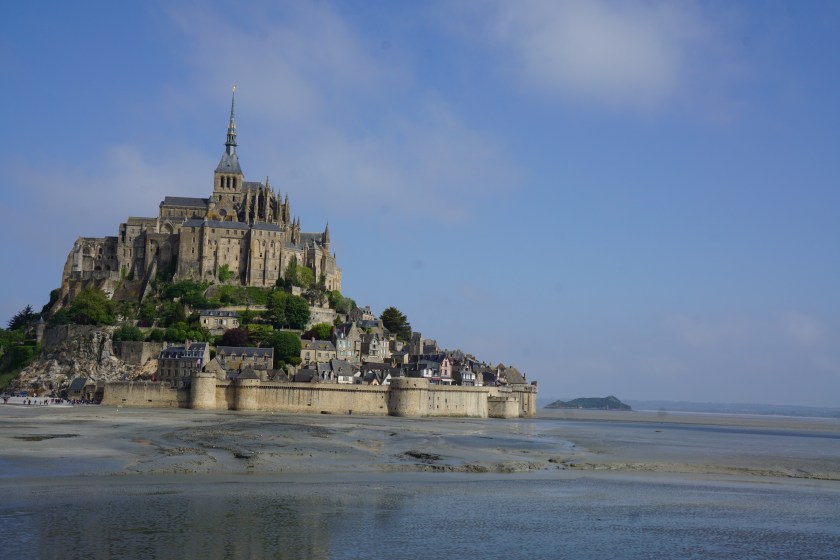
Mont St. Michel, a UNESCO World Heritage Site, is a small island off the coast of Normandy that is topped with a medieval Benedictine monastery. Over hundreds of years, the ramparts were built around the island to keep the English forces out, which was followed by other buildings that lined the steep village streets. Most of them have now been converted into museums, hotels, restaurants and boutiques. Water rushes in and out of the bay each day and surround the island making it feel even more remote during high tide.

Getting there:

We drove from Paris to the new car park, approximately 1.5 miles away from the island, and took the shuttle to the entrance. As we were staying on the island at the historic Auberge Saint Pierre (250 Euro/night) and knowing that we would have to do a lot of walking to get to the hotel, we only took a small overnight backpack. We patted ourselves on the back for the smart decision as we saw many tourists struggling with their rolling luggage up steep hills and flights of stairs.

Lodging:

There are only a handful of small inns on Mont St. Michel, which were very expensive ($250+/ night) with many cheaper options outside of the island. We opted to stay inside the town to experience the village without tourists at night and in the early morning. This was the right decision for us as the island was deserted around 5pm, leaving only a handful of folks wandering around in silence. It was a completely ghost-like atmosphere juxtaposed to the bustling and crowded touristy vibe earlier in the day. We watched as the tides came into the bay during sunset, seemingly cutting off the abbey from the modern world. Waking up to sunrise over the island and to birds chirping outside the window was worth the pricey lodging.

Things to Do:

The best thing to do in Mont St. Michel is getting lost along the winding streets and discovering random sites along the way. The village itself is very small and can be walked within an hour or two. I would recommend the following sites:

1. Abbey of Mont Saint Michel (8 Euro/adult) – We walked along La Grande Rue and up the winding stairs to the abbey. We didn’t need StairMaster after that walk! The Abbey has many rooms to explore including the church, cloisters, refectory and monk’s promenade. It’s a great way to spend 30 minutes to an hour learning about the various purposes the abbey served over its colorful history.

2. The small graveyard below the abbey (where we struggled to make out names on the tombstones that had been faded with time) – This area also afforded Instagram-worthy views of the abbey.

3. Walk along the ramparts and see the differing perspectives of the Normandy bay, especially during the changing tides when water rushes in and surrounds the island.

4. There are other museums such as Logis Tiphaine Museum (a historic house of Knight Betrand du Gueslin), Historical Museum (a small museum that contains 1,000 years of the island history) and the Museum of Sea and Ecology (houses 250 ancient models of boats). We did not have time to visit these museums in person, but would have loved to spend some time there.

Place to Eat:

Everything in Mont St. Michel is average at best, with popular tourist choices such as crepes, simple French food, and pizzas. There are some places worth stopping by, but due to limited options, they tend to be swarmed by tourists.

1. La Mere Poulard – This is arguably the most famous restaurant in the village and also one of the most recognized in France. They are known for their rich and fluffy soufleed omelets whipped up in copper bowls and cooked over an open fire. We selected the set Menu Mere Poulard at 65 Euro per person, which included appetizer, entrée and dessert. In hind sight, it was too much food as everything was extremely luxurious. It was interesting to watch chefs make the omelets in the fireplace in a very countrified kitchen. Other than that, the omelet was very rich and the egg butter foam on the omelet was a bit over the top as all I could taste was fat. The food was good, but wasn’t worth 65 euro per person. I would recommend just going for 1 omelet to share for two people, which still costs around 40 to 50 euros.

2. Creperie La Sirene – This little creperie is hidden at the back of a souvenir shop and has a good selection of Breton galette, both savory and sweet.

3. Le Terraces de la Baie for a great view for lunch.

4. Coffee at any of the cafes along the ramparts for an afternoon break and to people and bird watch.

This slideshow requires JavaScript.

Day 2: Cancale and Saint Malo

Nearby Mont St. Michel is Cancale, a place that locals recommend for the best oysters in France. We drove one hour from Mont St. Michel to the seaside market where there were various stalls hawking fresh oysters of the day. After browsing for 15 minutes, we selected a few dozen oysters from Jean D. Cancale including the Pied de Cheval at 6 Euro/each. It was half the size of my face and very meaty. The vendor gave us an impromptu shucking lesson while she prepared the oysters for us. She made it look a lot easier and faster than when I tried it at home. Afterward, we made our way to the “stairs” by the harbor with trays of goodies and proceeded to eat and throw the shells onto the “beach” like the locals. These were the freshest and tastiest oysters that we’ve had in a long time. Absent of being completely stuffed on oysters, we would have kept on eating. This is a must stop destination for oyster lovers.

Another short 30-minute car ride later, we arrived at a charming bed and breakfast, L’Hôtel Particulier Ascott, located in Saint Malo. This port city in Brittany has granite ramparts surrounding the old town. Walking through the cobbled streets of St. Malo’s old town feels like you stepped back into history and gives an authentic glimpse into Brittany’s seafaring past.

Lodging:

There are many reasonable options in St. Malo. We opted to stay at L’Hôtel Particulier Ascott, a quaint three-star bed and breakfast, to fully experience the country road trip. This 19th-century mansion sits in the residential area of Saint-Servan, right at the mouth of the Rance River and just 1,300 feet from the beach. The inn is managed by a sweet couple that provided just enough personal touches. We were made to feel at home right from the start. The room was small but very comfortable with modern amenities. Breakfast was served with an assortment of pastries, cold cuts and yogurt. The whole experience was what one would expect of a memorable European B&B.

Things to Do:

1. Cathedral – The main attraction in old town is the 12th century cathedral that was built in the Roman style and houses the graves of Jacques Cartier, a navigator who discovered Canada, and Duguay-Trouin, who I have no idea what he accomplished.

2. Walk the intra-muros – This district is all cobblestone streets with restaurants, boutiques, creperies and getting lost along the winding roads is the best way to explore.

3. Walk along the ramparts – Climb up the stairs at various access points in the old town to the ramparts and stroll along the bastions, guard towers, posterns, canons and sentries. You also get a panoramic view of the bay and its island. The loop should take about an hour to complete.

4. Castle – The 14th century castle is located at the Saint Vincent gate and currently houses the history museum of Saint Malo.

5. The various historical houses including:
– The 15th century stone house of Duchess Ann

–  The 17th century house that is half timbered and where the International House of Poets and Writers is currently located,

–  The Corsair’s Abode which was the 18th century Afield Hotel.

Place to Eat:

Saint Malo is known as a seafood destination in the Brittany region with many restaurants specializing in seafood towers. Some notable eateries that were recommended to us:

1. Le Beurre Bordier – An artisanal butter that is churned by hand in a wooden kneading bowl daily. The butter is then shaped by hand and struck with a box tress paddle to form a regular and made-to-measure packs. We purchased sampler sets for breakfast and gifts. I can easily say that this was some of the best butter I have ever had. They also have a restaurant, Autour du Beurre, which highlights their famous butter creations.

2. Le Comptoir Breizh Café – Their specialty is buckwheat gallettes and soup.

3. Le Chalut – This is a Michelin restaurant for seafood hidden in a maze of streets. Reservations are highly recommended.

This slideshow requires JavaScript.

Day 3: Dinan

After a hearty breakfast in the beautifully curated parlor at the B&B, we drove 30 minutes to Dinan, a medieval village that is so pretty, it could fit into one of the Disney movies. The village is adjacent to the River Rance and is built up along the surrounding hills. The town has some of the best preserved medieval architecture in Brittany with buildings dating back to the 13th century. Dinan’s historic commercial center, Place des Merciers, is lined with Instagram-ready half-timbered and arcaded buildings. You can meander around the town for hours and not get bored of the normal town life.

Lodging:

Dinan is a small village so options such as Airbnb or the Ibis Styles in centre ville could be your best bet. There are a few high end options that are available by the river as well. We stayed at the Ibis Styles, which was an affordable option and reminded me of the Marriott Courtyard in the US. It was conveniently located right by old town so we were able to explore on foot and ditch the car for the day.
Things to Do:
There are a few sites worth seeing, but the best thing to do is to wander and get lost. The theme of this road trip was to explore and see where our feet took us, usually to pleasant surprises. Dinan is a small town and the architecture is very well preserved.
Walk along the ramparts and see what you can discover. The ramparts stretch along 2km around the old city and affords magnificent views of the town and Breton landscape.

1. Chateau de Dinan – This traditional 14th century castle includes keep and gate that join the medieval ramparts enclosing the old town. The castle visit encompasses a self-guided tour of its many rooms and has interesting facts about life in the medieval times. The audio guide is in French; however, they have placards in English in each room.

2. St. Sauveur Basicilica – This 12th century cathedral is situated in its own square and boasts Gothic and Romanesque architecture. The church is also surrounded by bakeries and cafes in case you need an afternoon break.

3. Rue du Jerzual – Dinan’s steep main street with numerous cafes and shops housed in buildings from the 13th century, which leads to the Dinan port.

Places to Eat:

There are many places to eat traditional Breton food and some recommendations are:

1. Crêperie Ahna – This small restaurant made the best crepes in town and is always packed.

2. Fleur de Sel – This restaurant has great regional cuisine. Reservations are highly recommended.

This slideshow requires JavaScript.

Day 4: Back to Paris with a stopover at Monet’s House in Giverny

On our last day, we stopped by Giverny to visit Monet’s house at the peak of springtime. Since it was a week day, it was not overly crowded. If possible, buy the tickets online prior to going otherwise the ticket line can be very long (in French time). The flowers were vibrantly showcased in a formal garden like they were depicted in various Monet’s paintings. The famous pond and Japanese bridge are smaller than I had imagined, but very pretty nonetheless. One could imagine Monet spending hours amidst the inspiring visual splendor dreaming up his next creation. The other highlights of the attraction were walking around Monet’s house and admiring its well preserved furnishings and numerous canvases of art. The visit took around 2 hours and was just enough for a break before returning to Paris.

This slideshow requires JavaScript.

This itinerary was short yet it allowed for us to see the best of each site and left us wanting to come back again soon. Western France is filled with small towns that time has seemingly left untouched that beckon to be discovered by those looking for the simple country life.

For related articles, visit the TRAVEL page or the World Travel Index.

Author: Chau Hoang

Explore Marrakesh (Morocco) Like in Insider

Marrakesh, with its kaleidoscope architecture and chaotic souks, can be overwhelming for the uninitiated. I had an opportunity to visit Marrakesh for four days with my friends who have been there numerous times and had local recommendations from their friend, Zach Idrissi, the owner of Amani Hotel. Having local guidance to ease me into this overstimulating experience was a welcome blessing since I was flying solo for most of my stay in the city. I also lucked out by going around Ramadan as everything was calmer and more laid back. The markets and attractions will close a bit earlier around 5pm, but the aggressive behavior in the souks will generally be less prevalent. This makes for an overall pleasant and safe experience for solo travelers.

Where to eat:

  1. Have an afternoon tea break on the terrace of La Mamounia and take a stroll in their manicured garden. You should check the availability for non-hotel guests as the hotel started to restrict non-hotel guests to certain hours for tea.
  2. Have dinner at Le Tanjia where there are daily belly dancing show and the food is fantastic. It has a great atmosphere for group or solo dining.
  3. Go to Al Fassia, a restaurant run by an all-women co-op, for traditional food. Reservations are highly recommended as this place was packed. Their specialty is traditional pigeon pie.
  4. Have dinner at Riad Idra, a luxury boutique hotel in the souk. Their chef makes incredible cuisine, which was served on their gorgeous roof top and beautifully designed French style dining room. Each meal was prepared fresh with ingredients purchased from the market that day. I was fortunate to have the chef customized my meals, which made it into a five-star dining experience.

Where to stay:

  1. Stay at a luxury 5-star hotel for one night such as La Mamounia for the experience. Marrakesh is known for having spectacular luxury hotels so this is a must do.
  2. Spend the rest of your stay at a riad in the souk. Riad are converted houses and mansions generally located throughout the souk. I would make sure that the riad is close to one of the main souk entrances because cars are not allowed in the area. These hotels are also incredibly difficult to find among the maze of streets so make sure your riad give explicit directions.

I highly recommend staying at Riad Idra, as the experience was better than some of the best luxury hotels I’ve stayed at around the world. It felt like home in this beautifully curated mansion. Each room has so much personality and the service was impeccable. For example, they provided slippers for each room, which were way too big for my feet. Without any notice to management, my slippers were replaced with my size after turn down service. My clothes were folded and put neatly away every day even though I left them strewn all over the place. They even helped me buy hotel quality tea pots at near market prices since I hated haggling at the souk. I would go back to this riad in a heartbeat.

What to do:

  1. Visit the Instagram-worthy Jardin Majorelle and the Yves St. Laurent Museum early in the day. The bright blue structures at Jardin Majorelle offset the green and browns succulent and cactus. If you are lucky, you won’t capture a fellow tourist in the shot. The Yves St. Laurent Museum houses legacy works from its namesake designer in an approachable setting. These sites can become overcrowded with tourists, which makes it hard to enjoy the scenery.
  2. Visit Maison de la Photographie for a curated collection of old photographs depicting Moroccan life and end the stay with a short break on the rooftop for mint tea.
  3. Book a morning cooking class at Maison Arab. This was a very informative and hands on experience. They are the best in town and the facilities are made for teaching purposes.
  4. Have your hotel help you book a spa day at La Baine de Marrakesh a few weeks in advance. The prices are reasonable and this is where locals go to get pampered. It’s a luxurious experience with reasonable prices, so it is very hard to get a reservation. Additionally, bring a bathing suit with you as there is also a small pool to chill out by if you show up early.
  5. Visit the Bahia Palace early as tourist swarm in and becomes overly crowded, a recurring theme in Marakesh.
  6. Visit El Badi Palace, which was unfortunately closed for renovation when I went.
  7. Visit the Sadian Tomb to see the intricate tile work after waiting for an hour under the blazing sun.
  8. Take a quick stroll into the souk. Unless you are ok with the haggling and the aggressive behavior of the vendors, I would only window shop. Always start bargaining at least 50% of the quoted price.
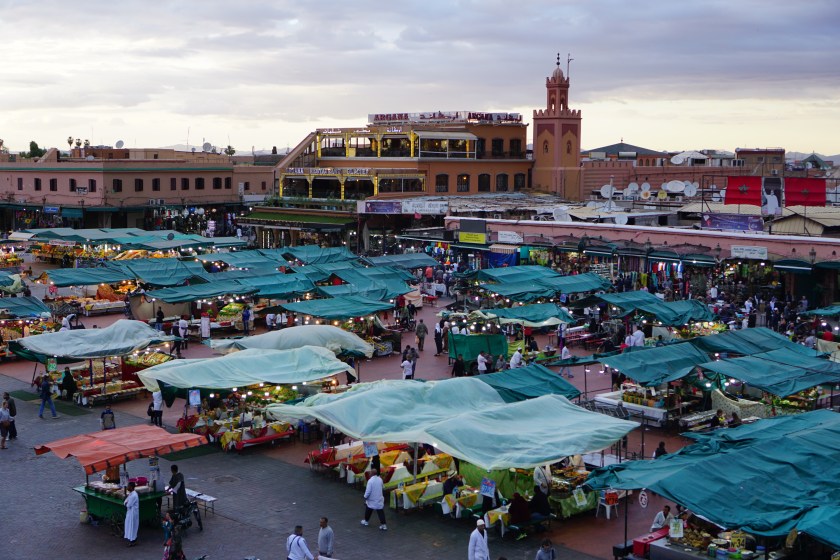
  9. See Djema El Fna (main square) at sunset from the rooftop of Cafe De France or Le Grand Balcon Cafe Glacie. Both have greats view of the square and only require buying a soft drink as admittance price. Another must do is to have fresh orange juice from one of the market vendors. This may be the best orange juice that I ever had.
  10. Spend a day relaxing at the hotel pool complex if you book a stay at one of the five-star resorts.

Sample itinerary:

Day 1

  • Arrive at Marrakesh and relax at the hotel
  • Dinner at Al Fassia

Day 2:

  • Visit Bahia Palace, Badi Palace and nearby Sadian Tomb
  • Lunch and explore the souk
  • Visit Maison de la Photographie
  • View sunset at Djema El Fna from a café rooftop
  • Dinner at Le Tanjia

Day 3:

  • Cooking class at Maison Arab
  • Tea at La Mamounia
  • Afternoon spa at La Baine de Marrakesh
  • Dinner at your riad or Riad Idra

Day 4

  • Visit Jardin Majorelle and Yves St. Laurent Museum
  • Spend the rest of the day shopping for souvenirs

The most important thing to do in Marrakesh is to be open to new experiences as the city can be a dizzying experience for first timers…If you do, you are likely to find yourself swept away by its complex beauty and the feeling that you just step into a version of the 1950’s Morocco.

Check out our blog on 2 Days Chillaxing in Essaouira, Morocco and Essential Travel Tips for Marrakesh and Morocco

For related articles, visit the TRAVEL page or the World Travel Index.

Author: Chau Hoang