Latest Posts

Bánh Tiêu Mật Ong/ Honey Glazed Sesame Hollow Donuts

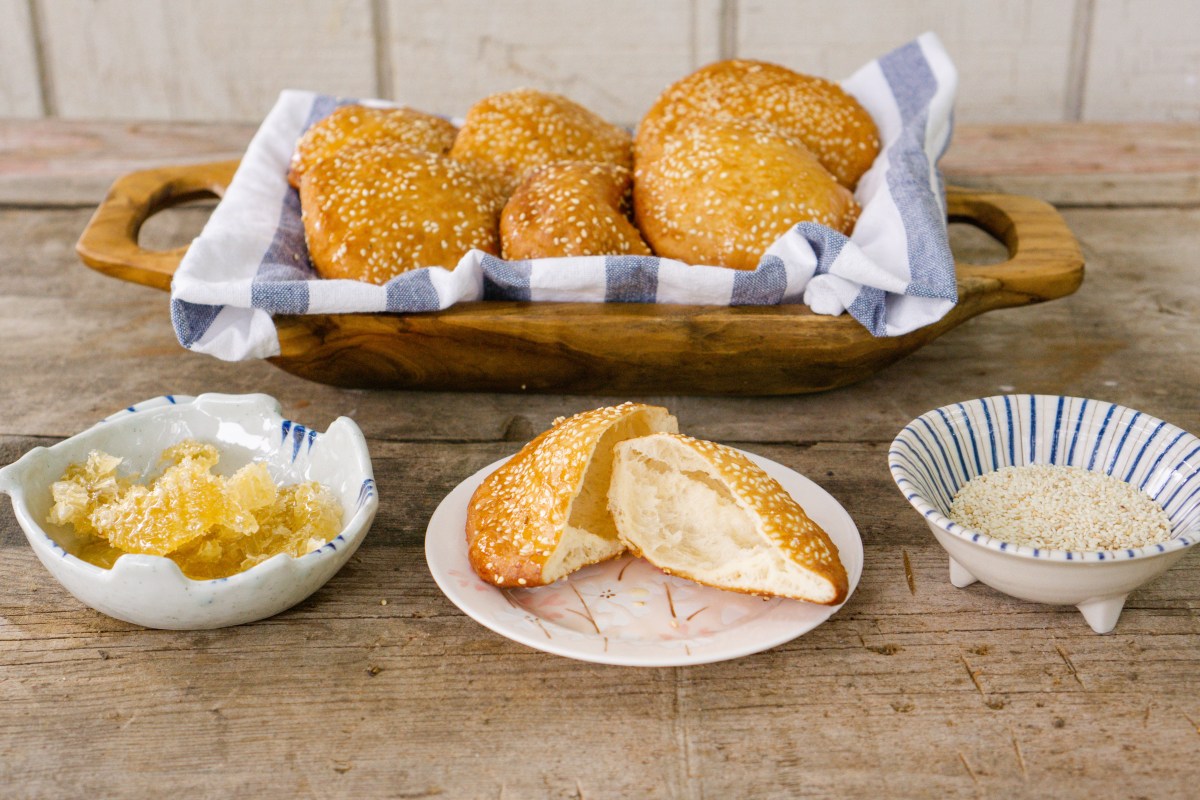
Bánh tiêu is essentially the Vietnamese version of fried dough or donut. One can find them sold throughout any town from street vendors. These donuts differ from American donuts due to bánh tiêu having a hollow center. This creates a light and fluffy donut with a chewy texture, which also has a light crunch from the sesame seeds.

To take this traditional hollow donut up a notch, I incorporated honey into the batter and also applied a light honey glaze. This version of bánh tiêu has just the right amount of sweetness that my family cannot get enough of. 

This recipe makes 12 donuts and takes about 2 hours with proofing time.

Ingredients:

2 and 3/4 cup of bread flour / 400 gram

1/2 cup of water

1/2 cup of 1% low-fat milk

3 tablespoons of sugar

1 and 1/4 teaspoon of salt

1 packet of vanilla sugar or 1 teaspoon of vanilla extract

1 teaspoon of instant yeast

1 teaspoon of baking powder

1/2 cup of sesame seeds

2 tablespoons of honey

Honey glaze (1/4 cup of honey + 1-2 teaspoons of water to dilute until honey is manageable with a brush. Use more or less honey according to your preference.)

Approximately 1 quart of vegetable oil for deep frying

Neutral cooking spray like PAM

Equipment: Stand mixer or hand mixer. You can also knead by hand. It just takes a lot more effort.

img_7026

Directions:

Mix 1/2 cup of milk with 1/2 cup of water and microwave for 30 seconds. The temperature should be lukewarm.

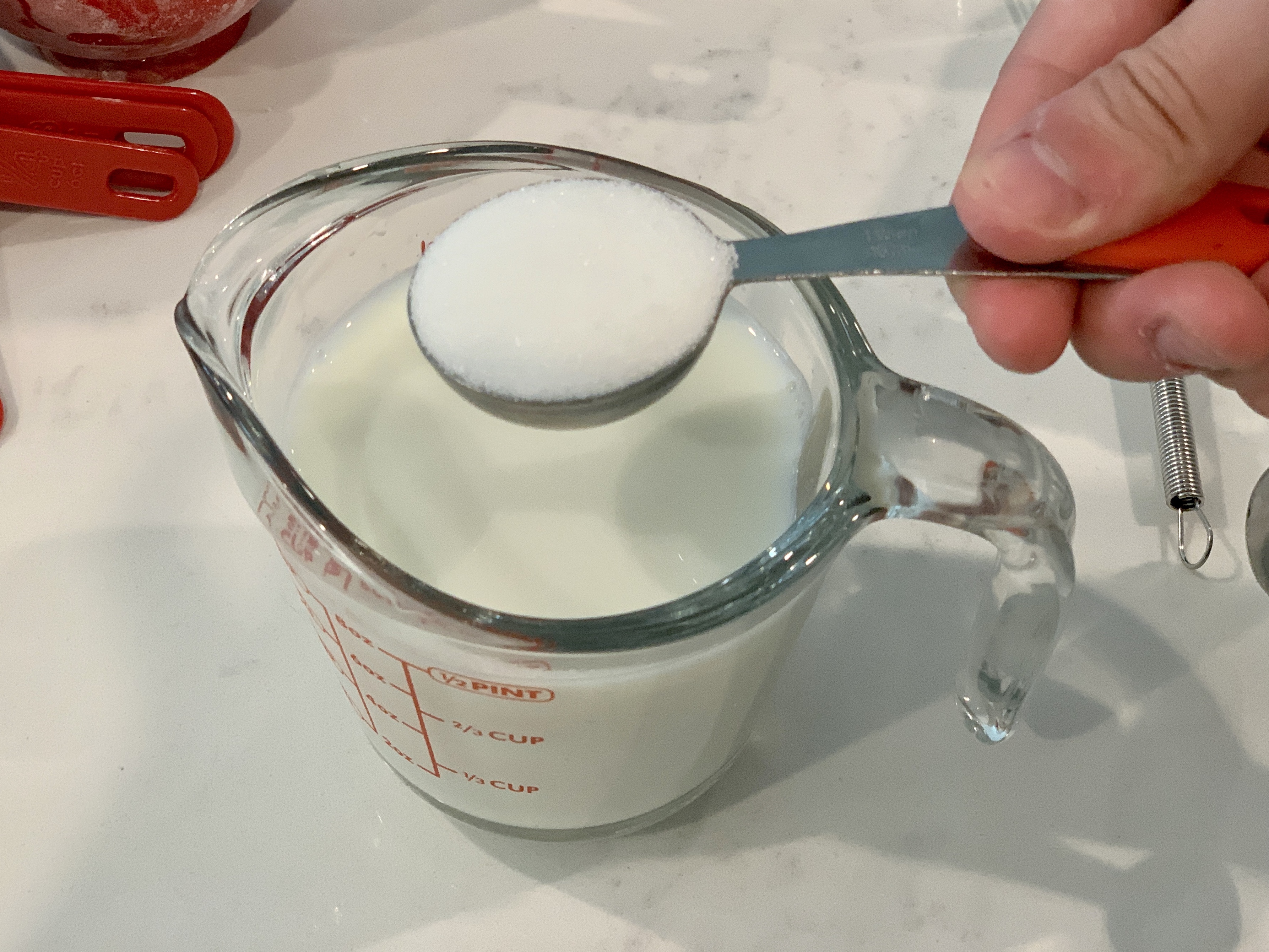
Add 1 tablespoon of sugar and 1 teaspoon of instant yeast to the milk mixture. Cover with plastic and set aside for 5 minutes. (Instant yeast does not need to be activated but I find that you get the best results this way.) You should see some foaming from the yeast after a few minutes.
img_7028

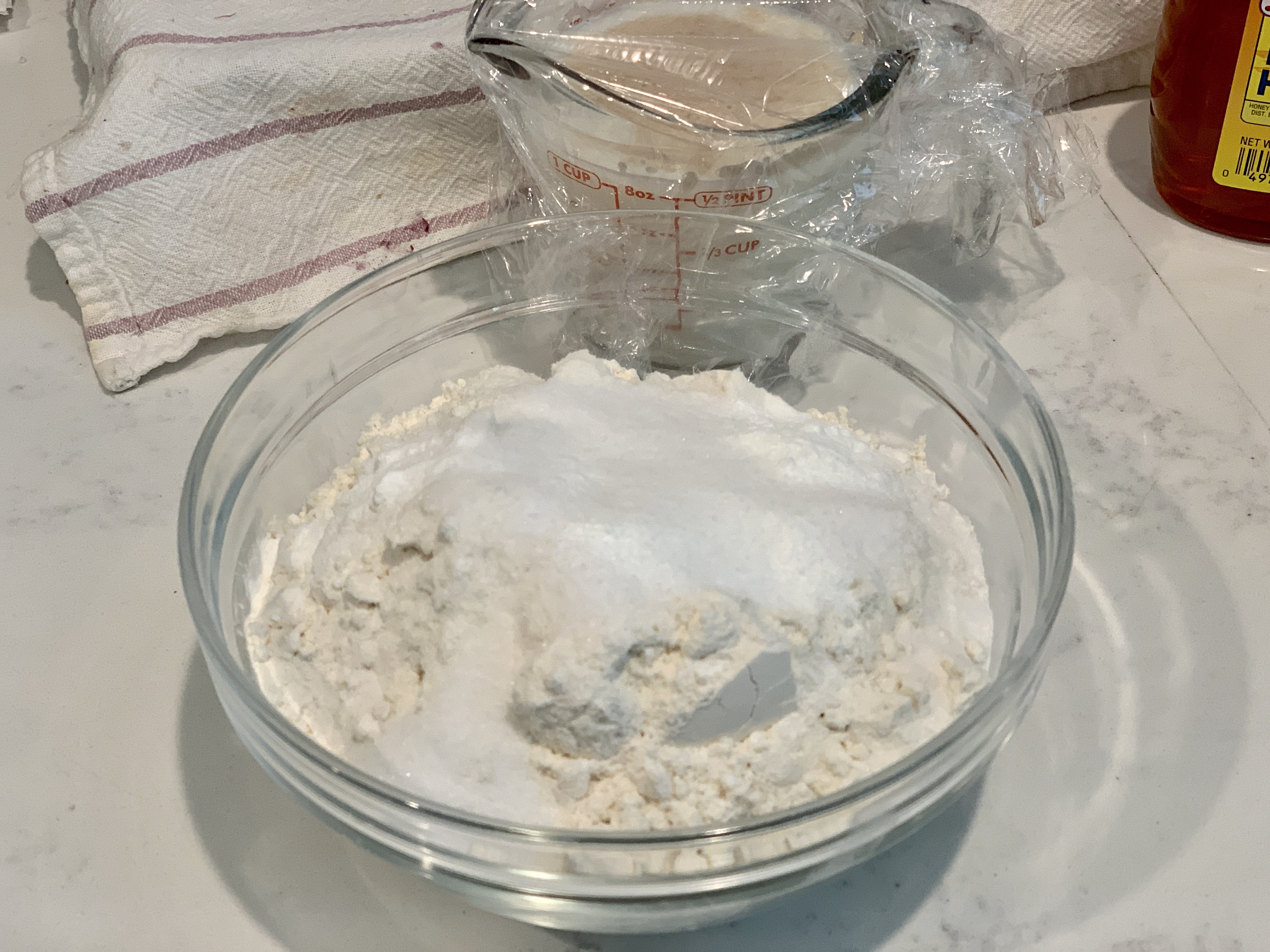
In a mixing bowl, add 2 and 3/4 cup of bread flour, 2 tablespoons of sugar, 1 packet of vanilla sugar, 1 teaspoon of baking powder, and 1 and 1/4 teaspoons of salt. Mix to incorporate all the ingredients.
img_7037

Using a standard mixer with a dough hook, put the setting on stir or #2 for Kitchenaid stand mixer. Slowly add the milk and yeast mixture to the flour until it is fully incorporated into the dough.

Add 2 tablespoons of honey to the dough as it continues to stir. This all takes about 2-3 minutes.

Turn the setting to medium or #4 for Kitchenaid and knead the dough for 7-8 minutes for a total of 10 minutes or until the dough is smooth and elastic. (It’s important to go by the texture of the dough over the estimated timing.)
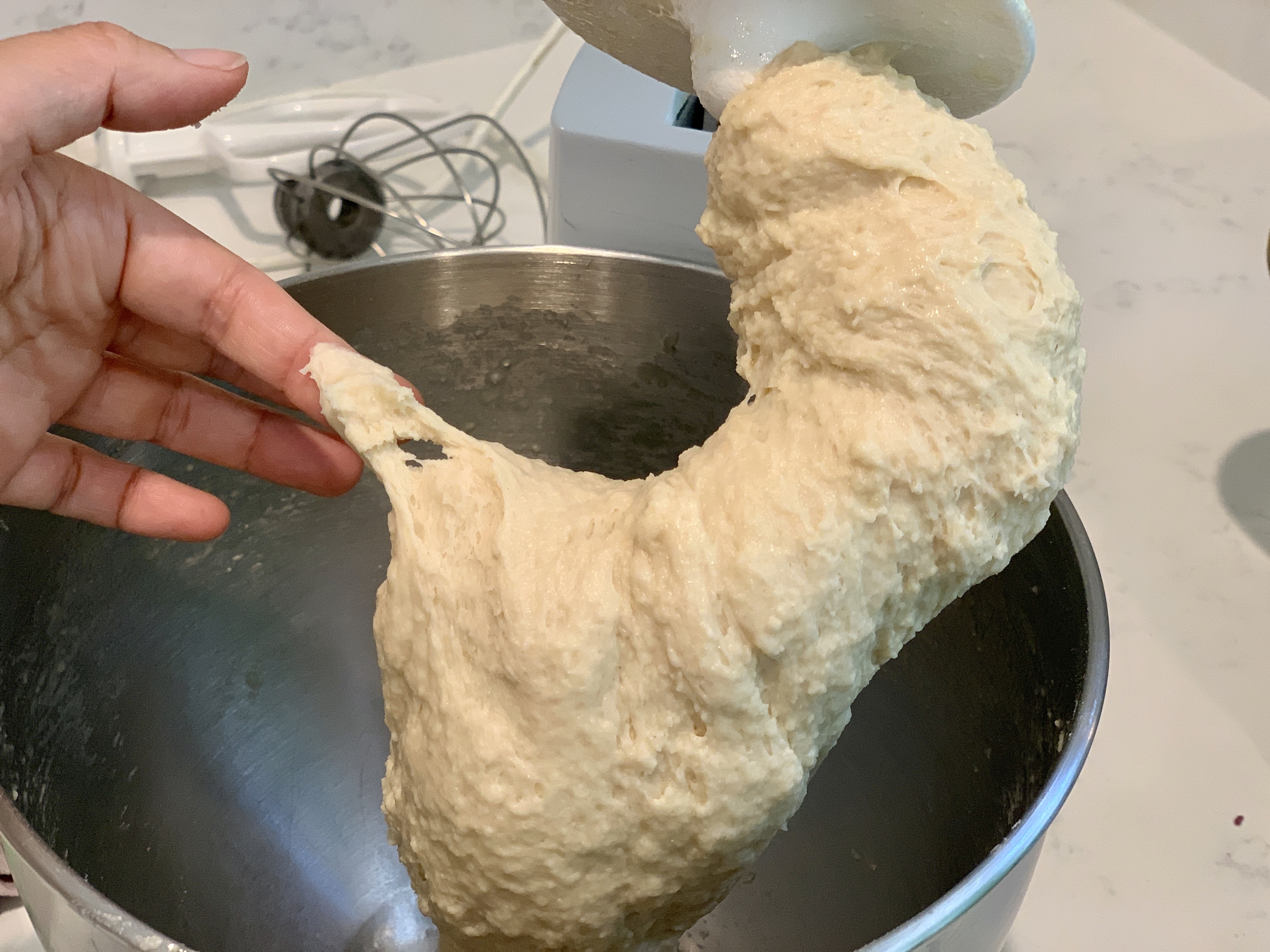
img_7045

at 5 minutes

img_7048

at 10 minutes

Grease another bowl and spray your hands with cooking spray. This will make it so that the dough doesn’t stick to your hands.

Remove the dough from the mixer and form into a ball. You can do this by pulling the sides under and sealing the edges. Do this a few times until it forms into a smooth ball.

Let the dough proof in the greased bowl covered with a kitchen towel or plastic for 1 hour or until it doubles in size. I put mine in the oven so the temperature is usually mid to high 70Fs.
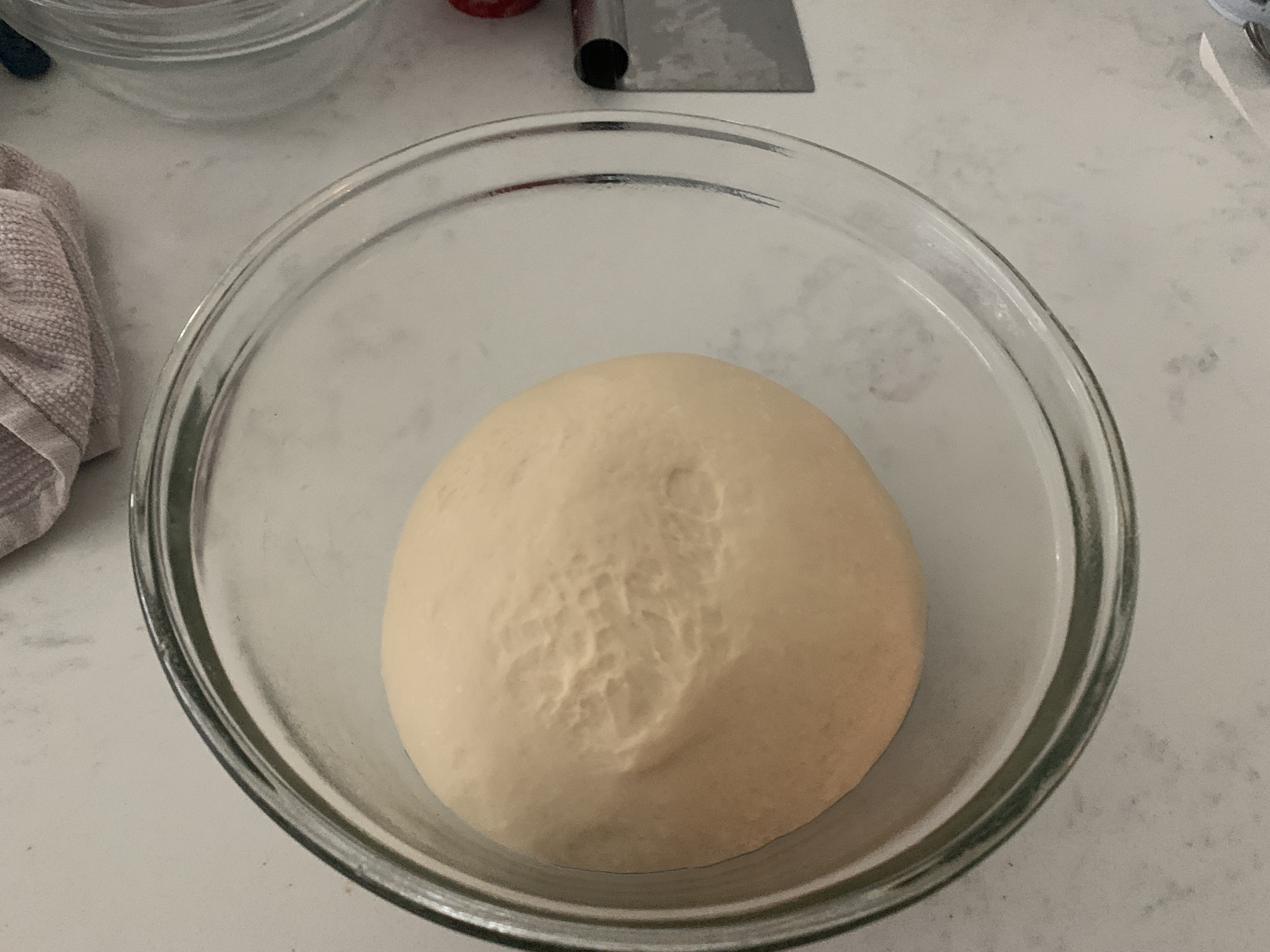
img_7051

After 1 hour, take out the dough and place it smooth side down on a work surface. I spray my work area with PAM so the dough doesn’t stick. Knead for 1 minute to remove excess air.
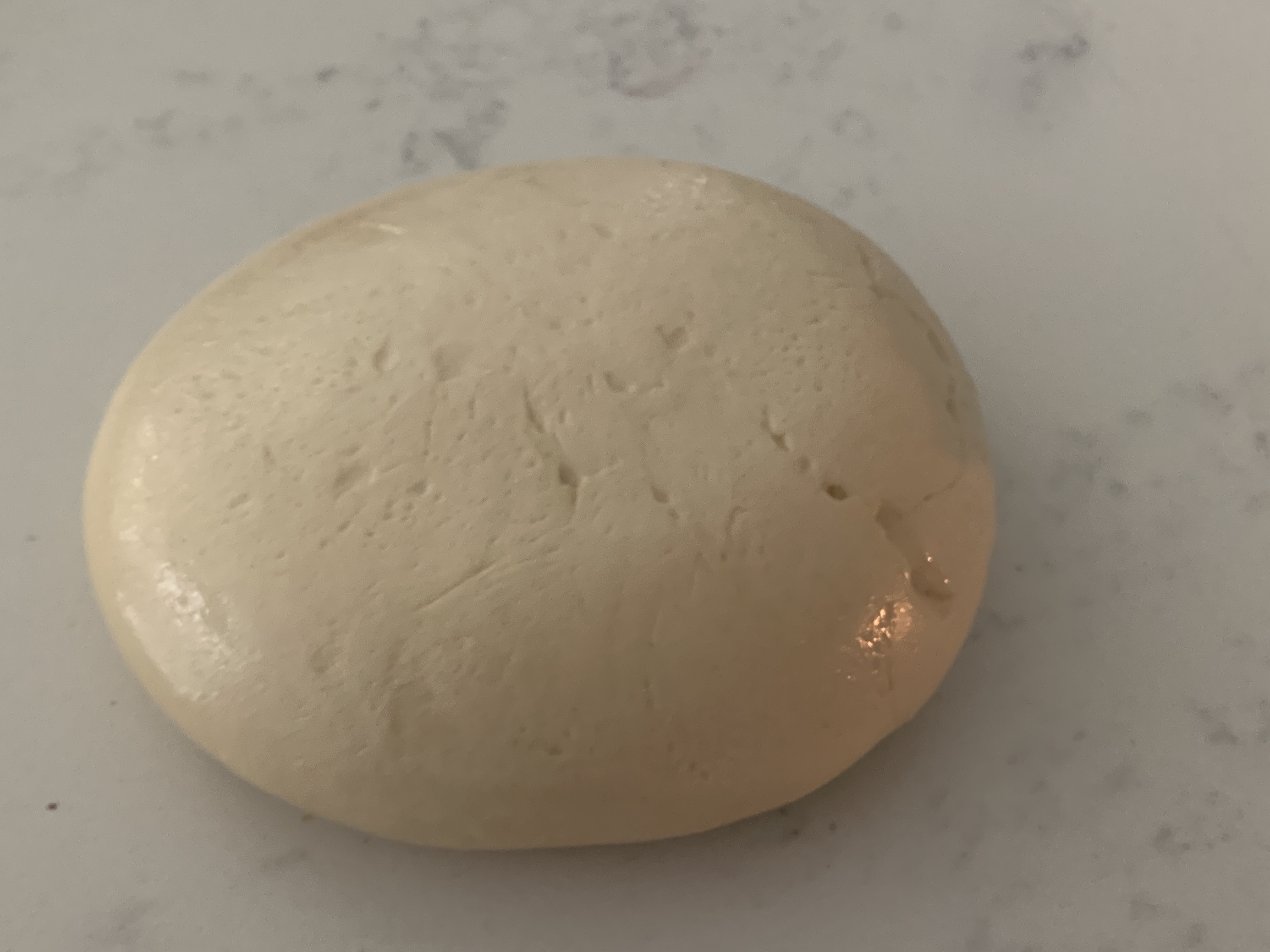
img_7052

Divide the dough equally into 12 pieces. Form each piece into a ball and roll in sesame seeds. Let it rest covered for 20 minutes.

  • Press the wet side inward and press to seal.
  • Repeat until you have a smooth ball. 
  • This takes 2-3x.

After 20 minutes, heat up approximately 1 quart of oil to 350F to 375F (use medium heat). Depending on the size of your pot, you will need to make sure that there are at least 2 inches of oil otherwise you will not be able to fry the donuts properly.

While the oil heats up, use a rolling pin and flatten each dough ball into a disk with 1/8th inch thickness. Cover the disk while working on the next ball.

img_7062

Fry the dough when the oil temperature reaches between 350F-375F.
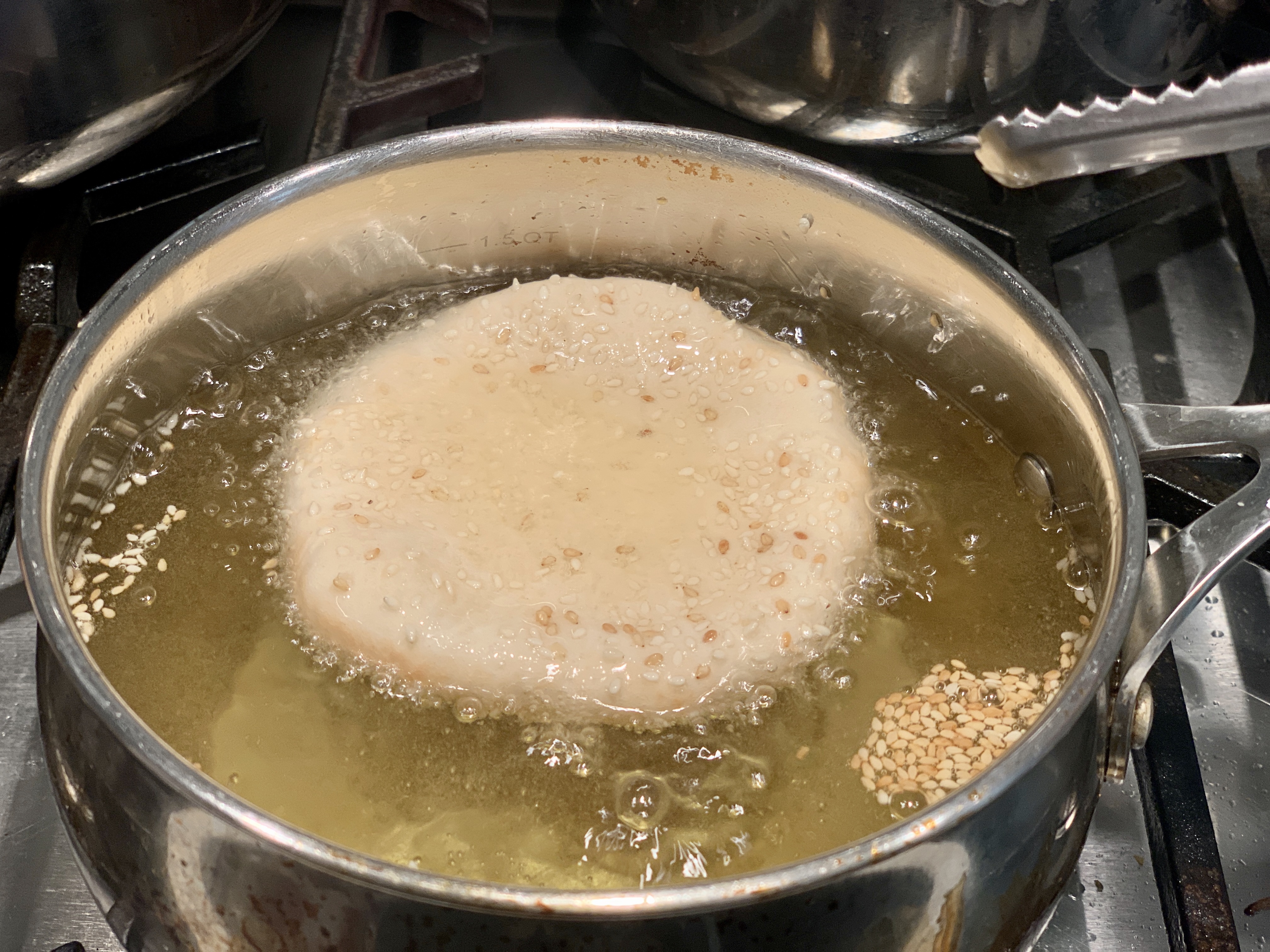
img_6905

  • Carefully slide the donut into the oil from the side so it doesn’t splash you.
  • It will take a few seconds for the donut to rise to the top. Count to 5 and flip over. You can use tongs to maneuver the dough. Be careful not to press into the dough so it doesn’t deflate while cooking.
  • Continue to count to 5 for each side and flip until the donut puffs up and turns golden brown. It will take approximately a minute for each donut so be careful not to burn it.

Remove from the oil and rest on some paper towel to absorb the excess oil. Brush the honey glaze on one side of the donut. Serve warm.

img_7065

Why doesn’t my donut puff up?

  • The first one will likely be a “throwaway’.
  • The yeast was not good. Sometimes your yeast may be old or just ineffective. This is why we activated the yeast first to check before adding to the dough mix.
  • You did not proof the dough enough so that it had time to rise and rest.
  • If it takes you a long time to heat up the frying oil or to flatten the dough so that each disk slowly shrinks back and becomes thicker. Flatten out the dough again to 1/8th inch thickness before frying.
  • Make sure your temperature stays around 350-375F by adjusting the heat to medium-low if your donuts start to darken too quickly.

For more recipes, visit our EAT page or Recipe Index.

Author:  Chau Hoang

Photo Editing: Kevin Nguyen (https://www.kevwin.com/)


Chè Nhãn Hạt Sen / Longan and Lotus Seed Summer Pudding

Summer in Vietnam can be brutal with the average temperature hitting in the high 80F’s and with the suffocating humidity, it can feel like it’s 100F degrees. I remembered taking two to three showers a day when I was visiting my family in July. As a result, locals turn to refreshing food and drinks such as longan and lotus seed summer pudding served with a generous scoop of ice in order to keep cool. This chè comprises of sweet longan, crunchy lotus seeds, and other ingredients that are also common Chinese herbal medicine known to have cooling properties. Don’t worry…this dessert will not taste like medicine but it does help keep your body from melting during a hot summer day.

Ingredients:

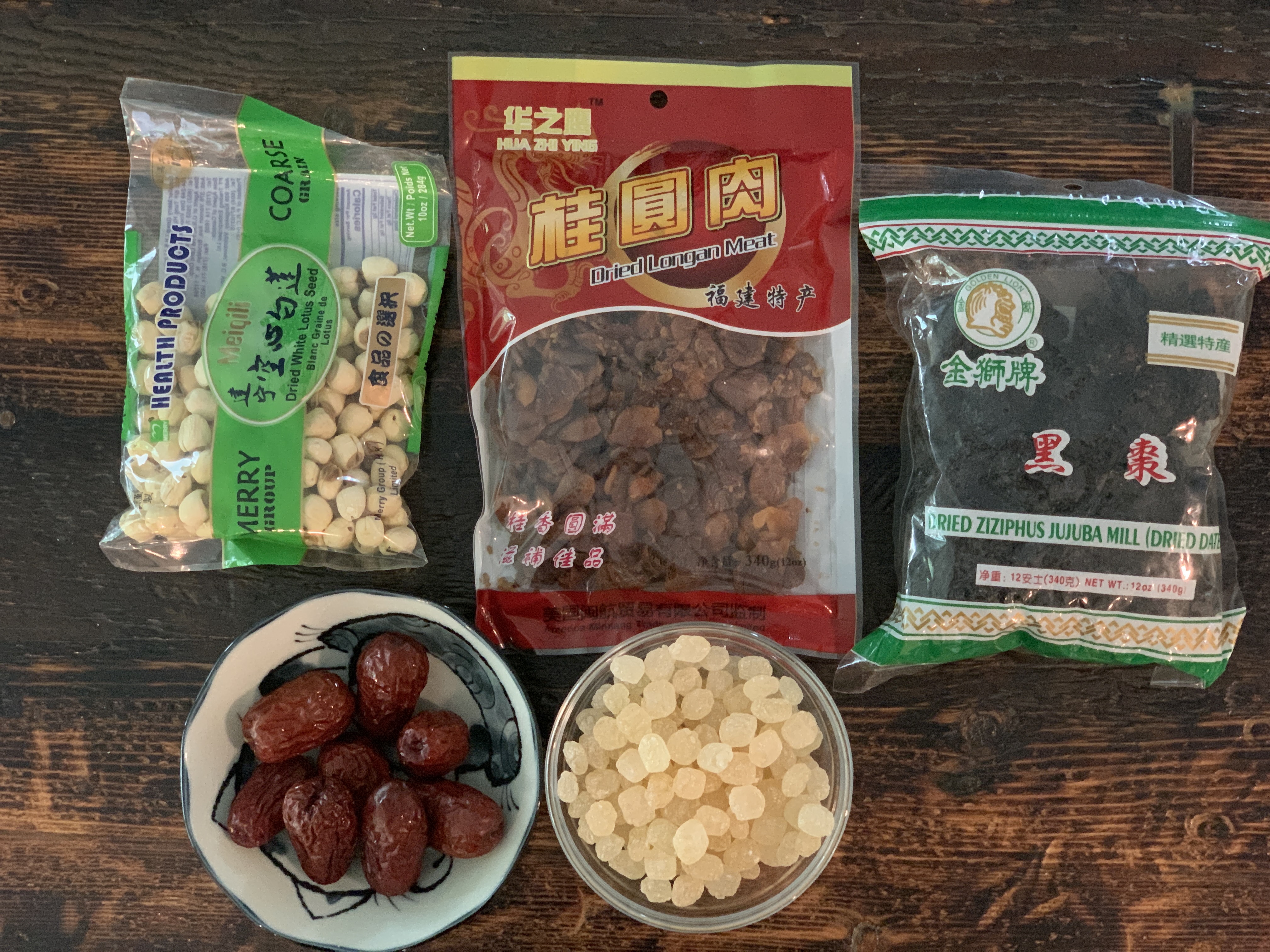
1 cup of dried lotus seeds

1/2 cup of dried logan meat (You can substitute with dried lychee.)

8 dried red dates (red jujube)

12 dried black dates (dried Ziziphus jujuba mill)

1 cup of rock sugar.

1/4 teaspoon of salt

5 cups of water

Directions:

Soak all the dry ingredients for 1 hour and rinse to remove any impurities.

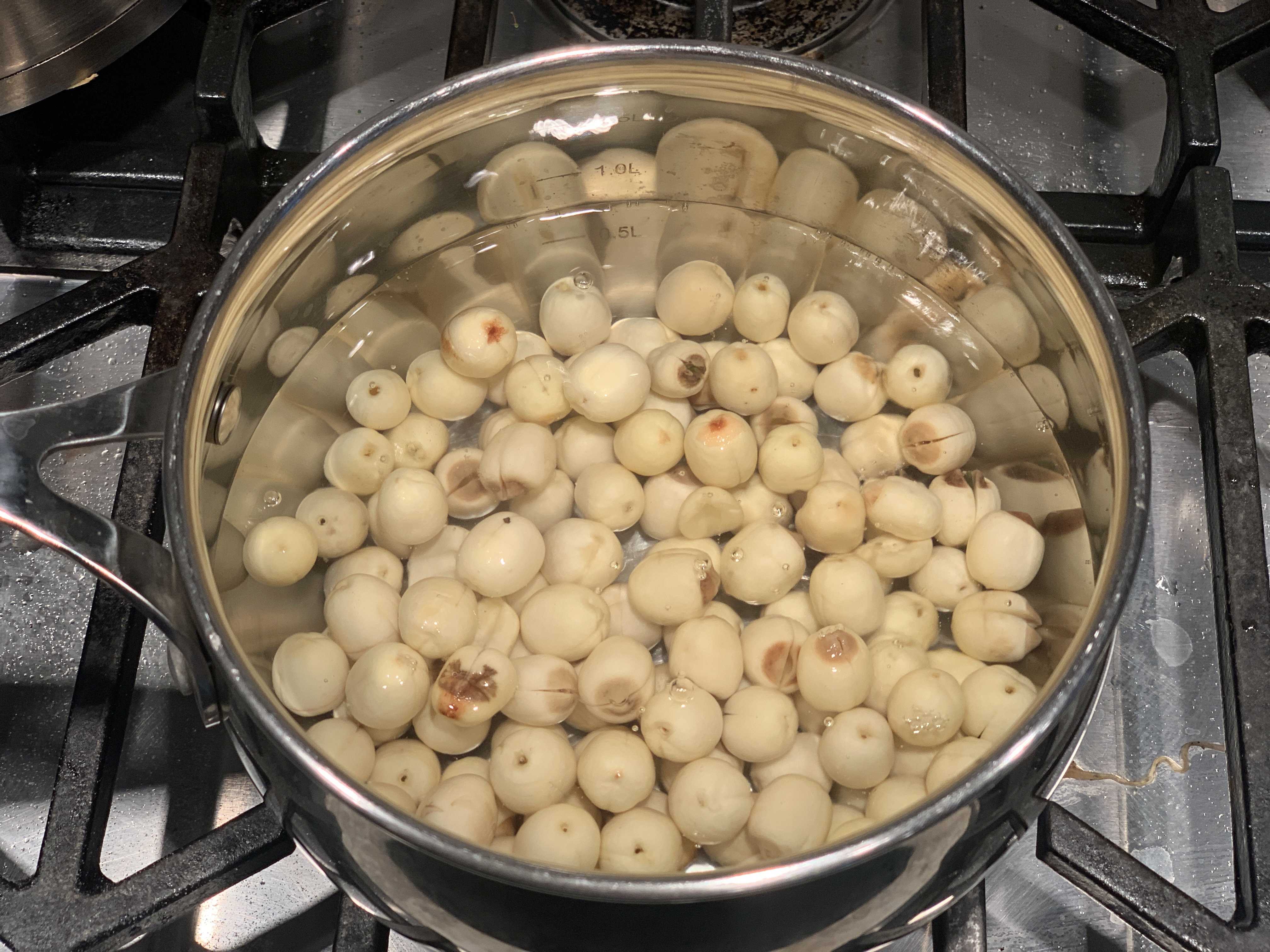
Boil 5 cups of water in a large pot. Add 1 cup of lotus seeds and turn the heat to medium-low and cook for 45 minutes until the seeds soften.

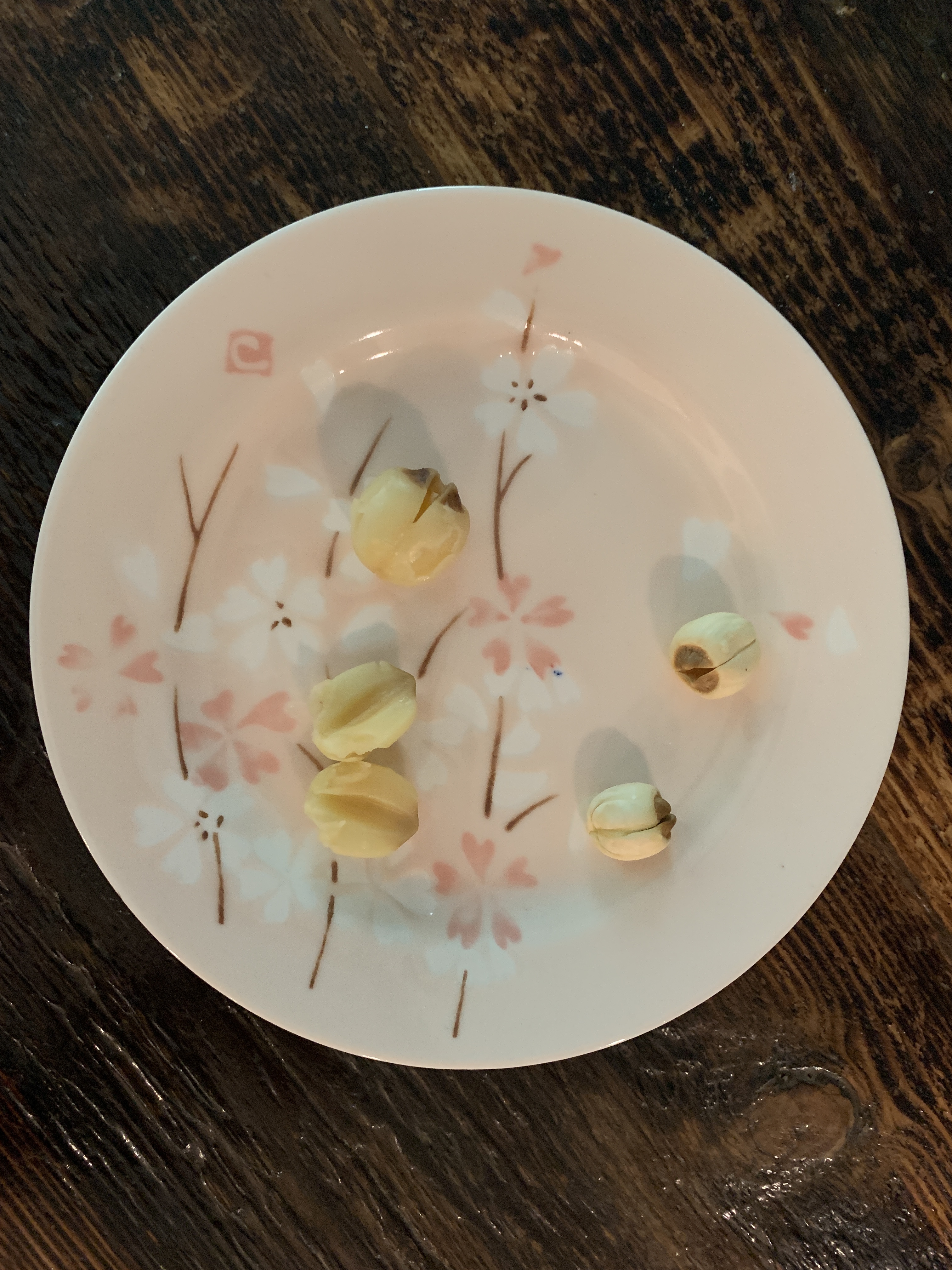
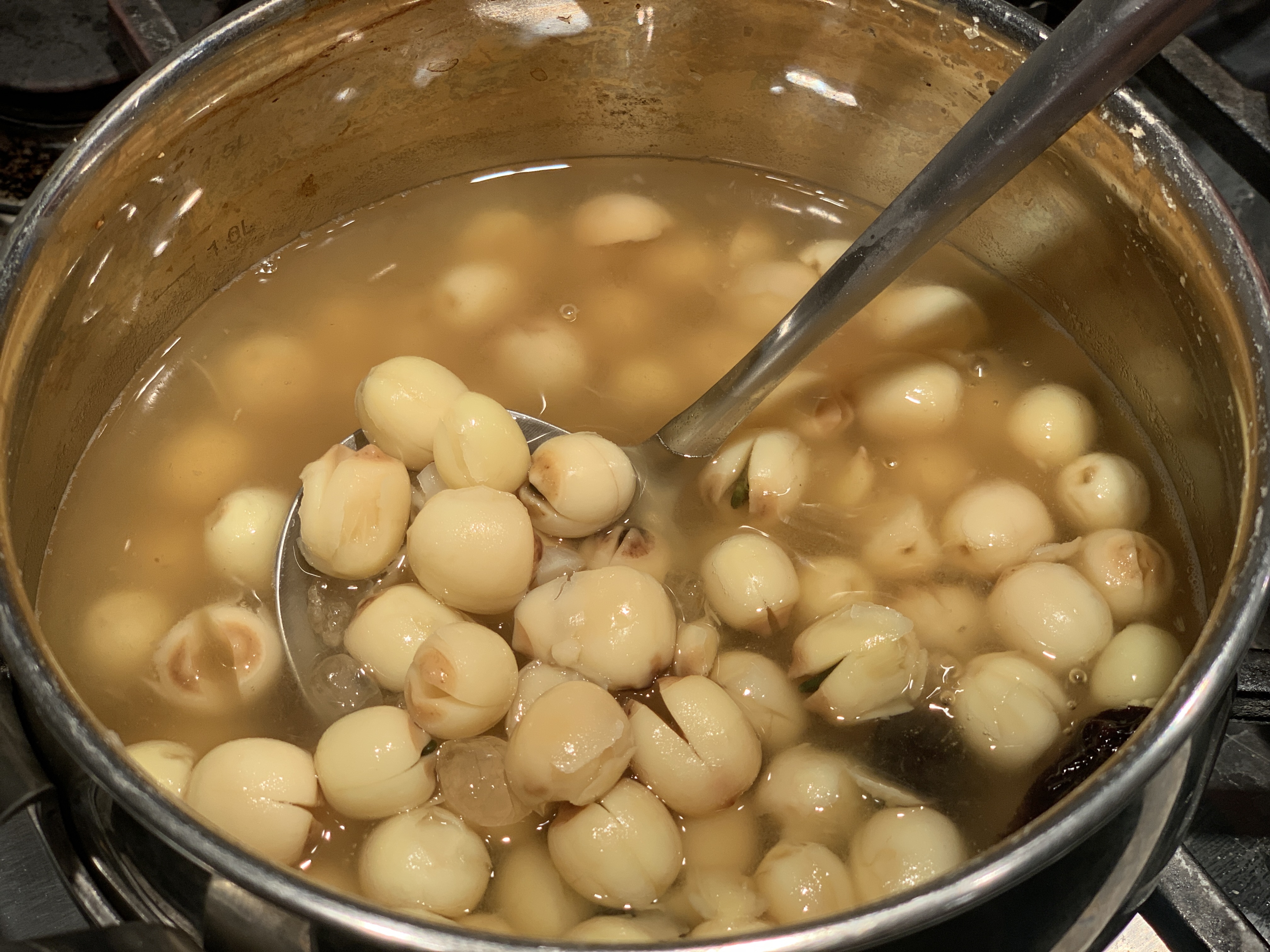
Cooked (left) vs Uncooked (right)

Add 1 cup of rock sugar and 1/4 teaspoon of salt and simmer for another 5 minutes.

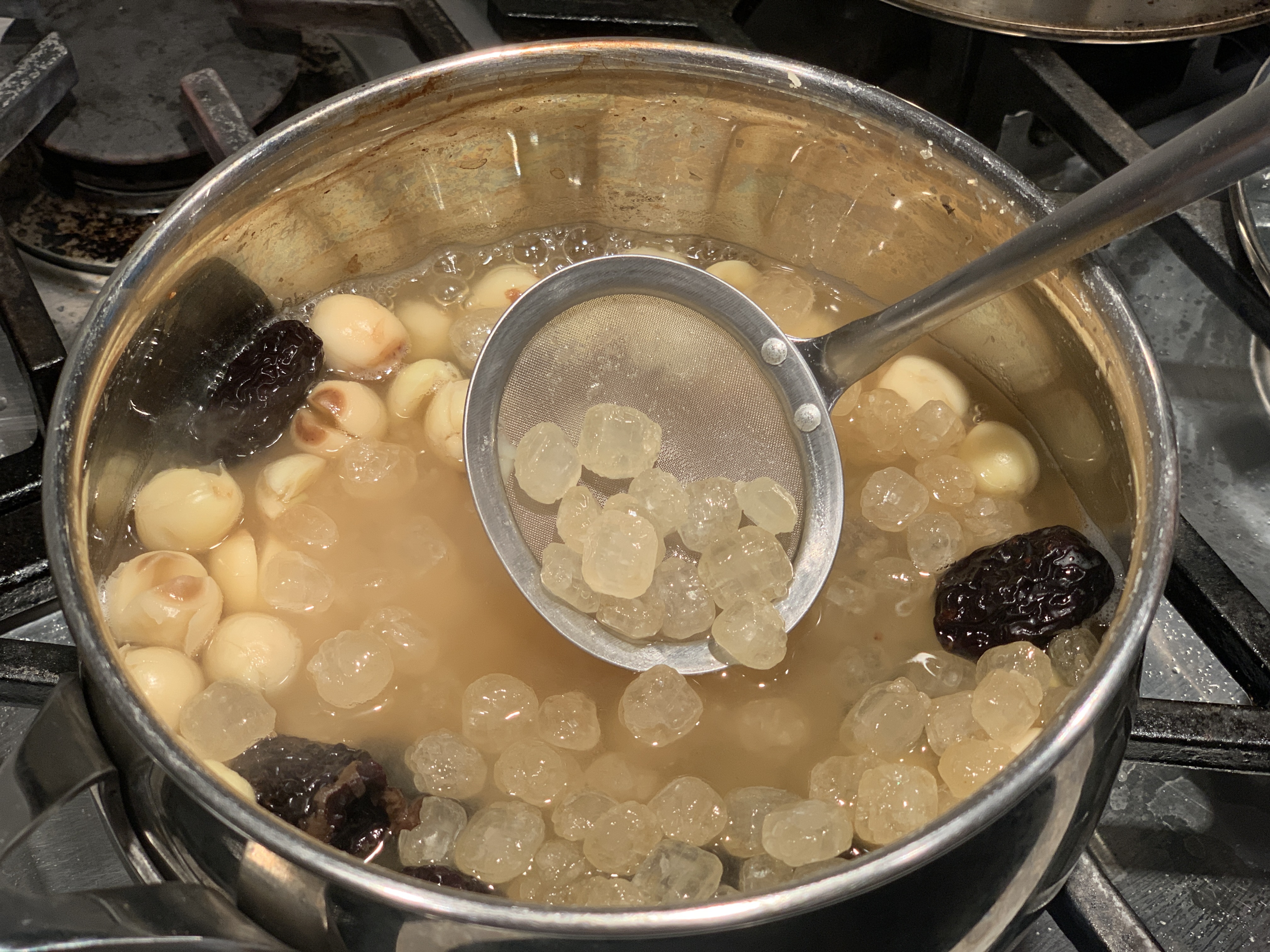
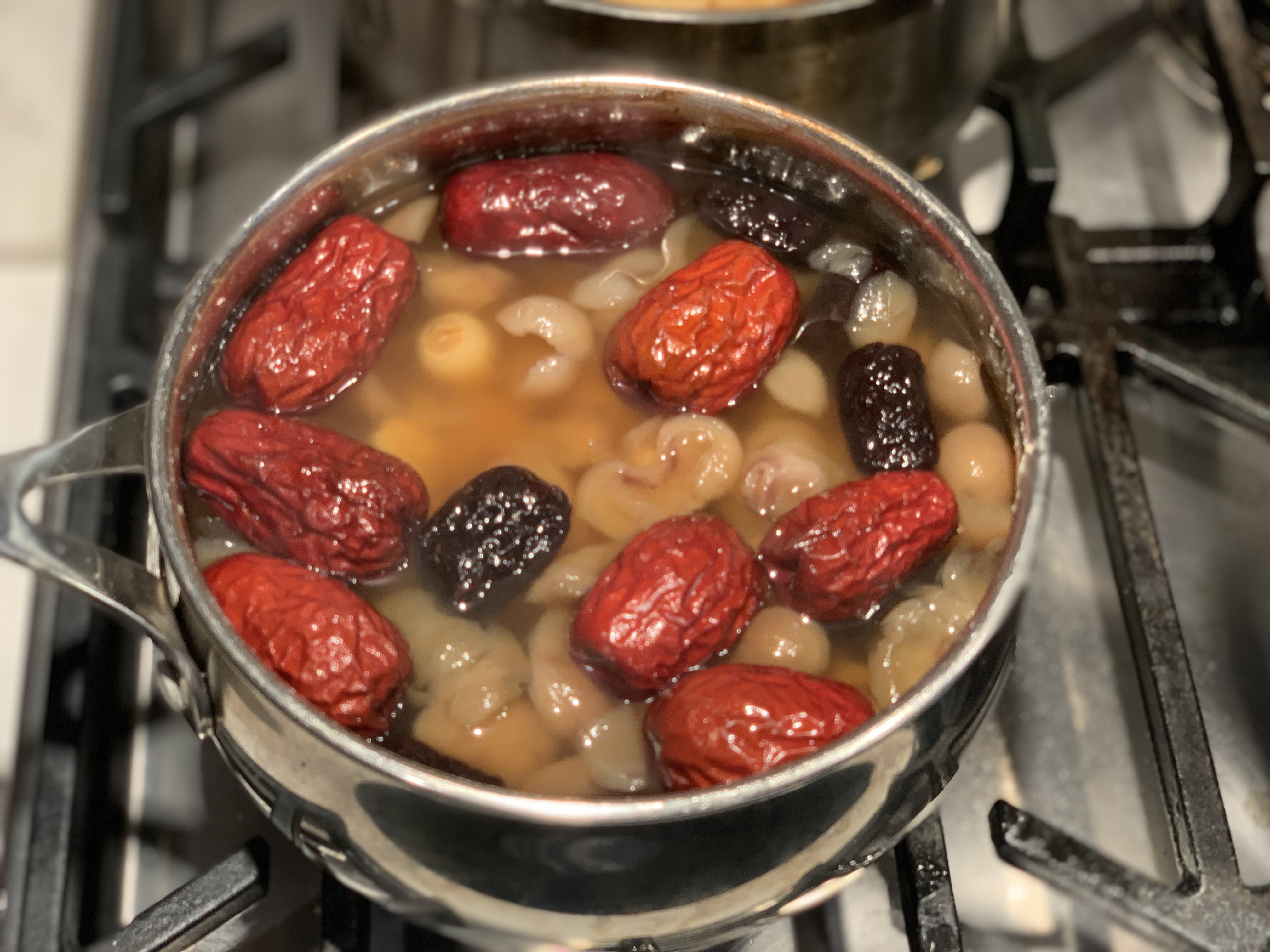
Add all the remaining ingredients and turn the heat up to medium-high and boil for another 10 minutes until the longan and other ingredients have softened and soaked up some of the sweet broth. Skim and discard any foam. Turn off the heat and let it cool.

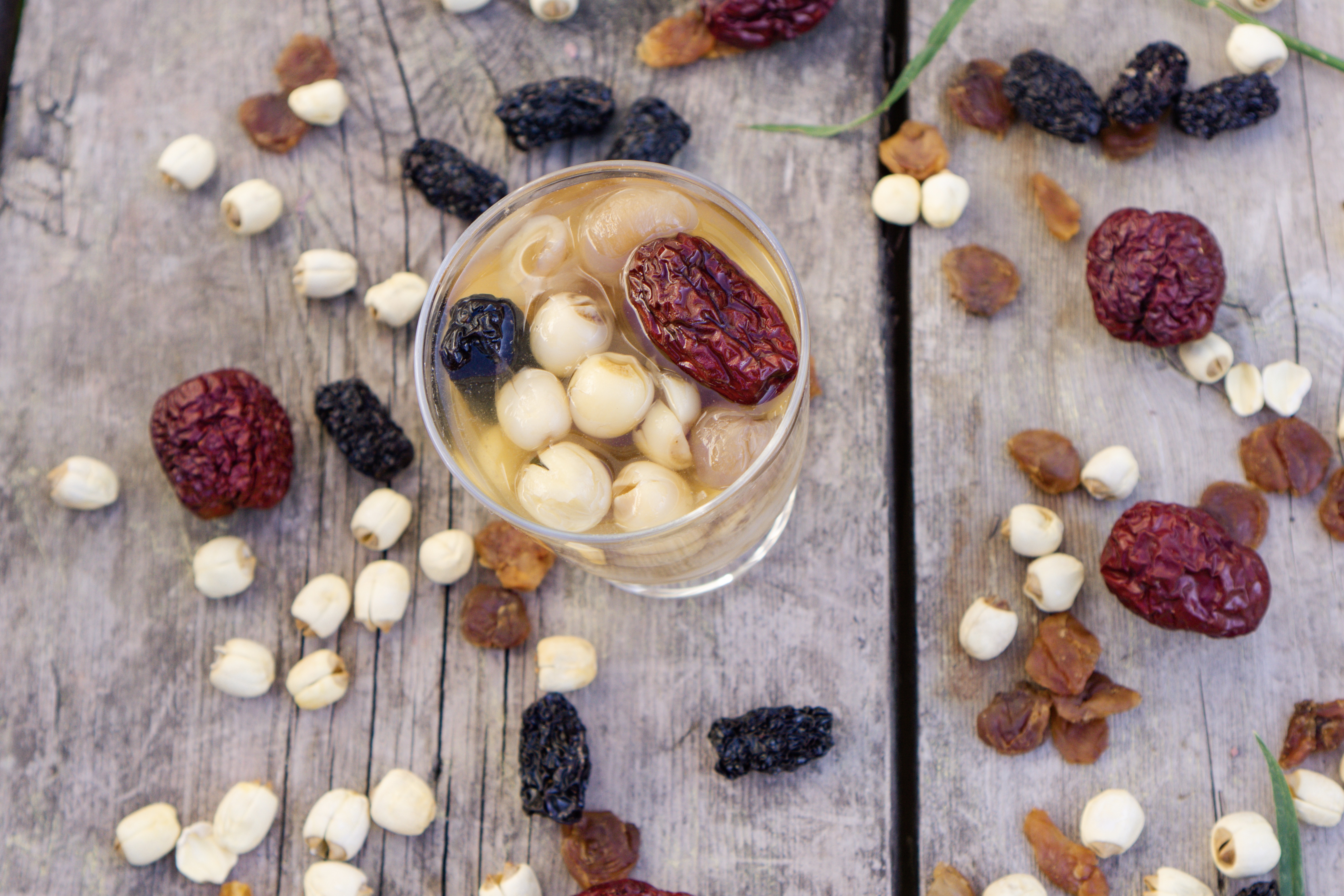
Serve this refreshing pudding chill with a generous scoop of ice for the best taste.

For more recipes, visit our EAT page or Recipe Index.

Authors:  Susan Tran and Chau Hoang

Photo Editing: Kevin Nguyen (https://www.kevwin.com/)
 

Honey Milk Bread

Ever since my first trip to Japan years ago, I have been obsessed with fluffy white bread that is drastically tastier than the US version. I could only find this at good Asian bakeries like Tous Le Jour. Due to the pandemic, milk bread was hard to come by. I scoured Youtube and blogs to find the perfect recipe and after a few trials and errors, I finally modified one that works for me.

This recipe is based on Aimee’s Cooking’s dinner rolls, where I adjusted the sugar and honey ratio and used a different bread formation. The differences make the honey flavor more pronounced and the bread less sugary tasting. The loaf method compared to the dinner roll method also gives the bread more structure while retaining the fluffiness.  I hope you like this as much as my family.

This recipe is for one bread using an 8 1/2″ x 4 1/2” loaf pan. It’s medium in difficulty and takes around 2.5 hours including a lot of waiting time.

Ingredients:

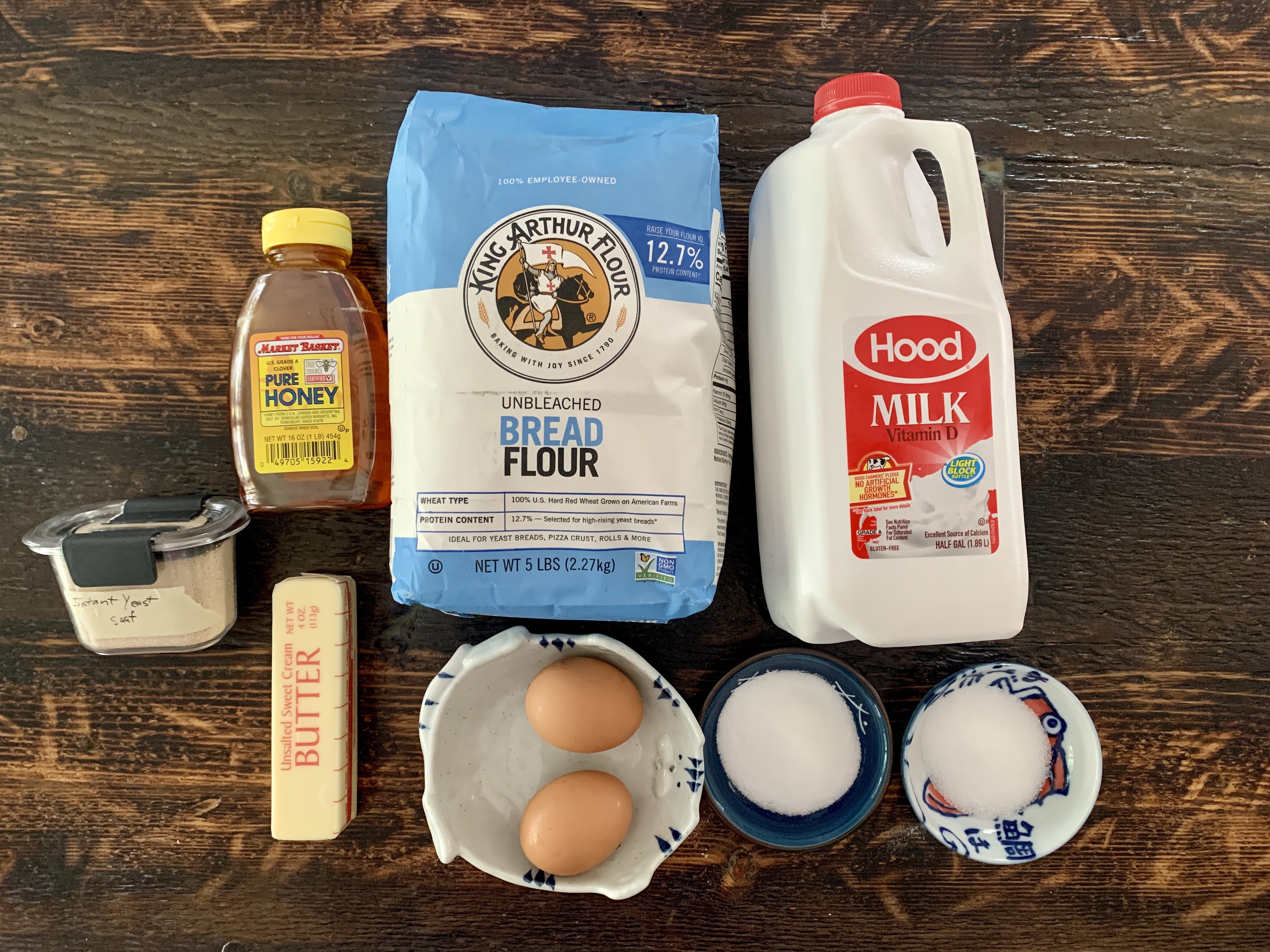
3/4 cup of milk

1 tablespoon of instant yeast (active yeast works too)

1 tablespoon of sugar

4 tablespoons of unsalted butter

1/2 tablespoon of melted unsalted butter to brush the bread at the end

1 and 1/4 teaspoons of salt

2 eggs (1 for the dough and 1 for the egg wash)

2 and 3/4 cup / 400 gram of bread flour (12.7% protein is recommended)

3 tablespoons of honey

img_7295

Directions:

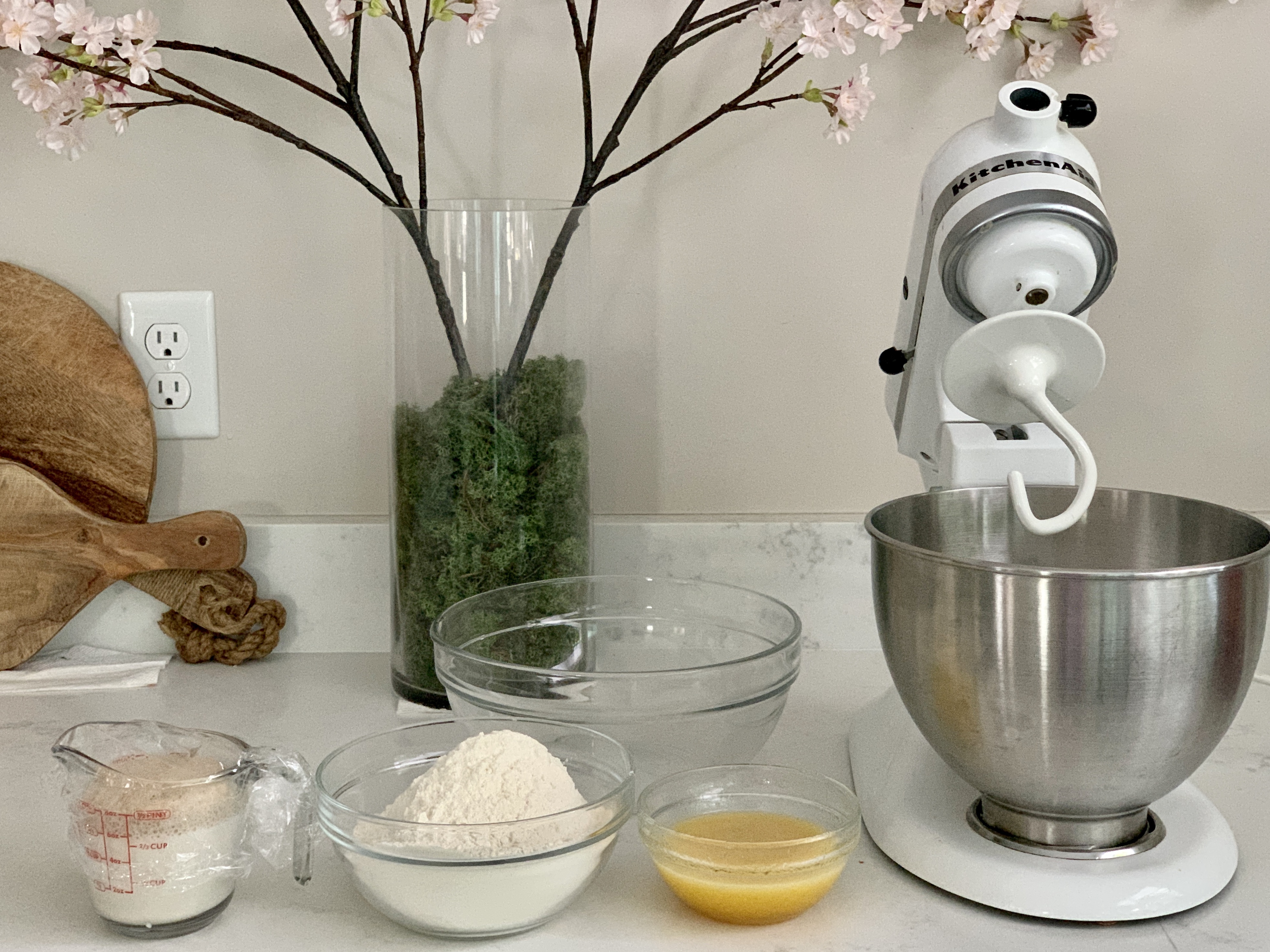
Heat 3/4 cup of milk in the microwave for 30 seconds until it becomes lukewarm.

Add 1 tablespoon of sugar and stir to dissolve.

Add 1 tablespoon of instant yeast, mix quickly and cover the bowl with plastic wrap. Set aside. (Note: instant yeast doesn’t need to be activated; however, I get the best result when I let it bloom for around 5 minutes before adding to the flour.)

In a separate bowl, melt 4 tablespoons of unsalted butter and mix with 1 and 1/4 teaspoons of salt, 3 tablespoons of honey, and 1 large egg.

img_7297

Using a stand mixer like Kitchen Aid with a dough hook, add 2 and 3/4 cup of bread flour to the mixing bowl.

img_7304

With the setting on stir (low or #1-2 for Kitchenaid mixer), slowly add the milk and yeast mixture. Next, slowly add the butter and honey mixture to the dough. This will take around a minute.

Set the mixer to medium or #4 for the Kitchenaid mixer and let the dough kneads for 10 minutes. By the end of 10 minutes, the dough should be smooth and stretchy when you pull on it.

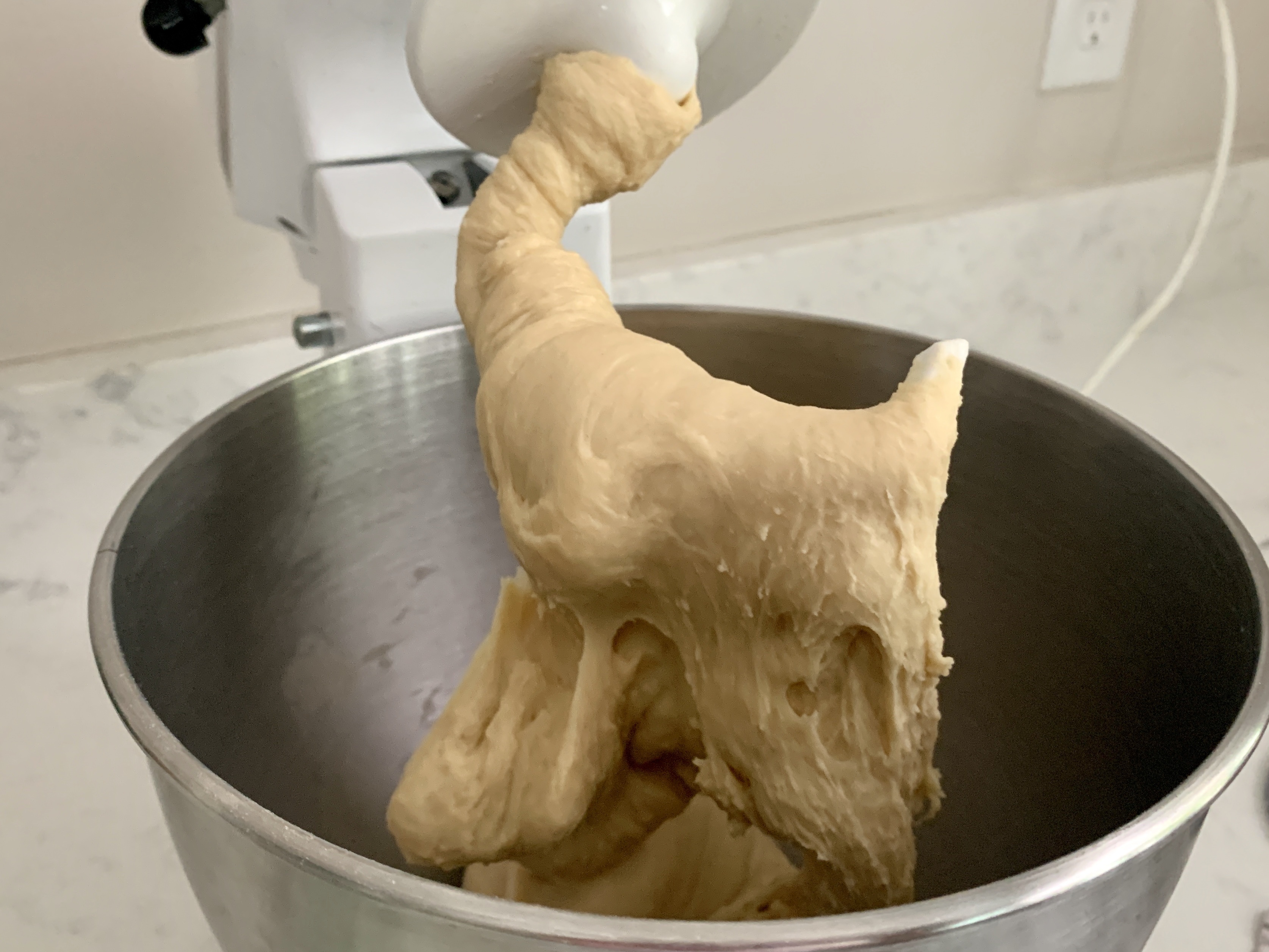
  • At 5 minutes, the dough is coming together, but is still very sticky and not smooth.

img_7325

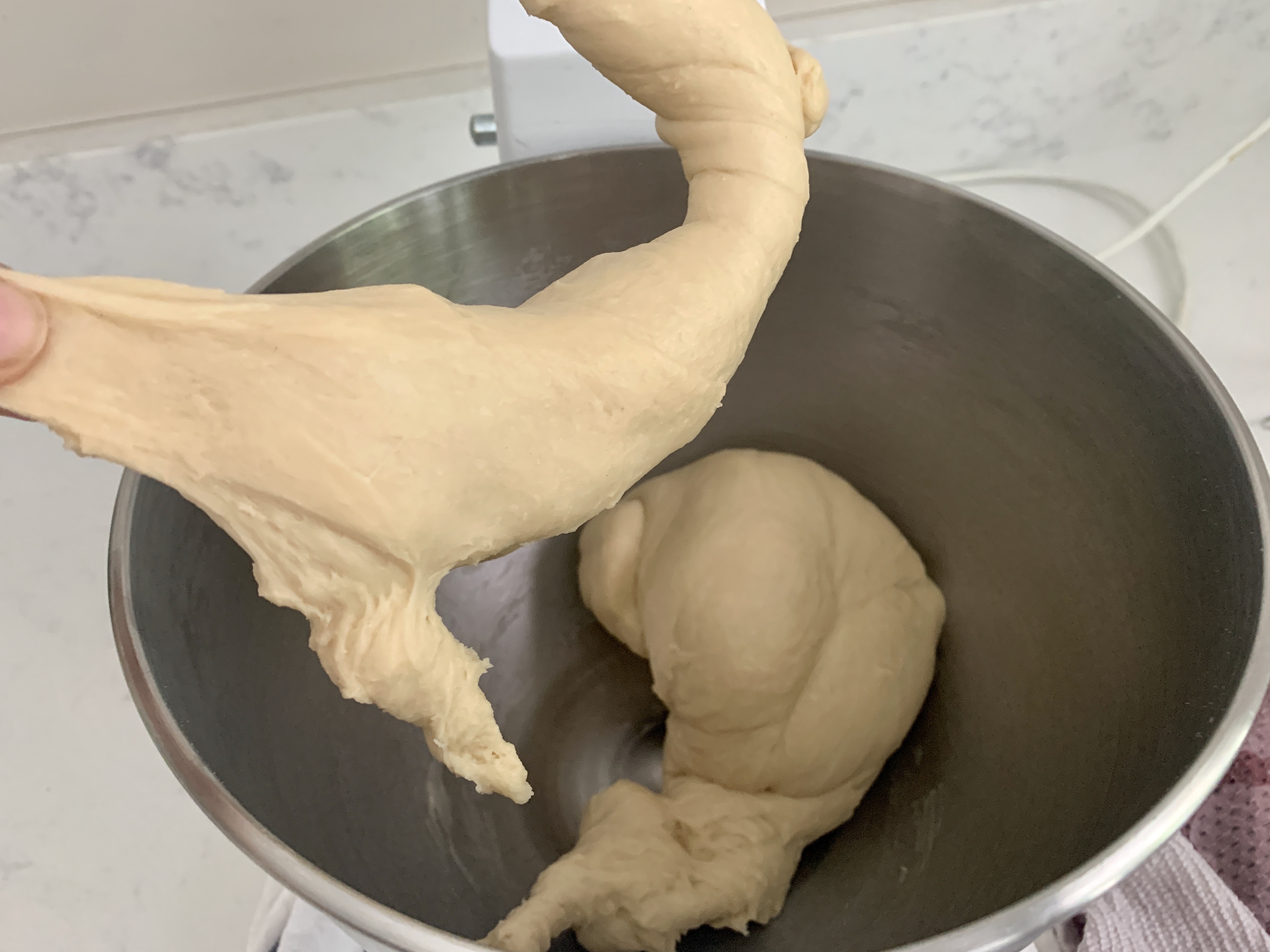
  • At 10 minutes, the dough should be smooth even when you stretch it out.

img_7331

Grease another mixing bowl with cooking spray.

Remove the dough from the mixer and form into a ball. You can do this by pulling the sides under and pinching the edges together. Rotate the dough and do the same method. You should be able to form a smooth ball within 4-5 times.

  • Stretch the side and fold under to form a ball.

  • Pinch the sides that you just pulled under, which should help to create a ball. Turn the dough 180 degrees on your hand and repeat this process until a smooth ball is formed at the top.

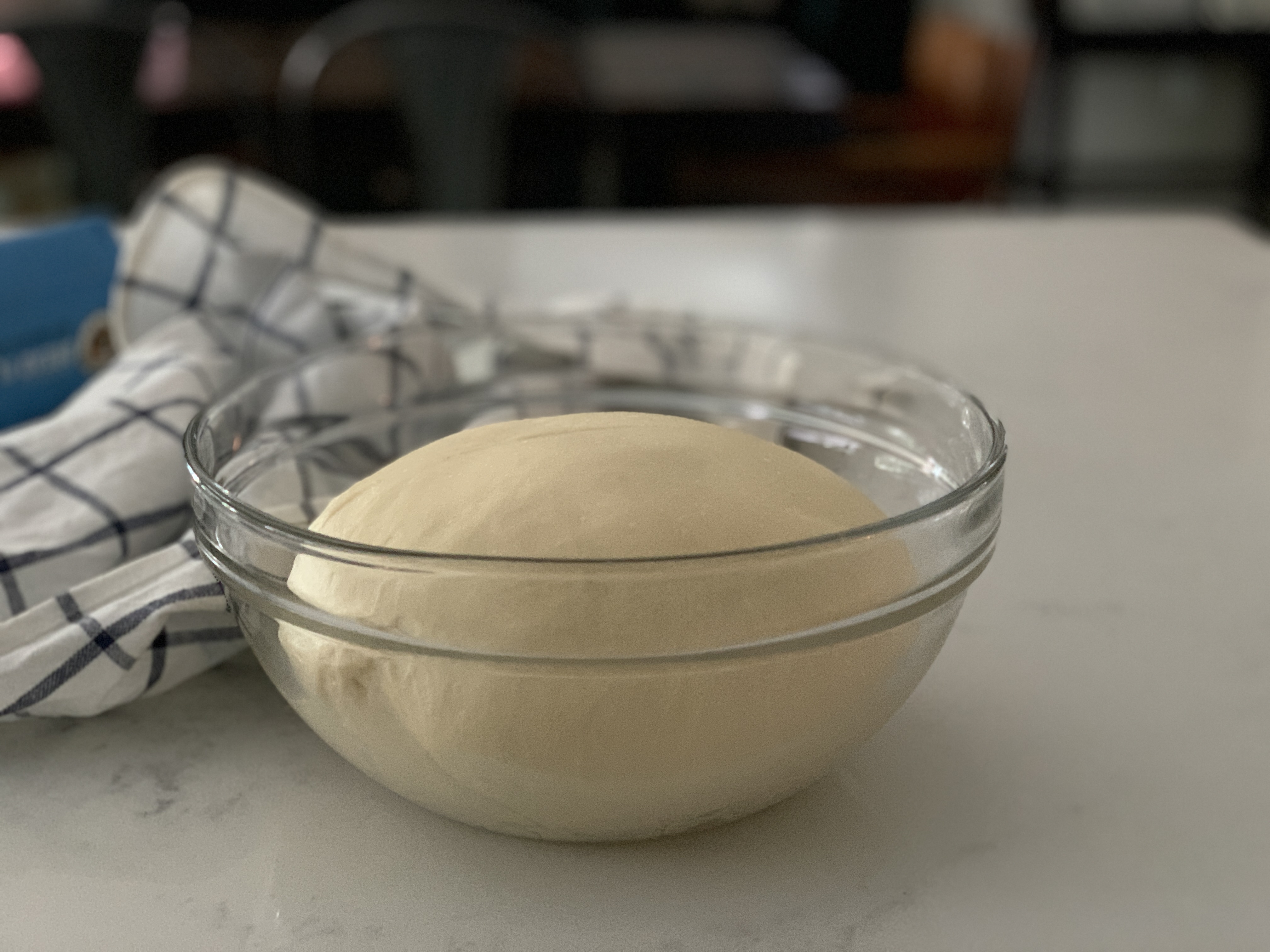
Add the dough ball to the greased bowl and cover with plastic wrap or kitchen towel. Place in a warm spot to proof for 1 hour. (Proofing is when you rest the dough and allow for the yeast to activate and for the dough to rise.) I like to proof mine in an oven with the light on. The light adds just enough heat. Your dough should double in size by the end of the hour. If it’s not, proof the dough a little longer.

After 1 hour:

img_7386

Spray your loaf pan with cooking spray.

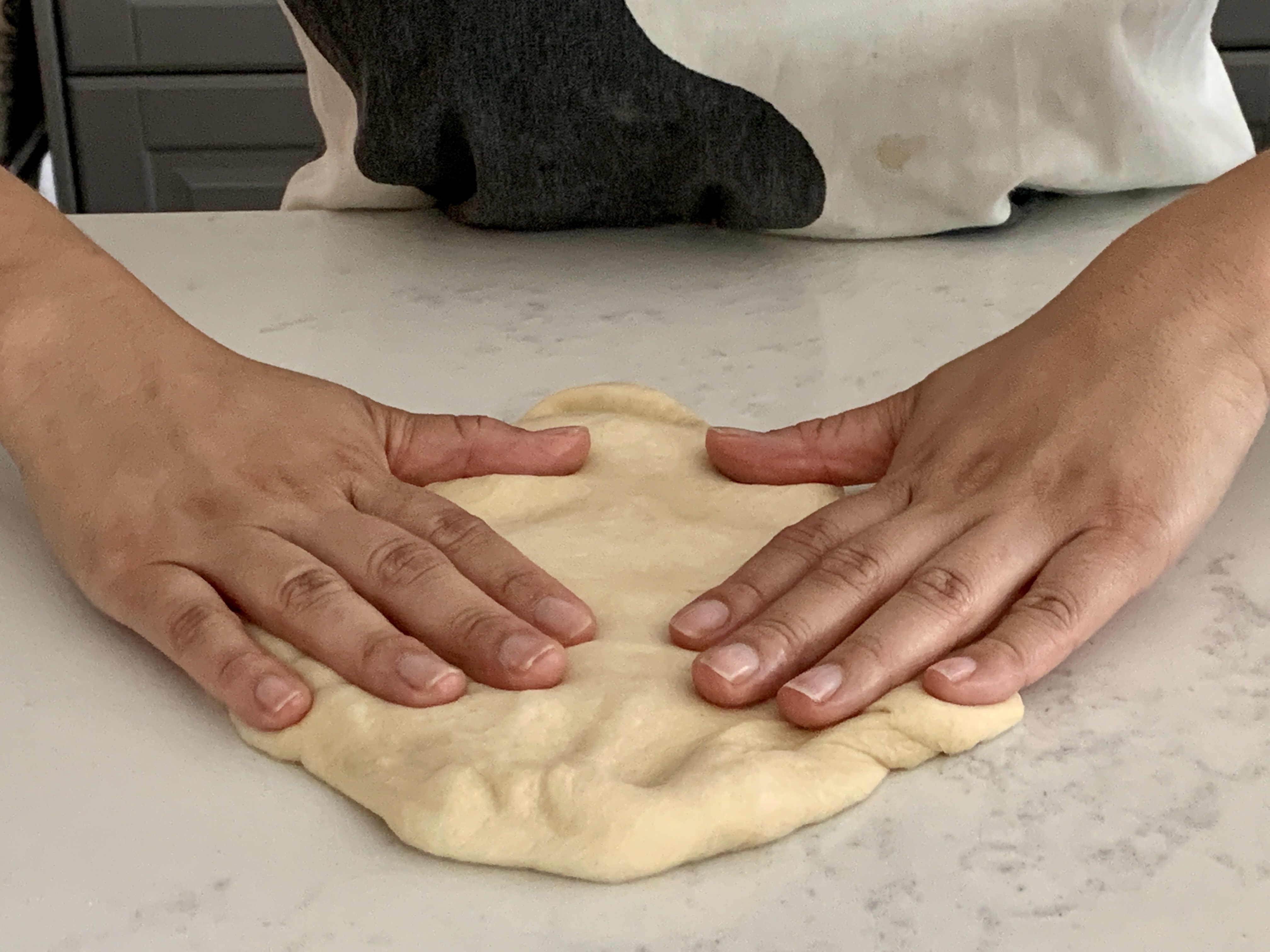
Spray the surface that you will use to knead the dough. (Since the dough is sticky, I prefer to use cooking spray rather than add more flour to maneuver it.) I also sprayed my hand before I touch the dough, so it doesn’t stick.

Pour the dough out of the bowl whereby the smooth side (top part) of the dough is touching the counter.

Knead for up to 1 minute to remove excess air. Do not over-knead this.

img_7410

Divide into 3 equal parts.

Using a rolling pin, roll 1 part into a rectangle with approximately 1/8th inch thickness. Keep a mental note of how wide your loaf pan is so that you can roll and match the width of your dough to the pan.

Fold each side in to create a 3-way fold.

Flatten the dough again into a rectangle with 1/8th inch thickness.

Starting from one end, roll the dough toward you and at each turn, pinch the dough to seal the edge. This helps create layers and makes the bread fluffy.

Continue to do that until you are close to the end. Roll the end portion as flat as possible so it will stick to the dough. Roll the dough all the way and pinch the edges to seal.

Place into the loaf pan with the smooth side facing up (one part on each end and one part in the middle of the pan).

img_7461

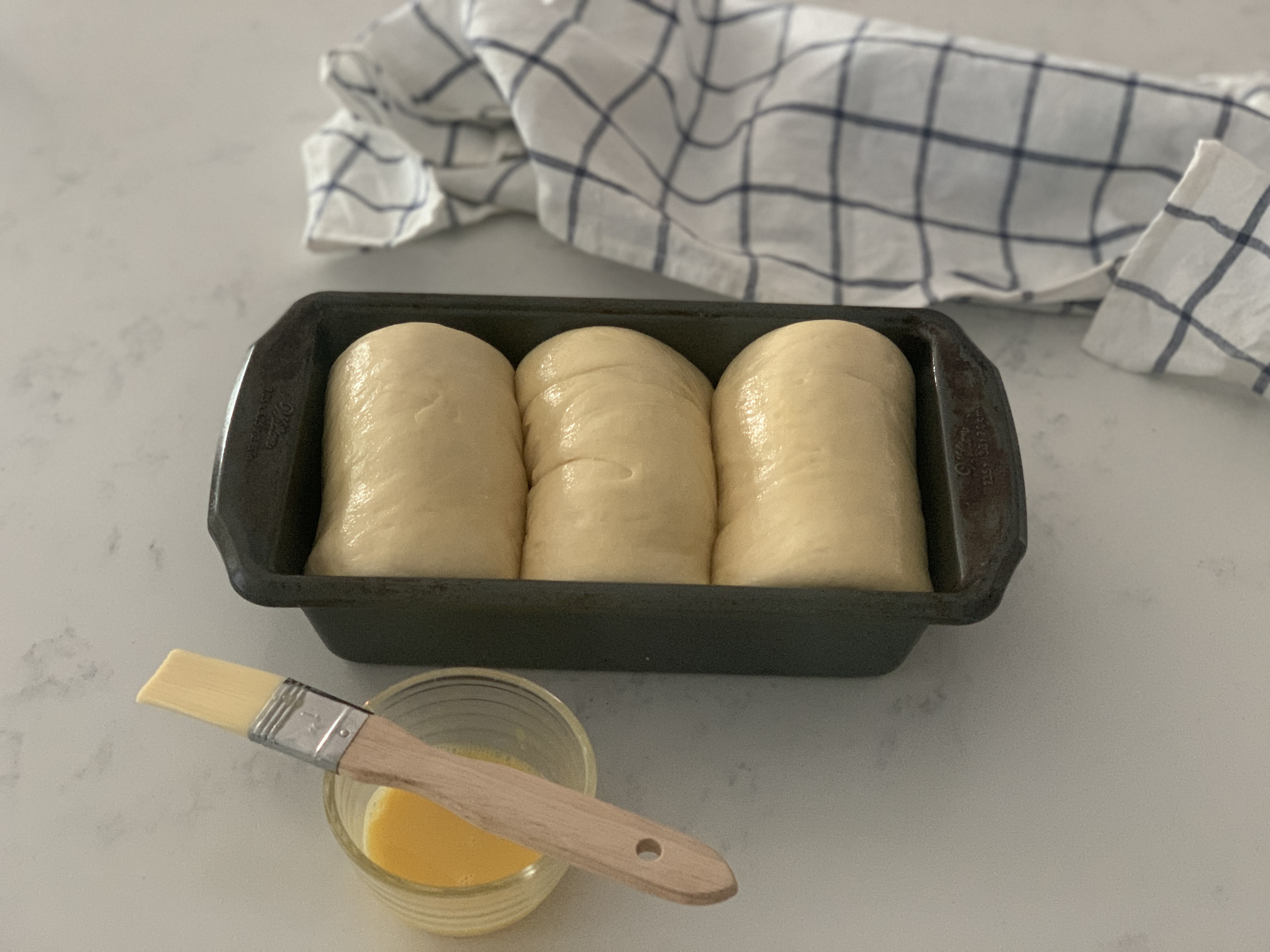
Cover with a kitchen towel and let the bread proof for the second time for 35-40 minutes. The goal is to have the dough rise just to the top of the loaf pan. If the dough proof for too long, the bread may collapse after baking and become dense because there is not enough support in the bread structure.

Brush a light layer of egg wash onto the top of the dough. If the egg wash is brushed on too thick, you may not get a consistent color after it bakes.

img_7466

Preheat the oven at 350F and bake for 30 minutes. Test the bread with a toothpick. If it comes out clean, then the bread is done. Carefully remove the bread from the pan and let it cool on a rack.

img_7476

Brush melted butter onto the bread for more flavor and for that glistening shine.

img_7632


For more recipes, visit our EAT page or Recipe Index.

Author: Chau Hoang

Additional Credit: Aimee’s Cooking Youtube

Photo Editing: Kevin Nguyen (https://www.kevwin.com/)
Viet-Cajun Butter Sauce for Seafood

Like all good recipes, I accidentally created this addicting crack sauce (per my foodie family) when I was experimenting with new toppings to take steamed seafood up a notch. In the summer, our family likes to have a variety of crustacean and shellfish. Viet-Cajun style butter sauce has been popular for seafood boil starting in the southern region of the US for a few years now. This sauce is not for the faint of heart…literally, as it comprises of melted butter and a lot of different seasoning. This sauce will make you the star at your next seafood feast.

This sauce serves up to 8. You can always freeze the leftovers.

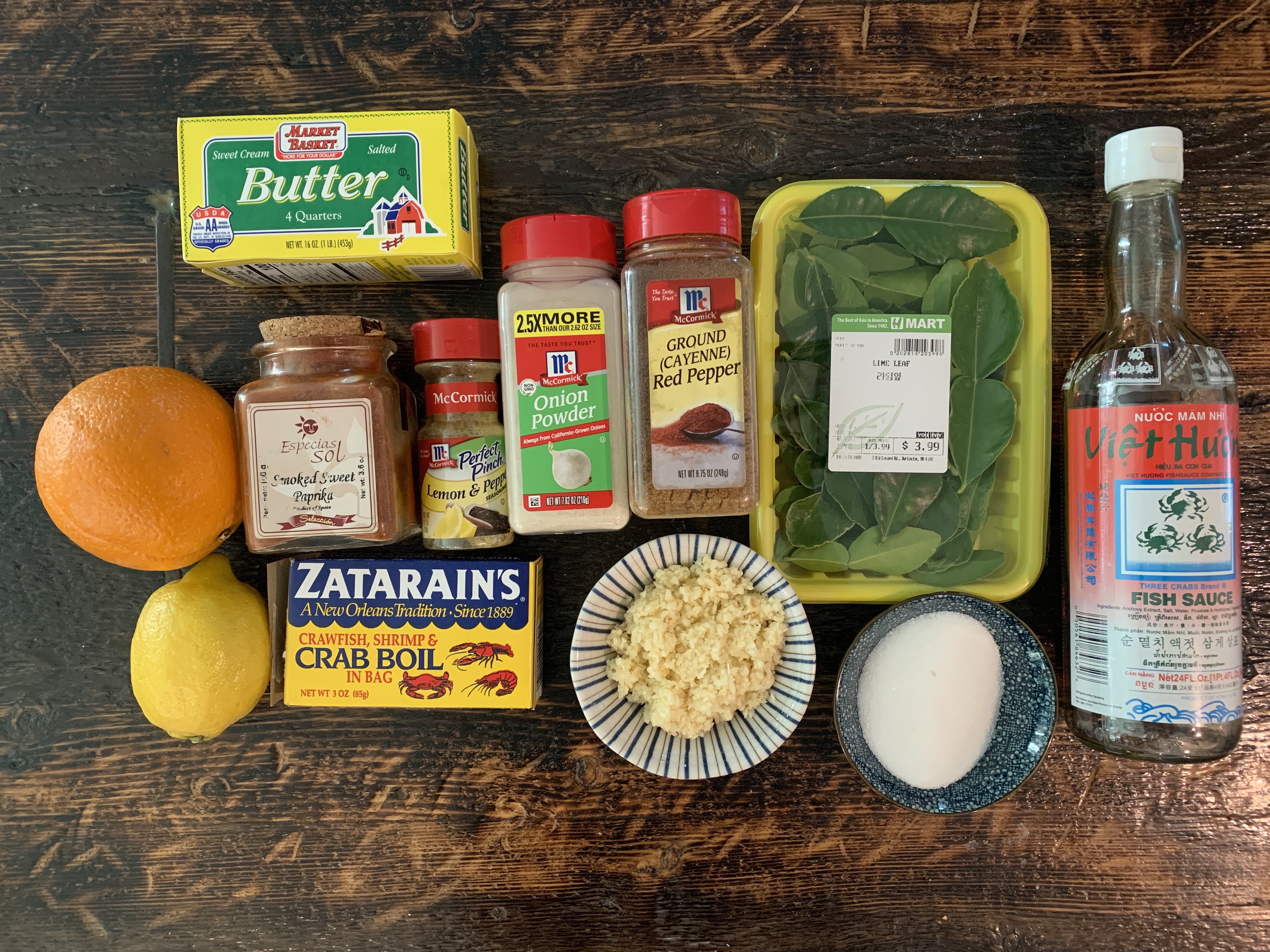
Ingredients:

1 large orange

1 large lemon

4 sticks of salted butter

1/3 cup + 1 tablespoon of fish sauce

1/4 cup + 1/2 tablespoon of sugar

6 tablespoons of minced garlic

1/2 tablespoon of cajun boil seasoning like Zatarain’s

1 tablespoon of lemon pepper powder

1 tablespoon of paprika

1 tablespoon of cayenne pepper

1 tablespoon of onion powder

4 Thai Kaffir lime leaves (fresh or dried)

img_7101

Directions:

In a small pot, melt 4 sticks of butter on medium-low heat. Add 6 tablespoons of minced garlic. Be vigilant to not burn the butter.

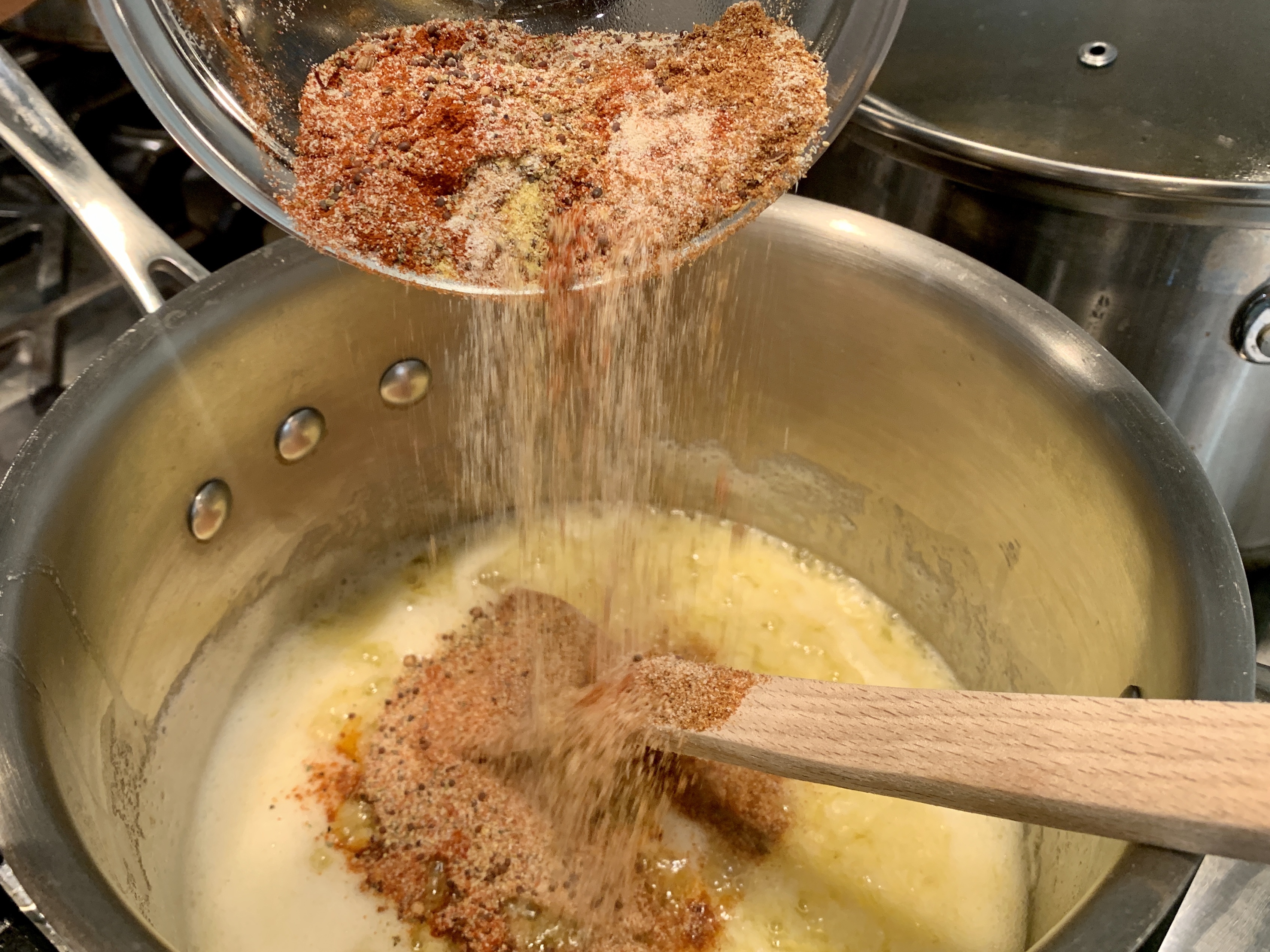
While the butter melts, add all the seasoning below:

  • 1/2 tablespoon of cajun boil seasoning like Zatarain
  • 1 tablespoon of lemon pepper powder
  • 1 tablespoon of paprika
  • 1 tablespoon of cayenne pepper
  • 1 tablespoon of onion powder

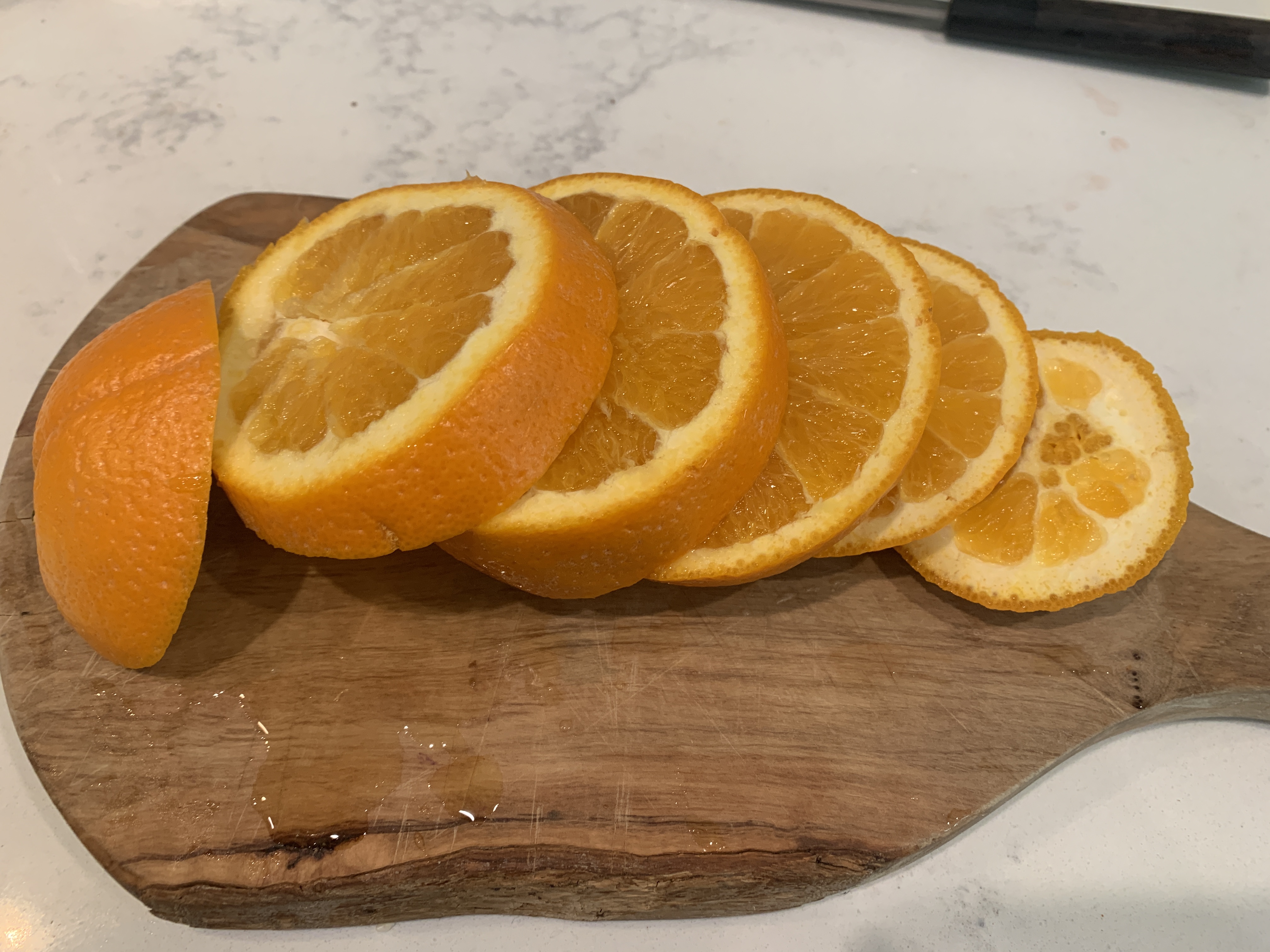
Cut the lemon and orange into thick slices, squeeze the juice directly into the sauce and add the slices to the pot.

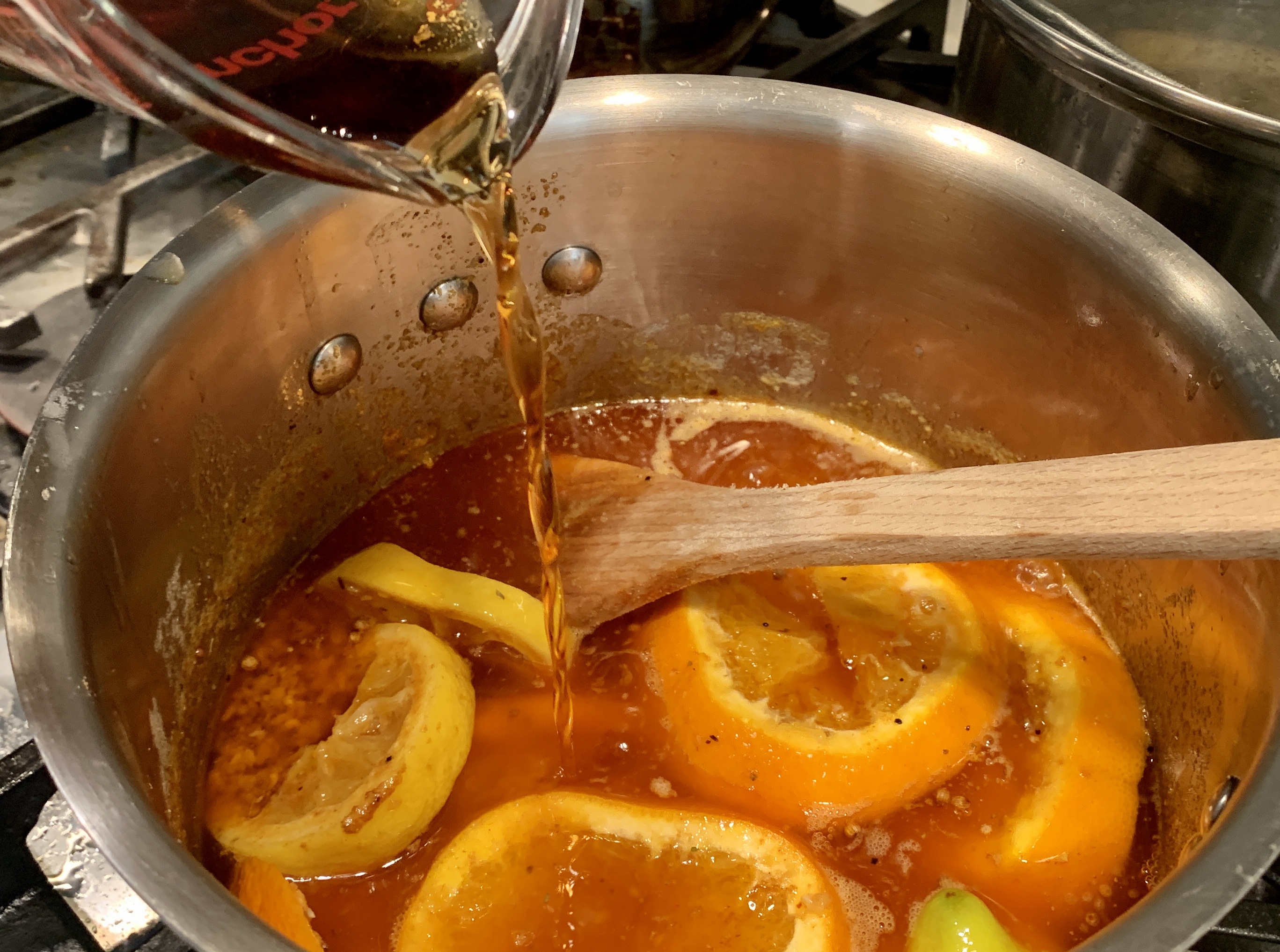
Add 1/3 cup and 1 tablespoon of fish sauce and 1/4 cup and 1/2 tablespoon of sugar.

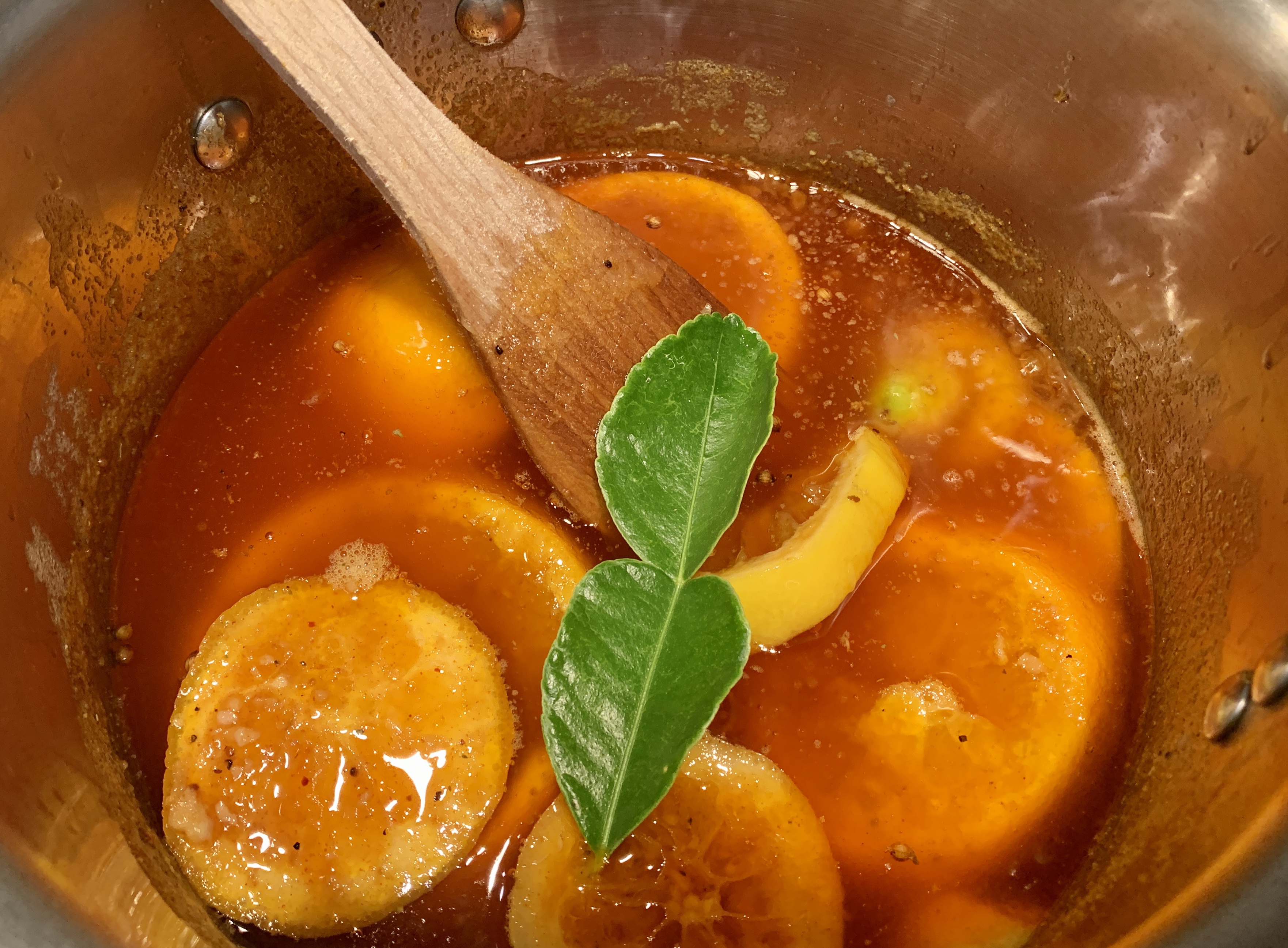
Add 4 Thai Kaffir lime leaves and  simmer the butter on low for another 5 minutes until all the ingredients are fully incorporated and the butter has carmelized (turn light golden).

img_7240

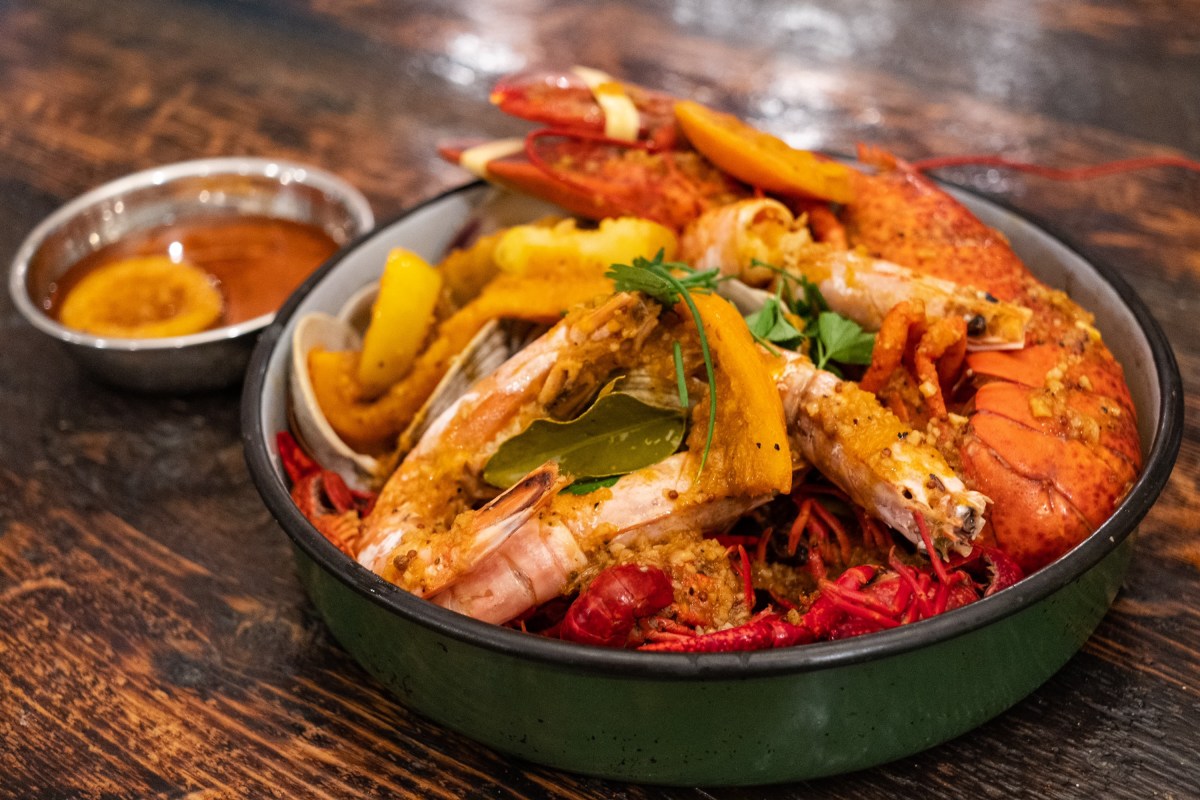
Pour over the steamed seafood or serve as a sauce on the side.

For more recipes, visit our EAT page or Recipe Index.

Author:  Chau Hoang

Photo: Kevin Nguyen (https://www.kevwin.com/)
Refreshing Summer Slaw

I randomly created this refreshing and crunchy slaw during our quarantine when we ran out of everything else. The key ingredients are Asian pear, apple and crab sticks. The family devoured it and kept asking for more.  Furthermore, I also found that it keeps very well in the fridge and tastes better the longer it marinates.  This slaw goes well as salad for a meal or a side dish to your next BBQ.

This recipe is rated easy and serves 2 as a main dish.

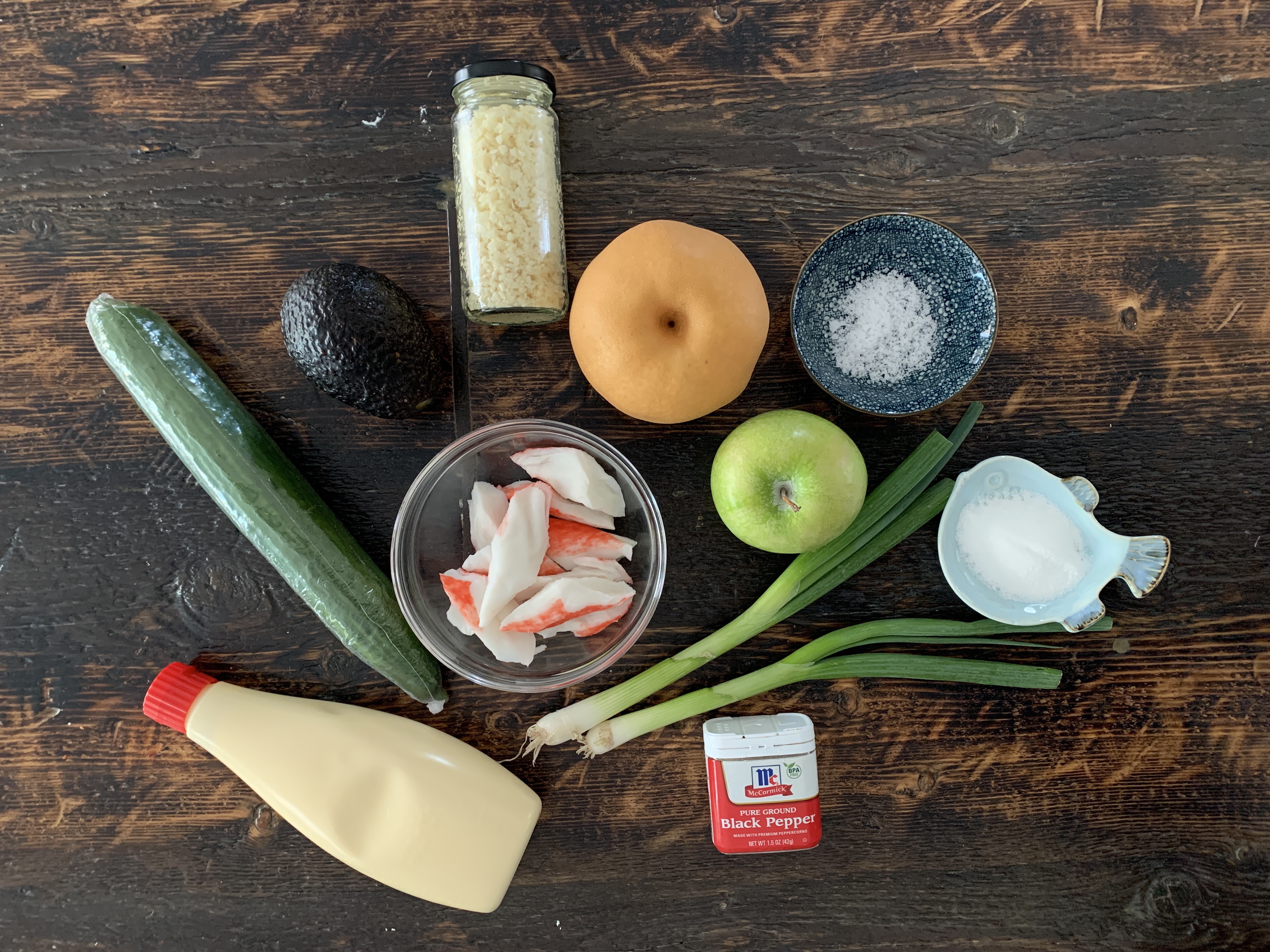
Ingredients:

1/2 ripened avocado (cubed)

1 green apple

1/2 English cucumber

1 Asian pear

2 scallion finely chopped

1/2 tbsp of minced garlic

6 crab sticks shredded

1/3 tsp of sugar

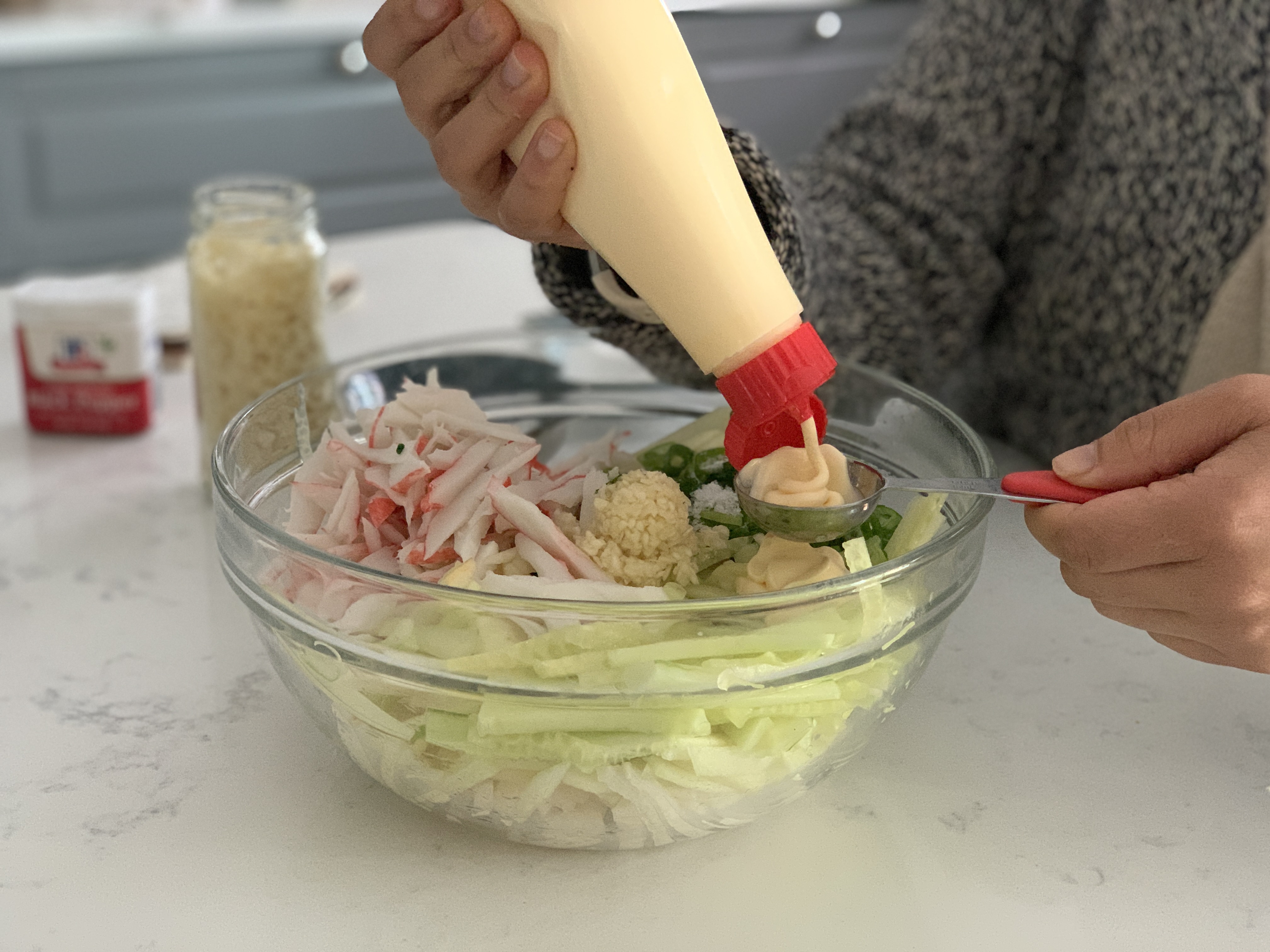
1 and 1/2 tbsp of Kewpie mayo (regular mayo will work, but you will not get the tangy-sweet taste that you will get with Japanese mayo)

1/4 tsp of salt

1/4 tsp of pepper

Direction:

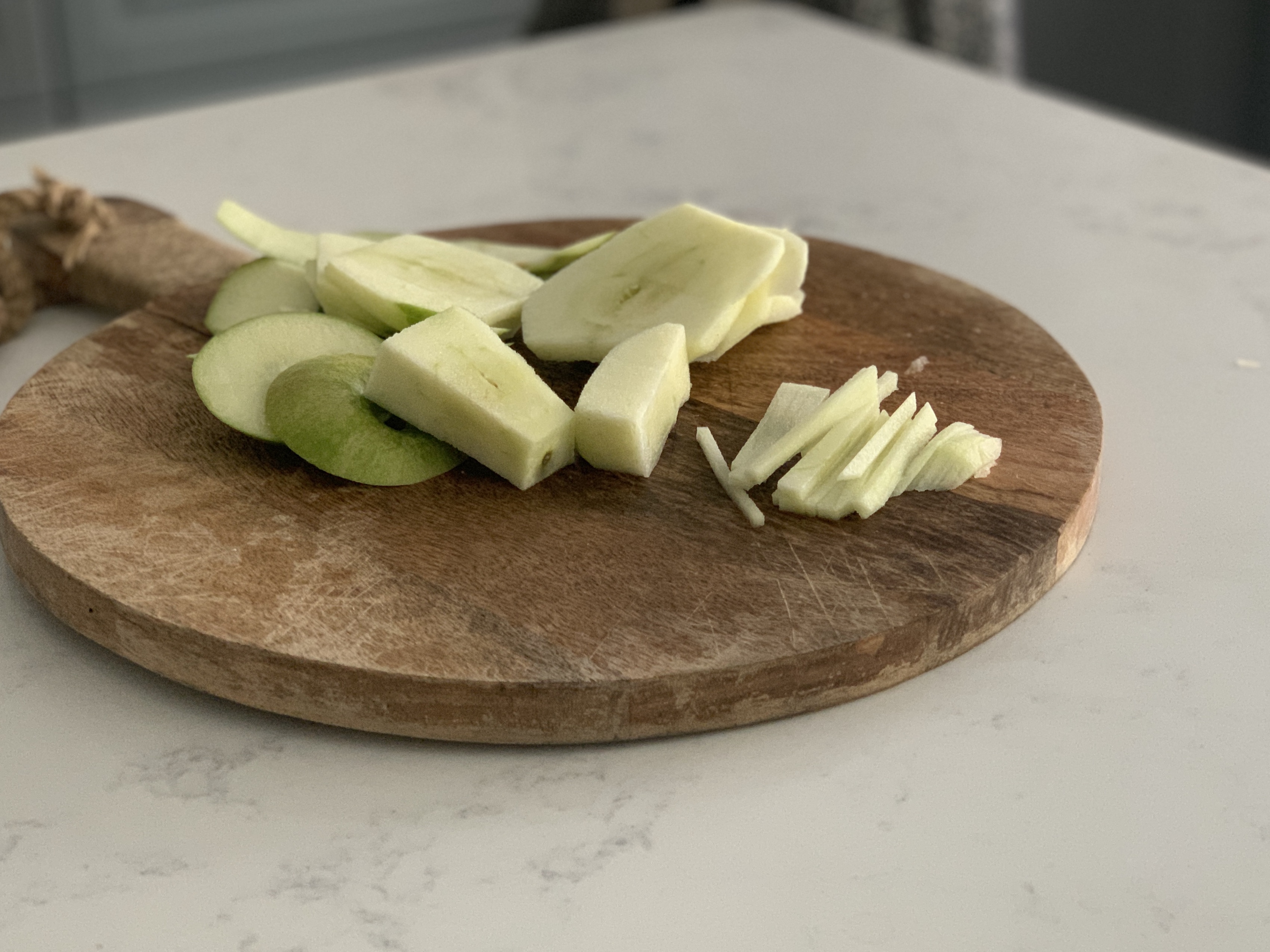
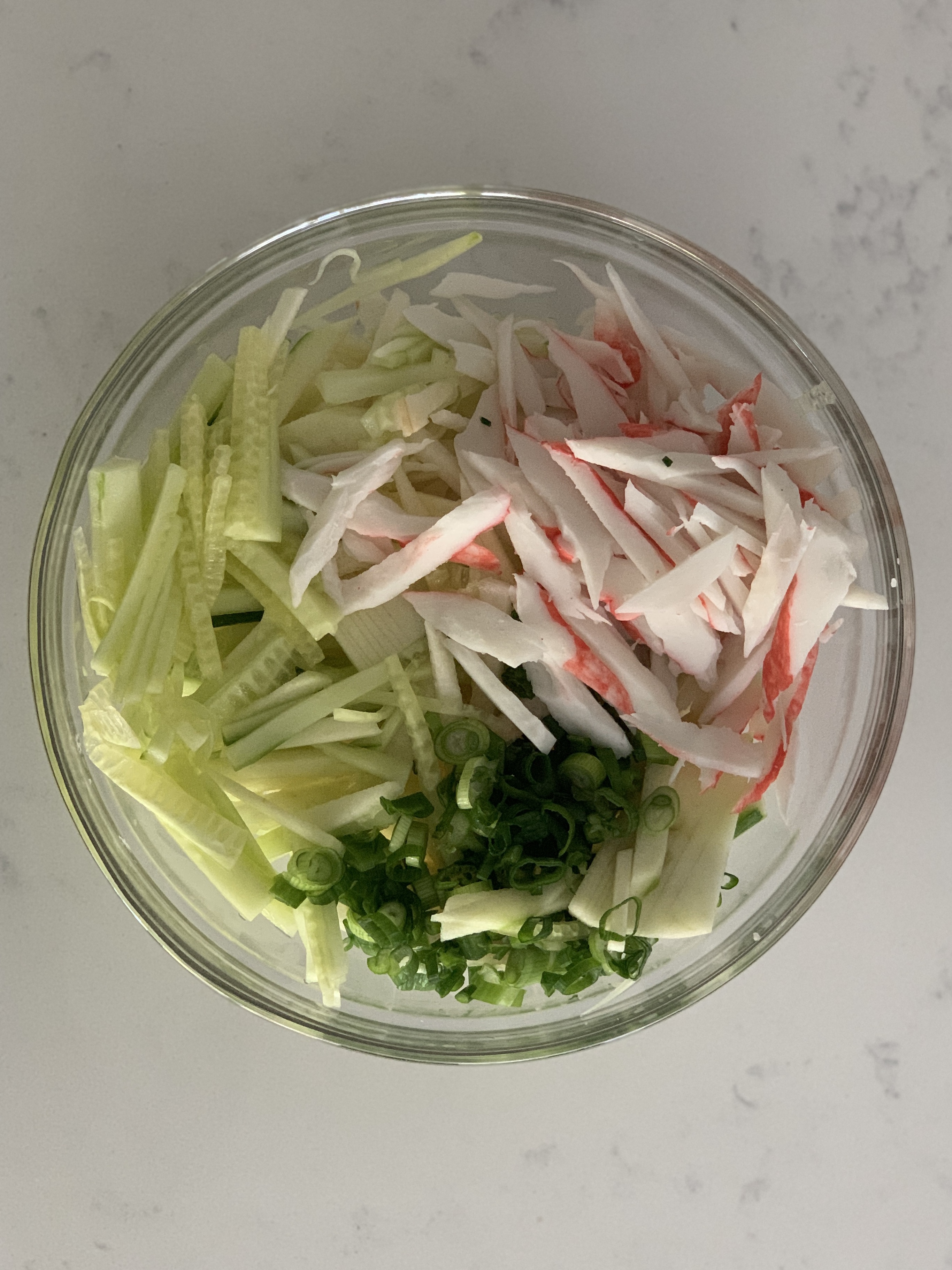
Julienne the apples, Asian pears, and English cucumbers into matchsticks and place into a large bowl.

Finely dice 2 scallions (discard the white ends) and add to the chopped fruit.

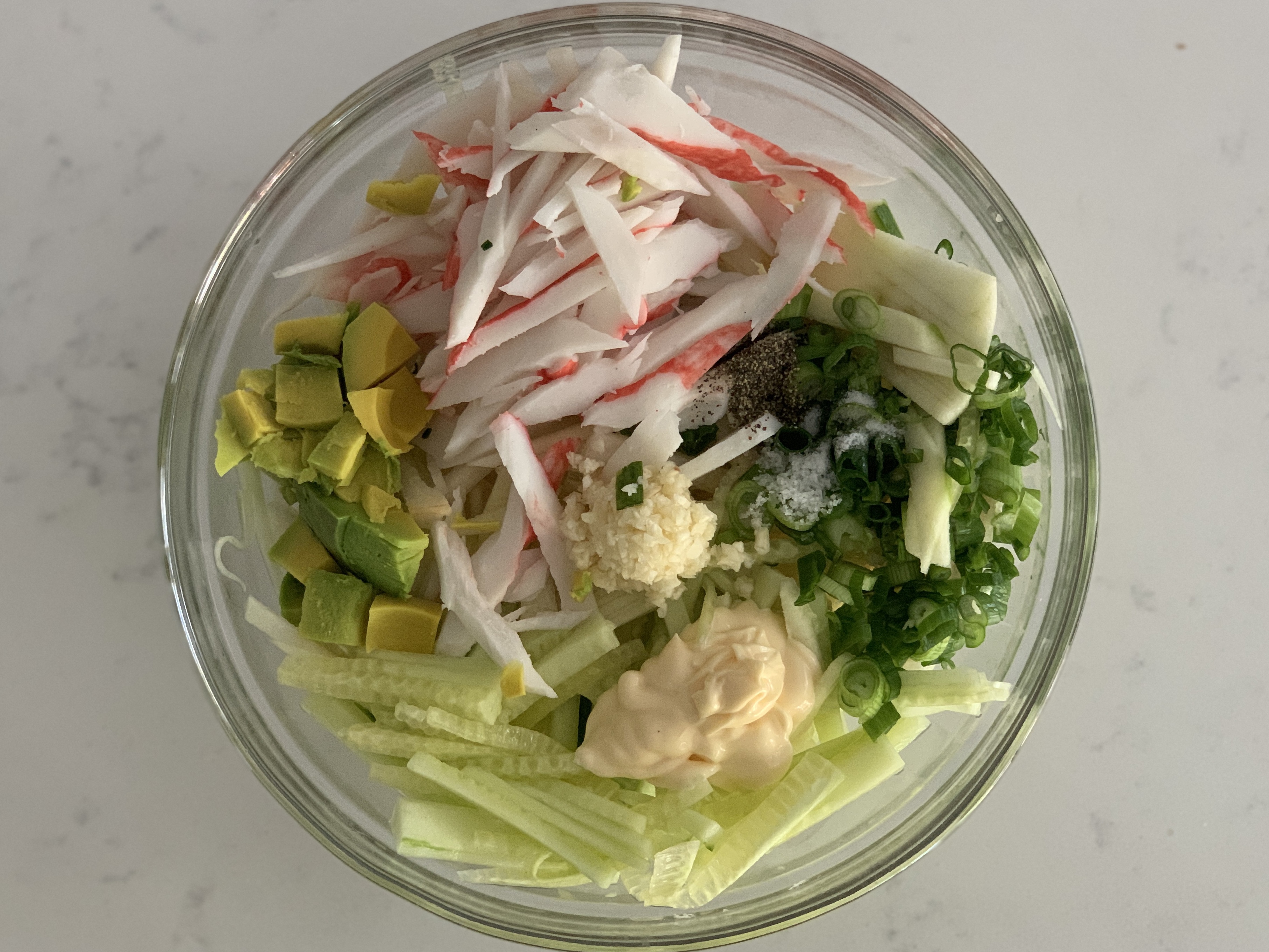
Scoop out half of an avocado, cube and add to the mixture.

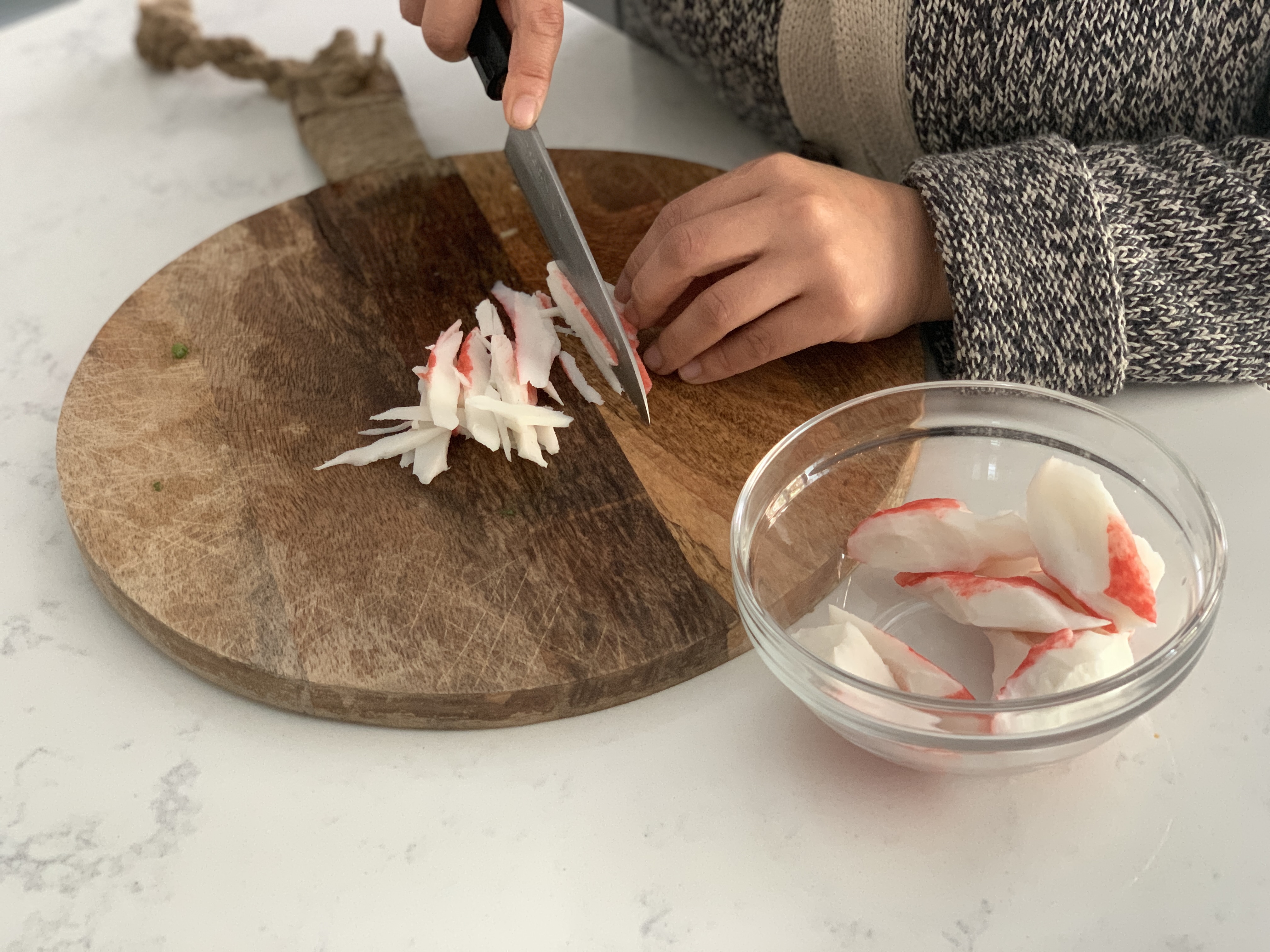
Shred the crab sticks by hand and add to the slaw.

Add the minced garlic, sugar, salt, pepper and Kewpie mayo.

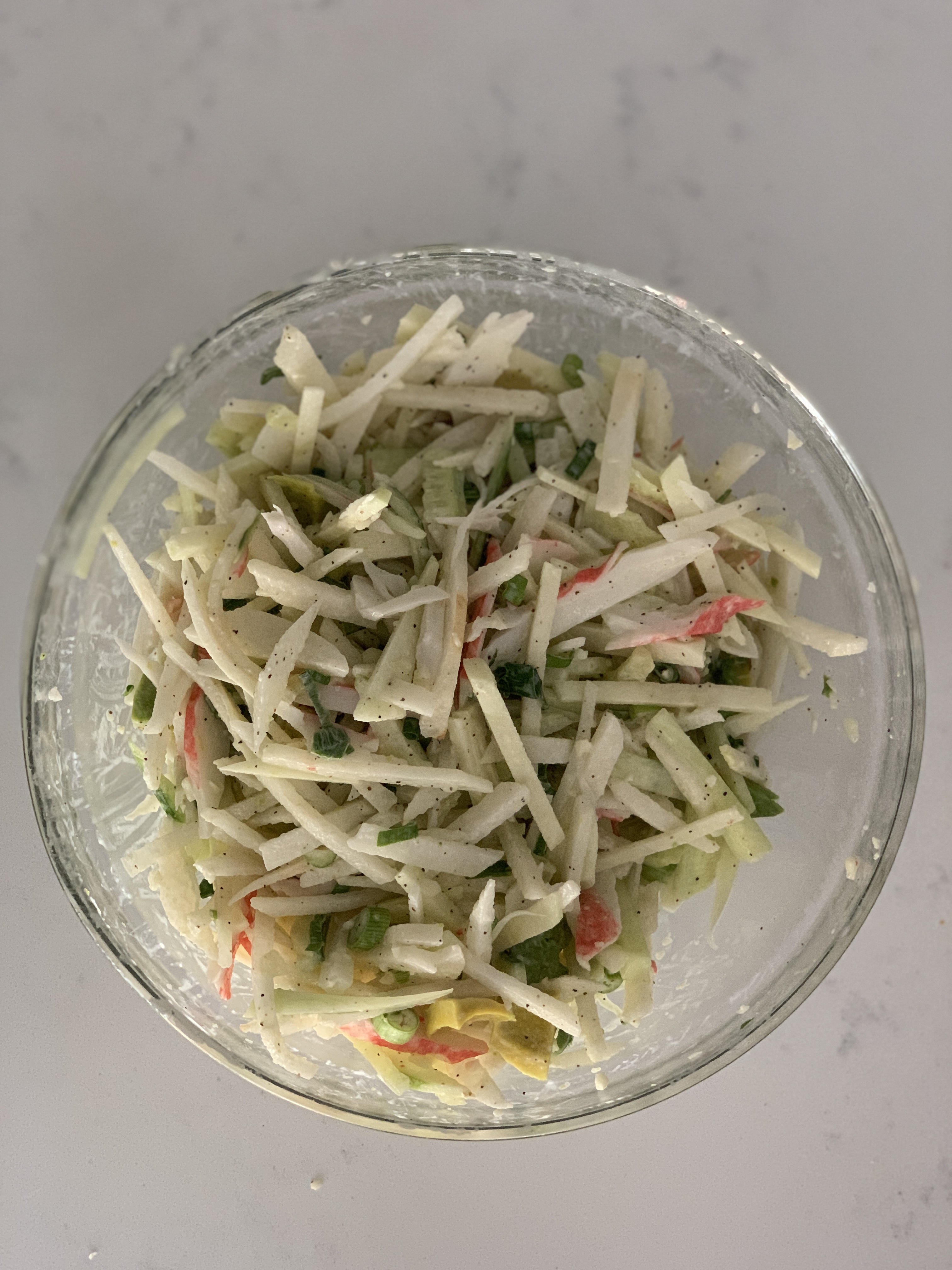
Mix the ingredients well and set aside for at least 15 minutes before serving.

This will stay in the fridge for up to a week.

img_5041

For more recipes, visit our EAT page or Recipe Index.

Authors: Madison

The Beginner Gardener Series: May 2020 Experience

Gardening is all about trials and errors. You will likely make mistakes, but also gain insights into being a better gardener.  Here is my list of successes and failures so far this year:

1- I was over-eager to acclimate my indoor seedlings in late April… and half of them died.   Luckily, I overseeded, so I had backups. For one, my cucumbers struggled to thrive in temperatures ranging from 30 to 50F, resulting in only two out of ten indoor seedlings looking well enough to be put in the ground.  I had to direct seed the rest and hope for the best.

2- I was ill early this spring and my husband did not pay close attention to the indoor seedlings. Consequently, they suffered from a lack of water and not enough time under the grow lights. We had to discard a large portion of them and so all of our efforts were for naught.

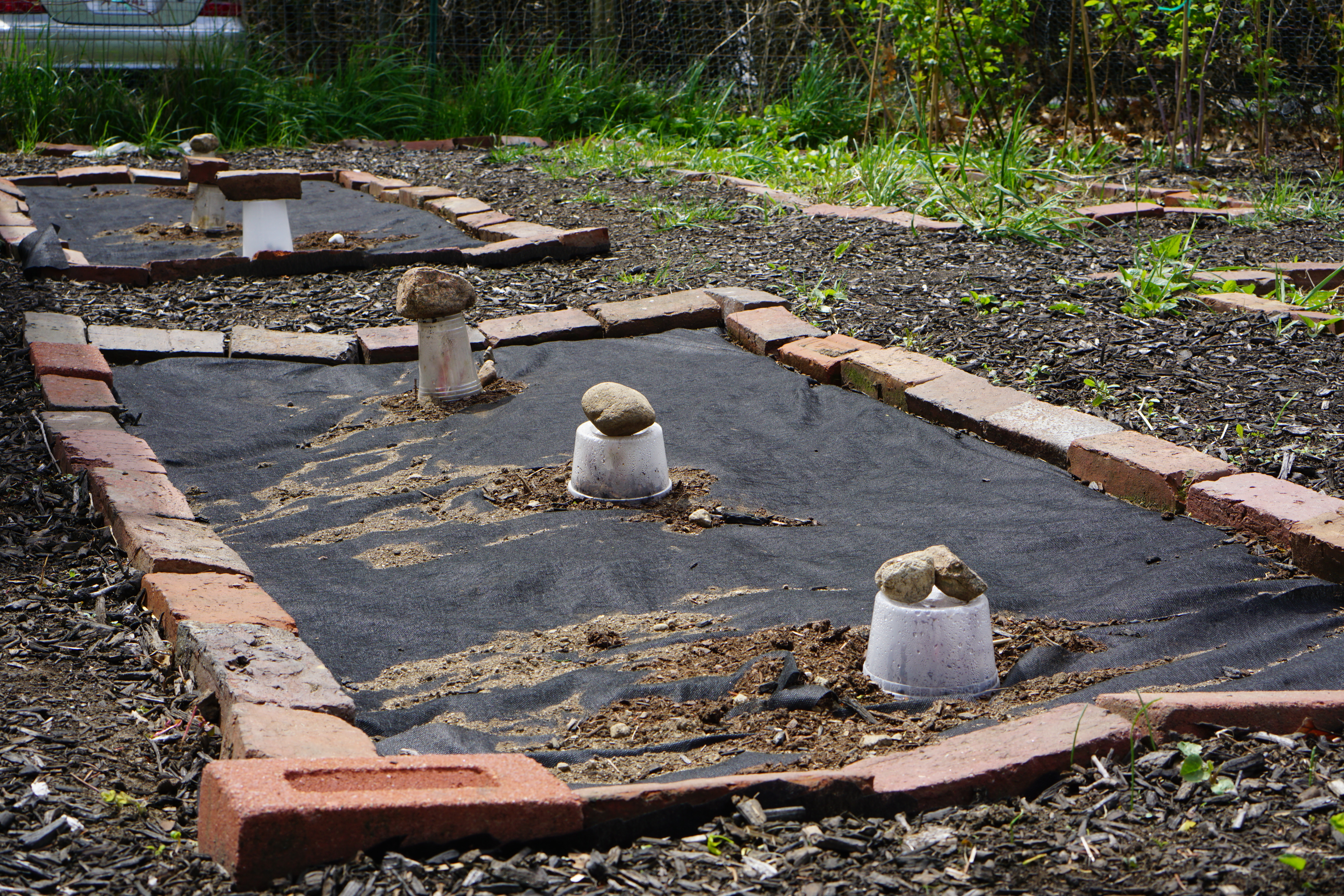
3- I discovered that I can utilize SOLO cups, takeout containers, empty clear jars, etc. as a cheap cloche to protect young plants.  For the cold snap that could have decimated my plants, an extra layer of thick clear leftover painter sheet over the SOLO cups did the trick. This mimicked a greenhouse environment and helped my plants survive the random arctic blast!

DSC06876DSC06884


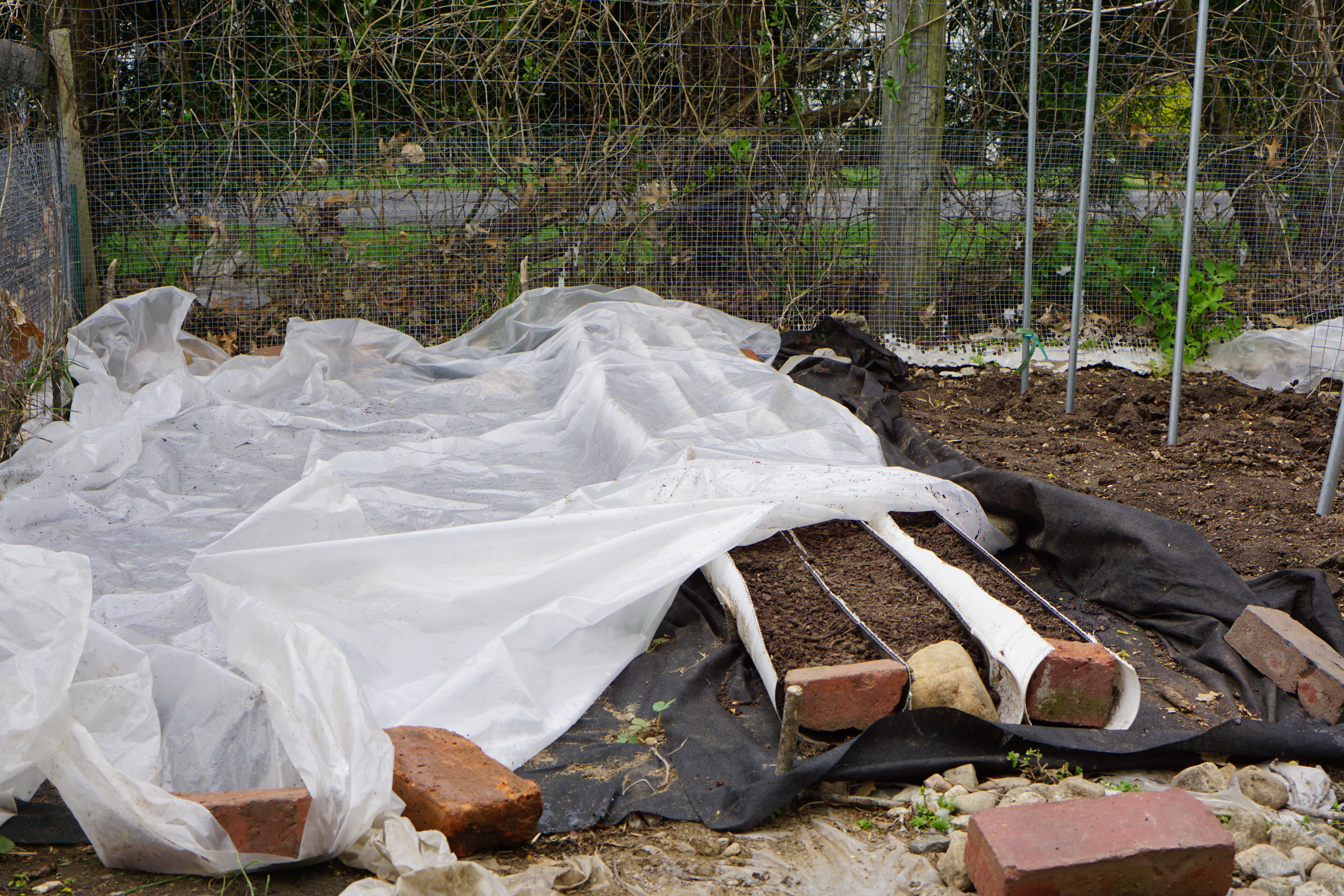
4- I cleared a section of the garden last year and experimented with black weed fabrics for several months.  When I went to uncover it for this year’s planting, I found that all weeds underneath had died!  It’s a useful trick if you plan to expand your garden and don’t want to weed all day long.

Weed fabric

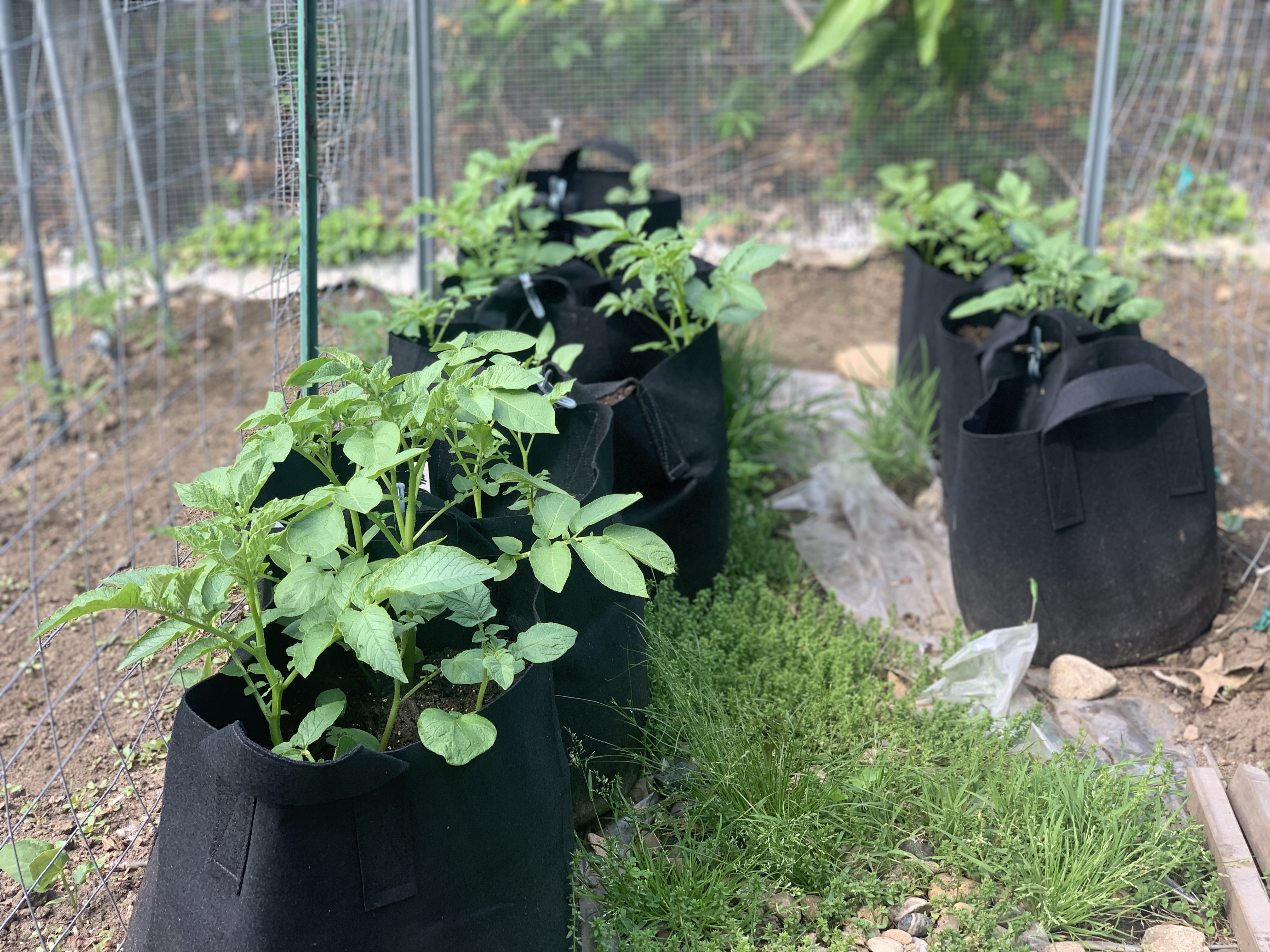
Last year, I planted potatoes in fabric grow bags and also in the ground.  I found that it’s easier and more space-efficient to grow them in the bags.  In May, I took out my old sprouted potatoes from the grocery store and planted them accordingly and they are doing well.  I can’t wait to eat my first batch next month.

I look forward to sharing with you what else I can learn from my experience next month.

For related articles, visit the Beginner Gardening Series.

Author: Madison

Nước Sâm / Vietnamese Herbal Ice Tea

Vietnamese herbal tea is usually served with ice, which makes it a refreshing drink in the middle of a hot and humid summer day. This drink is inspired by Chinese medicine with a focus on ingredients that have “cooling” properties. There are many variations and the one that we are sharing includes artichokes. Don’t be put off by the scary ingredient list as they are easy to find at any Asian grocery store or online.

Ingredients:

1 gallon or 3.75 litres of water

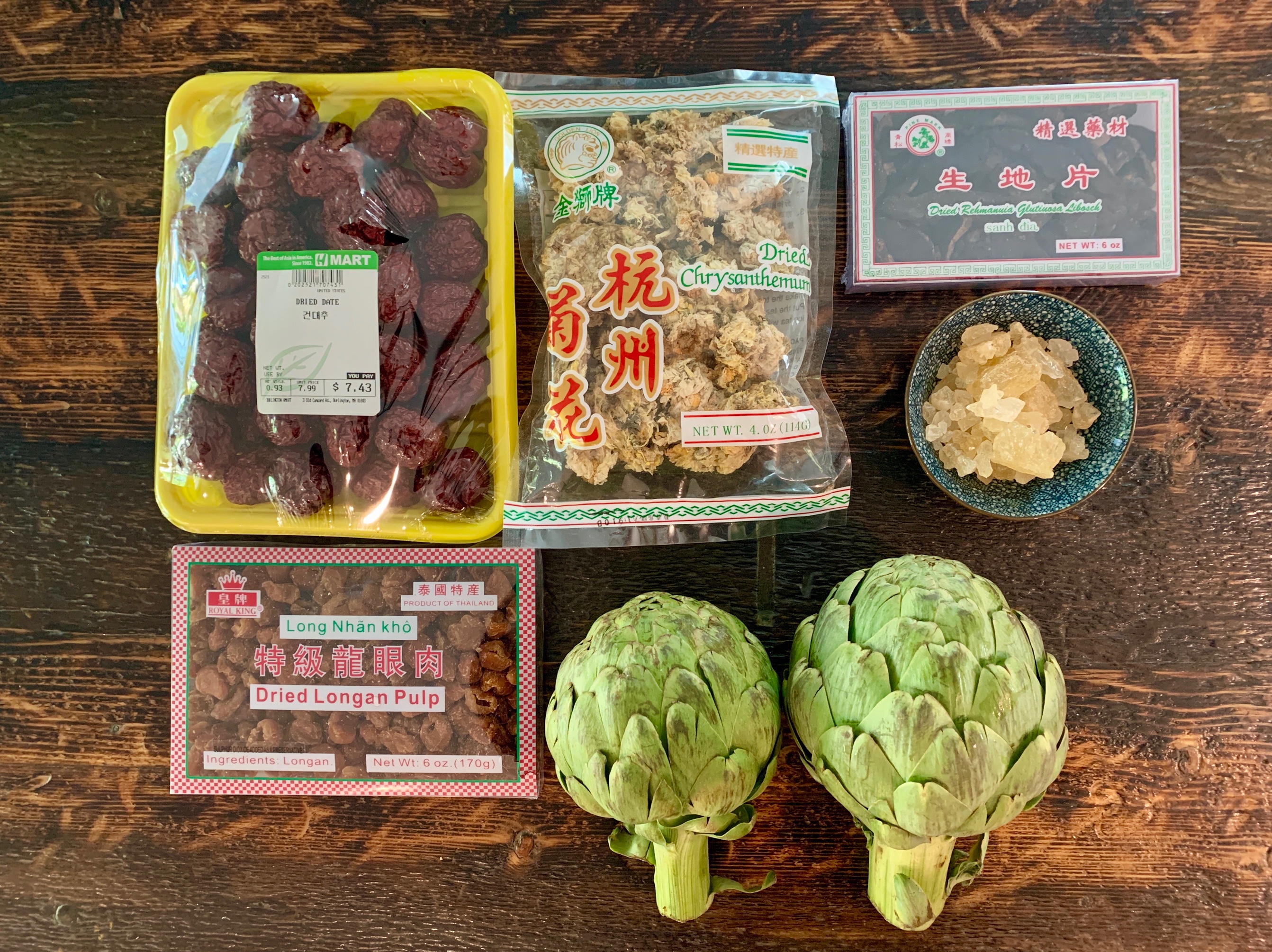
2 artichokes cut into quarters

1 pack (6 oz.) of dried longan

1 cup of dried dates

1 cup of dried chrysanthemum flowers

2 pieces of sanh dia (dried Rehmannia glutinosa)

1 tablespoon of rock sugar or regular sugar (adjust to taste). Rock sugar is less sweet and has a clearer taste than regular sugar so it doesn’t overwhelm the light drink.


Directions:

Soak the artichoke in cold water and rinse thoroughly to remove any sediment.

Quickly rinse the dried ingredients to remove any impurities.

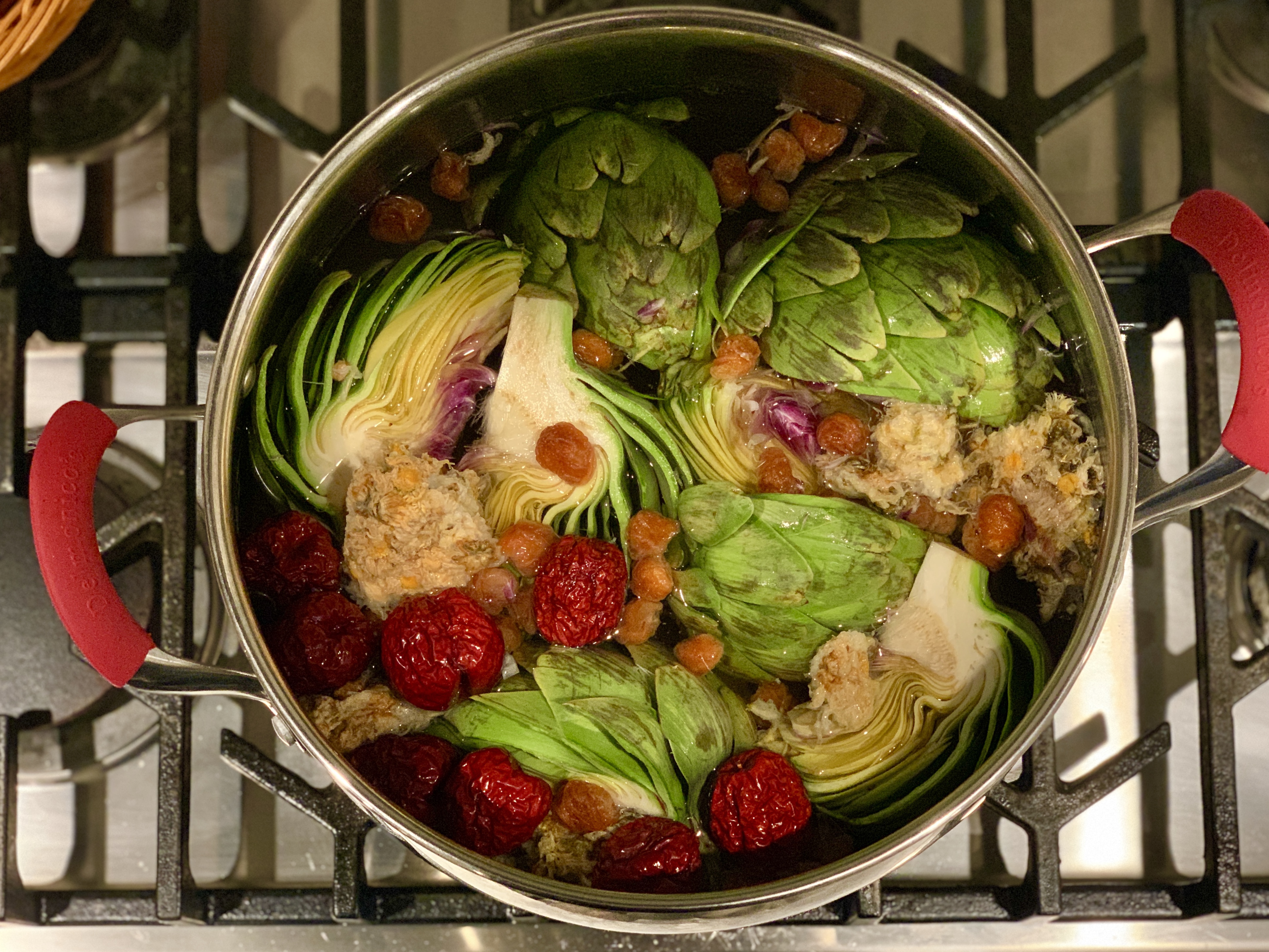
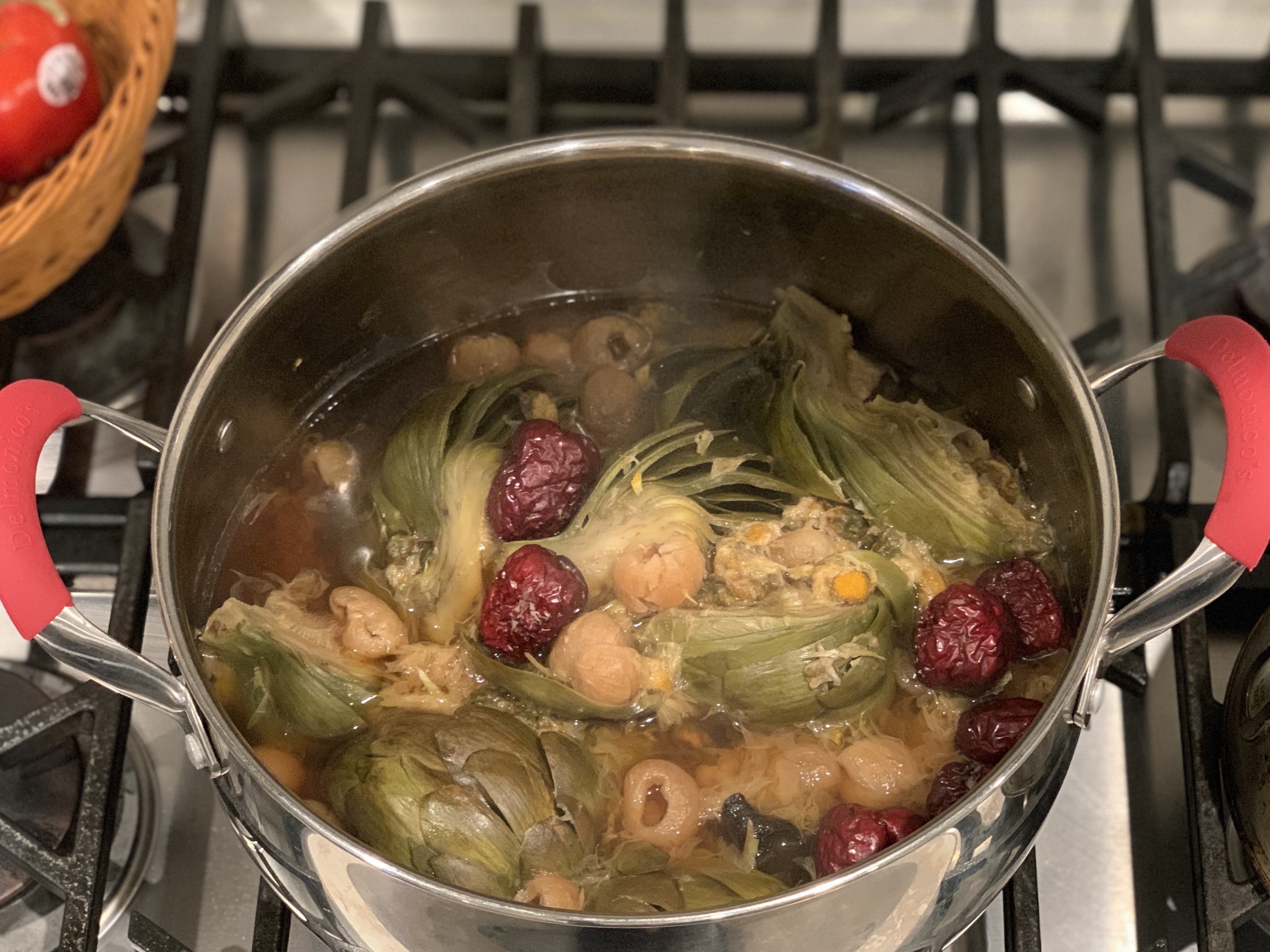
Boil all the ingredients in a large pot for 1 hour.

Strain the herbal tea to remove any solids and discard the ingredients.

Serve with ice for the best flavor. If the tea is too strong or sweet, dilute with ice and/or water to your preference. I prefer mine with 50% herbal tea and 50% water with ice.

For more recipes, visit our EAT page or Recipe Index.

Author:  Henry Nguyen and Chau Hoang

The Beginner Gardener Series: The 3 essential tools for gardening

When I was a beginner gardener, I made the  rookie mistake of buying multiple gardening tools that one would use in a traditional garden, including a trowel, transplanter, cultivator, weeding fork, and weeder.  Over the last three years, I found that I could replace them all with 3 tools: a trowel, a weeder, and a Korean traditional garden ho called “a homi”.  If I could only purchase one tool, then a “homi” would be the Swiss army knife.

  1. The homi:  This was a “do it all” hand tool since the Bronze Age for Koreans.  I started to see them used in Korean YouTube horticulture videos and decided to purchase one last year on Amazon.  It was the best gardening decision that I have ever made!  It made my life so much easier.  It has a curved handle and a blade with a unique shape that allows you to dig, weed, mound, etc… all encompassed in one tool.  You can find a homi at multiple price points on Amazon by searching for a “Korean homi garden tool”.
  2. The trowel: This tool is great for moving potting soil or fertilizer into buckets or grow bags.
  3. The weeder: This tool is a must-have for grabbing tough weeds down to their roots and extracting them.  As our garden is in the ground and not in raised beds, I do a fair amount of weeding throughout the growing season.  This little hand tool enables me to remove pesky weeds, while not damaging the vegetables or flowers that are growing around them.

Happy gardening!

For related articles, visit the Beginner Gardening Series.

Author: Madison

Airline Review: Air France Business Class Paris to NY

*I had written this post before Covid-19 upended the travel and airline industry. I hope we can go back to our wanderlust days safely soon. It is unclear how Air France’s offerings will be impacted by the pandemic.

On my recent flight from Paris to NY, I was able to try out Air France’s business class on an Airbus A380-800. This model will eventually be replaced by a newer and more efficient version later in 2020. I was very sick returning from a holiday in France, so a comfortable journey was a necessity. This was my experience on Air France in comparison with other business class flights that I have taken over the years.

Value: Average

Generally, AF’s Paris to NYC flight costs a few thousand dollars each way. Some discounted business class flight upgrades may be available on the day of departure at the check-in counter.

Seat: Average

For a business class seat on a 7+ hour flight, I was disappointed to find out that it was not a fully lie flat bed even though it was advertised as like “lie flat” or as AF puts it, “angle flat”. The seat nearly reached 180 degrees; however, it was weirdly angled where I found myself sliding toward the footrest. This disrupted my much-needed rest since I had to re-position myself a few times during the flight. AF also did not provide sheets except for a cozy blanket so passengers might find the seat material a bit scratchy to sleep on. The configuration was 2-2-2- with no direct aisle access for the window seat, which had more storage along the side of the plane compared to the aisle seat. There was also a very small tray that came out of the armrest for a business class seat, which could be a problem if you needed to work.

Priority Boarding: Below average

The business class ticket gave me Sky Priority security and boarding access. First class and business class board on the upper deck while other passengers use the lower deck. We had a small issue with boarding as the AF crew allowed business class passengers to board but didn’t allow people to enter the plane, creating a massive backup on the stairwell. It took 15 minutes for someone to let us onto the plane.

Lounge Access: Average

The AF lounge is very large; however, it surprisingly didn’t have the variety of food options as I had expected. I’ve been very spoiled by the Asian airline lounges where you want to go early and eat as much yummy food as possible.

Amenities: Average

Once I was on the plane, the flight attendant gave me a labeled hanger for my coat. A standard business class amenity kit and noise cancelling headphones were offered. I liked the large eye mask that I received since it was bigger than my current version and lined with this ultra-soft material. Slippers and socks were also offered.

This slideshow requires JavaScript.

In-flight dining: Above Average

We were served two meals on the flight. The dinner menu offered an appetizer, a starter, main dish, cheese and desert course. There was also a very small “At Any Time” menu offering a few not so enticing items versus the large selection of tasty mini meals from Japan Airlines. As a foodie, I wasn’t even tempted enough to try out that menu. Additionally, the offerings appeared to be on the caloric side. AF does have an extensive wine menu that was pages long.

I chose the lighter dinner option with the zander(fish) and shellfish jus with peas and green asparagus, polenta with tarragon. It tasted good, but the fish was dry. My neighbor’s spring lamb stew with rosemary looked much more appealing and she seemed to enjoy it.

Before arrival, I was offered a small breakfast comprised of a lot of bread and yogurt. It tasted okay, although nothing I would write home about. I will also preface that I like to eat healthier with less carbs and sugar. The breakfast was all carbs and sugar, so others might like it more than I did. I could’ve used some fresh fruit to offset the heaviness of the meal.

This slideshow requires JavaScript.

Cleanliness: Average

I found the bathroom to be clean but not spotless. Clarins toiletries were offered, which was a nice touch. It was much better than what I experienced on AF’s economy flights.

Cabin Service: Above average

The AF service was attentive as expected of business class. There wasn’t anything memorable about it other than they got the job done.

Overall: Average to Above Average

I’ve been spoiled on some really good business class flights with other airlines. This was a good transatlantic business class offering but was average compared to AF’s competitors. Nonetheless, I got my much-needed rest on the flight, so the flight served its purpose.

For related articles, visit the TRAVEL page or the World Travel Index.

Author: Chau Hoang

The Beginner Gardener Series: Mistakes that I made in Year 1-3 of gardening

As I reflect on my last 3 years of gardening, I realize that I made a fair amount of beginner mistakes.  Here are some takeaways that I learned to help you prevent the novice pitfalls.

  1. Putting seeds into the ground too late I decided to save money by germinating seeds instead of purchasing nursery plants in my second and third year of gardening. However, I started my seeding too late, which resulted in my vegetables maturing deeper into the summer and yielding less crop.  If you are not able to sow seeds into the ground two or three weeks after your area’s last frost date, then I highly recommend utilizing nursery plants instead. It is okay to get some help.
  2. Germinating seeds indoor without proper equipment.  I decided to start seeding a variety of tomatoes, cucumbers, and other vegetables indoors to get a leg up last year.  It sounded like a great idea, but I ended up with a lot of headaches instead.  I had only purchased one small grow light and assumed that the rest of the plants would sprout next to the windowsills.  That did not work out as intended and most of the plants either did not grow enough to make a difference or they die.  I ended up having to purchase nursery plants to make up for the failure, thus negating all the hard work spent during the winter.  This year, I purchased a cheap multi-level rack to hold the seedlings and many more grow lights.  The new equipment made a huge difference in the quality of my seed sprouts.
  3. Planting too many varieties.  I can get caught up with purchasing too many seeds and nursery plants when I go shopping at the local garden center. How can I say no to the wonderful variety of vegetation that beckon to be part of my burgeoning garden?  This exuberance led to me planting vegetables that I normally don’t eat or wasting the seeds altogether because I ran out of space in my mini farm.  This year, I made a note of all the vegetables that my family normally consumes throughout the year and I purchased seeds accordingly.
  4. Not learning enough about the vegetables before plantingEarly in my horticultural life, I would read the instructions on the back of the packet.  Unfortunately, this is only sufficient for understanding planting depth and spacing and that’s about it.   Gardening is about accumulating knowledge of your environment and how it affects each plant.  I spent more time over the winter learning about vegetables that I had planned on cultivating this year. I took the time to gather information about the soil preferences, the right temperature to sow, and their companion plants. I am looking forward to fruitful results.
  5. Watering during the wrong time of the day.  This is an interesting concept as I would water the plants whenever I could get to it during my busy daily schedule. This meant I would usually water my garden when the sun was still high in the sky, which is not ideal.  The water evaporates much more before landing on the plants or soil and dries up too fast for the soil to maximize the absorption.  Watering really early in the morning or at night helps plants store more water for the next day.
  6. Being overly ambitious with my garden.  I used to drive myself crazy trying to emulate a Pinterest-worthy garden and would get frustrated by my lack of progress.  I’ve learned from my mistakes and experience that gardening is a long journey and can take many years.  The beautiful gardens on Pinterest are the fruit of hard labor, planning, money, and years of patience.  I am satisfied to continue learning, building and loving my little garden even if it doesn’t compare to those bucolic and probably professionally designed ones. It is still very satisfying to be able to cook meals for my family with vegetables that I grew in my garden through my hard work.

For related articles, visit the Beginner Gardening Series.

Author: Madison