Latest Posts

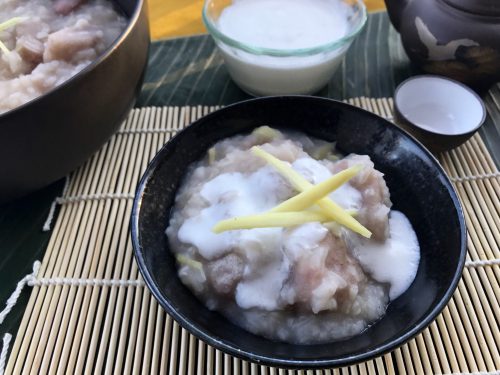
Chè Khoai Môn / Taro with Sweet Rice Pudding

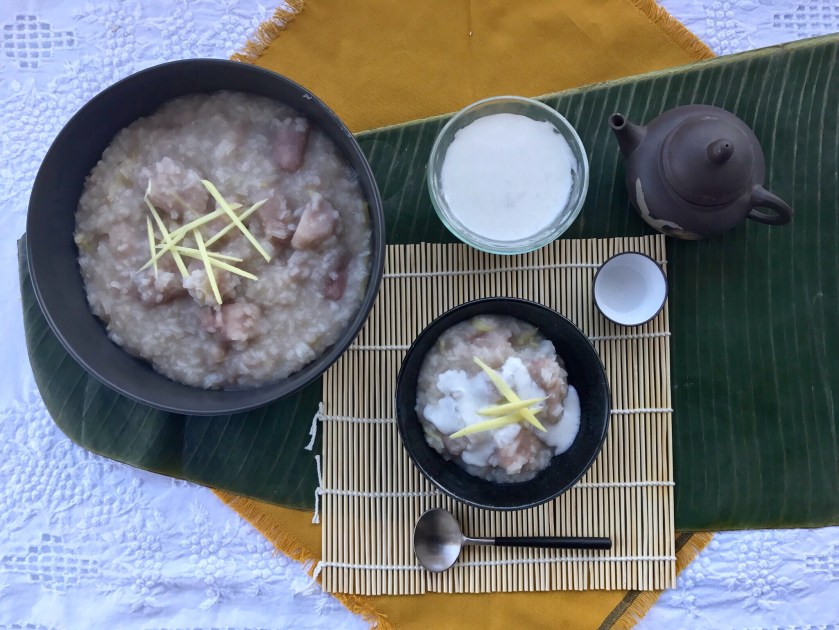
Taro is one of the most versatile root vegetable in Vietnamese cuisine. It is used often in both savory and sweet dishes. One of the more popular rendition of taro is chè khoai môn or taro with sweet rice  pudding. Steamed taro is added to a ginger syrup, mixed with sticky rice pudding and topped with a spoonful of coconut milk. This desert is deceptively simple and is also a wonderful snack or dessert.

Difficulty: Easy / Servings: 6 / Time: 1 hour

Ingredients:

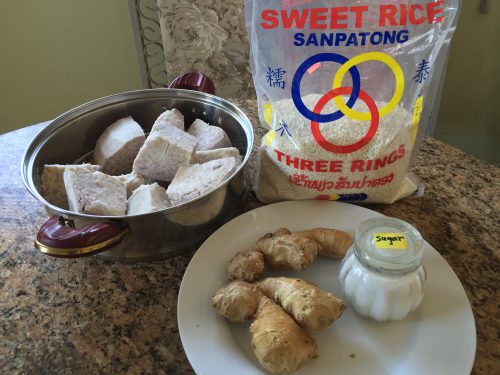
2 cups of sweet rice

4 lb. of taro peeled

1/2 cup of julienne ginger (approximately 1 large ginger root)

2 cups of sugar

1 can of coconut milk

1/2 tablespoon of tapioca powder

1/4 teaspoon of salt

 img_8935


Directions:

Peel and cut the taro into fist size segments. Steam the taro for 30 minutes. It will be easier to cut the taro into smaller cubes once the taro is cooked.

img_8931

Once the taro is cooked, cut them into 1 inch cubes.

Heat a pot with 6 cups of water and 2 cups of sweet rice. Cook the rice on a low boil for 30 minutes and stir occasionally so that the rice does not stick to the bottom of the pot and burn. This will resemble a thick porridge after 30 minutes. Turn off the heat and set aside.

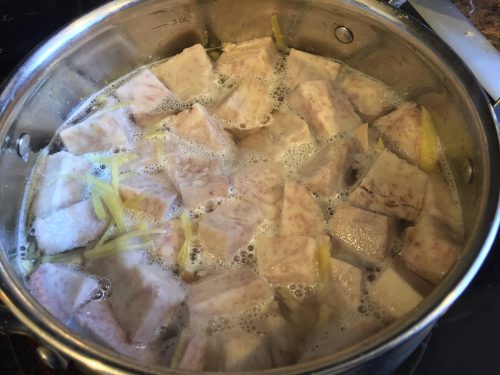
In another pot, boil 5 cups of water with 1/2 cup of julienne ginger and 2 cups of sugar.

Once the sugar has dissolved (approx. 5 minutes), add the steamed taro and cook on high heat for 15 minutes.

img_8971

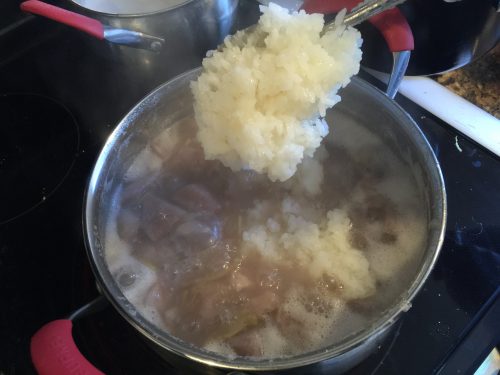
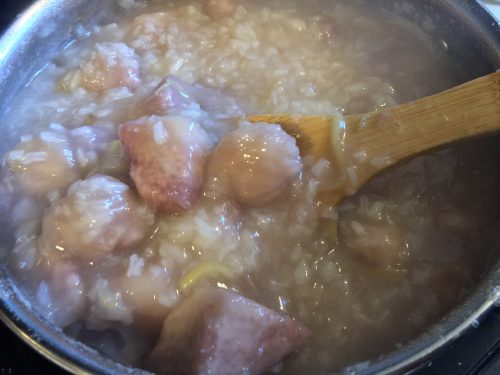
After 15 minutes, add the rice porridge to the taro pot. Stir to incorporate the ingredients. Turn off the heat.

img_8977

img_8982

Make coconut sauce:

In a small pot on medium heat, combine 1 can of coconut milk, 1/2 a can of water, 2 teaspoons of sugar and 1/4 teaspoon of salt. In a small bowl, mix 1/2 tablespoon of tapioca powder with 1 teaspoon of water. Once the coconut milk comes to a low boil, add the tapioca water and stir until the tapioca has dissolved into the coconut milk. The tapioca water will thicken up the milk so it becomes a sauce.

This pudding is best served warm top with coconut milk.

img_9981

For more recipes, visit our EAT page or Recipe Index.

Authors: Susan Tran and Chau Hoang

5 Days in Barcelona, Spain

Barcelona has been on my bucket list for a long time, but I did not have the opportunity until recently. My goal was to really explore Barcelona at a leisurely pace. My friend came on this adventure with me and we settled on a Tuesday to Sunday itinerary. In this post, I will highlight our trip to Barcelona and what we learned from it.

Day 1: Tuesday (Arriving in the afternoon)

We arrived in Barcelona in the early afternoon and both of us took separate taxis from the airport as we were in different terminals. Prior to this trip, my friend and I were warned to be cautious of taxis and pickpockets in Barcelona. I did not truly believe that Barcelona was an unsafe city as it is an international European destination.  Unfortunately, the following taxi incident shook my faith in the city. After getting dropped off a block away from my destination, my taxi driver grabbed a 50 euro bill out of my hand and drove off after I disputed the fare. The fare should only cost approximately 35 euros.  My friend was also overcharged approximately the same price even though she had taken a small car and only a duffel bag with her.
img_1381

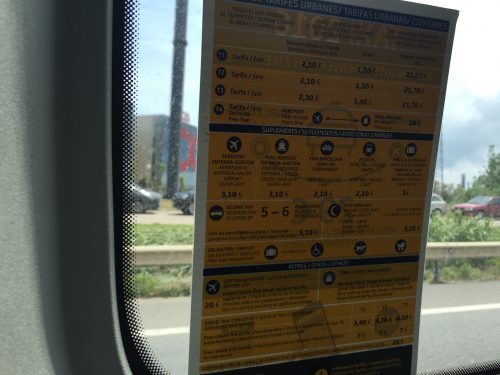
Pay attention to the taxi  fee signage

My advice is to have a car service pick you up if possible. If that is not an option, make sure the dispatcher gives you a regular taxi, otherwise you will be charged for a van even if you did not request or need one of that size. Additionally, you should request a receipt before leaving the taxi as you will need it for any disputes. On my last day, I ordered a taxi through Book Taxi Barcelona which allows you to pre-book and also pre-pay with your card for the trip to the airport. I had a satisfactory experience with this company and I only paid 42 euro for a black car pickup service.

Once we made it to our AirBnB located within walking distance to the Cathedral of Barcelona, we unwound and tried to let the bad taxi experience not ruin our first impression of this city. We walked around the narrow Gothic quarters and soaked in the sight of the Cathedral at a nearby café. Besides the Cathedral, there are also the Basilica de Santa Maria del Pi and Museu Picasso de Barcelona nearby. Strolling through the endless streets and alleys in the Gothic Quarter and discovering new places to shop, eat and drink was the highlight of the day. Eventually we arrived at Placa Catalunya where a bustling city scene awaited us. We strolled around the area and visited the police station there to report our cab incident. A while later, we headed to La Alcoba Azul for our first of many tapas meals. It was a small tapas restaurant and was a perfect way to unwind from an eventful first day in Barcelona.

This slideshow requires JavaScript.

Day 2: Wednesday (Gaudi)

We started the day early and headed to Arco de Triunfo de Barcelona and visited the Ciutadella Park. The park reminded me of a mini Central Park in New York City. As the clock ticked toward 10 am, we made our way to Sagrada Familia for our reserved entry for the famous Gaudi masterpiece. It was already swamped with tourists even when a majority of the visitors had purchased their tickets in advance. You must reserve your ticket for Sagrada Familia at least 2 days in advance otherwise you may not get in at all. We spent the next few hours marveling at the genius of Gaudi’s imagination and strained our necks staring at the intricate and whimsical architecture. The best place to take a picture of the Sagrada Familia is from the park across the street by the Carrer de Lepant. This part of the park offers scenic views of the cathedral without all the tourists blocking the cathedral.
Our stomachs started growling so we walked toward our next destination and tried to locate a relatively local restaurant for lunch. My suggestion is to walk a few blocks away from the Cathedral to find better food and less of a crowd. Since the restaurant we discovered was small, I was able to have the waiter charge my phone for me. I ended up doing this during every lunch on this trip as charging stations or electrical outlets are nonexistent in Barcelona.

Ciutadella Park

Sagrada Familia

This slideshow requires JavaScript.

After a leisurely lunch, we visited Gaudi’s Pedredra or Casa Mila and paid the entrance fee to visit the inside and the rooftop. We received the recommendation from the local shopkeeper to see the interiors of Pedredra instead of Casa Batlo. This was worth the ticket price as the views were worth many pictures. The famous chimney covers resembled landscapes from another world. As we walked toward Casa Batlo, we saw the gorgeous exteriors and opted not to go inside due to the long lines.

Pedredra or Casa Mila

This slideshow requires JavaScript.

We had a reservation for Cinq Sentits, a 1 Michelin star modern gastronomy, later that night. The service and food was exquisite, though it was pricey at 120 euro per person for a 6 course tasting menu. It is definitely a splurge and a nice break from the hustle and bustle of the day.

Cinq Sentits

This slideshow requires JavaScript.

Day 3: Thursday (More Gaudi)

Our day began at Gaudi’s Parc Guell. Unfortunately we did not know we needed a ticket (approx. 7 euro) to enter the monument area. The next available time was at 1pm and it was currently 9am. The admission ticket is relatively new as my friend did not need one when she visited a few years ago. Even though we didn’t get to visit the monument, I did not feel that I missed much as we were able to stroll around the park and see many of the sites. At this point, I was starting to be “Gaudied” out. I would suggest doing Parc Guell first before Sagrada Familia and the other Casas as it is the simplest in terms of Gaudi’s creations.

Parc Guell

This slideshow requires JavaScript.

Next we headed over to the Palau Reial de Pedrables for a quieter stroll around the gorgeous free public park that also housed more of Gaudi’s smaller works. We opted for the only place to eat lunch nearby to rest our weary feet. After a short lunch, we start off for the Monastir de Pedrables. This is a Gothic monastery that has a wonderful cloister and houses exhibitions throughout the year. It also has relatively fewer tourists and we ended up having most of the cloisters to ourselves.

Palau Reial de Pedrables & Monastir de Pedrables

This slideshow requires JavaScript.

Next, we took the subway to Mercat de la Boqueria to witness the bustling marketplace with many wonderful local fruits, vegetables and sweets. We then headed down the Rambla which is a tree-lined pedestrian mall that stretches 0.75 miles in central Barcelona. My friend characterized the Rambla as the Champs-Elysees of Barcelona which was not the case. It is basically a wide street with a ton of tourists. By the time we located the café at nearby Place Reial, we were ready for a long afternoon break from all the walking. We soaked in the remaining sun and snacked on tapas at Café Ocana. Once we had our fill, we headed to the Mirador de Colon to see the Christopher Columbus statue and called it a day. Later that night, we tried another tapas restaurant in the Gothic quarter called La Vinateria de Call and it was delicious. This is a bigger restaurant than the previous night and most of the diners were tourists as we ate early at 8 pm, whereas the normal dinner time is 10pm for locals.

This slideshow requires JavaScript.

Day 4: Friday (Montjuïc and Palau Nacional Museum)

We started the day taking a cable car, Transbordador Aeri del Port, near Playa se Sant Sebastia to Torre de Miramar on Montjuïc. This is the base of the Montjuïc area and has sweeping views of Barcelona. We made the mistake of walking from the base to Montjuïc Castle as it is a 2.7 miles uphill walk for approximately 1 hour. This left us breathless and exhausted for most of the morning as we had been walking nonstop for 3 days.  A taxi ride to the castle would have cost less than 10 euros. Montjuïc Castle lacks decor so the 1 hour uphill battle felt like a wasted effort. The castle is generally empty and only the ramparts offer another view of Barcelona. Next, we took a cab to Poble Espanyol (Spanish Village). After speaking to the ticket attendant, we found out it was more like a small scale amusement space than an actual cultural area. Also, the activities offered in the village are geared toward children. We opted not to pay the entrance fee at Poble Espanyol and took another taxi to Plaza d’Espanya for lunch.

Montjuïc

This slideshow requires JavaScript.

We ended up at Tapas Gaudi near Carrer de Llanca for lunch. My friend and I found the restaurant to be surprisingly good for a large chain. My squid ink paella hit the spot and it was even better that they had nice outdoor seating for us to enjoy the breezy spring weather. There are not many options to choose from in the area unless you know specifically where you are going. After a leisurely lunch, we made our way to Palau Nacional Museum which was a delight. The impressive scale of the museum with its gorgeous fountains and numerous stairways at the entrance was worth the visit alone. We spent the next few hours exploring the various exhibits including the Romanesque frescoes and modern art. At the end of the day, we picked the cable car ride and the Palau Nacional Museum to be the most memorable and worthwhile.

Palau Nacional Museum

This slideshow requires JavaScript.

We decided on Tapas 24 for dinner and headed there around 6:30. This is a very small restaurant that is insanely popular with tourists and locals. We were seated promptly but I noticed the lines that went out the door by 8 pm. The tapas were great, but the service was lacking and abrupt. This is a small and busy restaurant that I would not recommend having more than two people for dinner. The tapas are well executed and there are some innovative dishes making it one of my favorite restaurants during our stay in Barcelona.

Tapas 24

Day 5: Saturday (Museum de Picasso and Camp Nou)

My friend left Barcelona early so I was sightseeing solo for the day. I purchased the ticket for the Museum de Picasso online as I was worried about the crowds. I mistakenly ordered my tickets twice as the site had issues. Luckily, the museum refunded the extra ticket after I sent an email to customer service. The museum’s collection focused on the formative years of Pablo Picasso and gave visitors great insight into the artist’s life through his works. I highly recommend a visit to this museum even if you are not a fan of Picasso’s art.

After a few hours at the Museum de Picasso, I stopped at Bar Tapeo for lunch. The tapas at this venue has dominant international influences and every dish was simply delicious. Additionally, the service was personal but like any good restaurant in the city, it gets very crowded during the evening. Quickly after lunch, I ventured to the other side of town to visit the Barcelona FC Stadium, Camp Nou. This is a rite of passage for all Barca’s fan. The tour is open to the pubic most days and is self-guided. My favorite part of the tour was the beginning section where a detailed history of Barcelona FC and the numerous trophies were presented. The rest of the tour took me around the stadium and out onto the seating area. I was not impressed since I have been to numerous stadiums in the US. However, other tourists seemed to be impressed by the 99,354 capacity stadium. Overall, this is a must visit for Barcelona FC fans.

Camp Nou / Barcelona FC

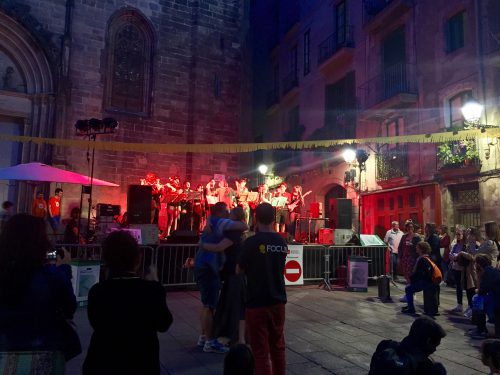
I made a point to try Le Plata that night for dinner. It is a small tapas bar that only serves a few dishes since 1945. Their main dishes are 1) fried sardines, 2) bread with crushed tomatoes 3) sausage and 4) a mix of onions, tomatoes and olives in olive oil. They have some beer and wine and that is it. There are very few seats so most people end up standing by the bar and tasting these delicious tapas to start their night. After trying all four tapas, I walked around the area and  discovered El Salon. It is a charming restaurant that would be good for a romantic dinner. Alas, I was having a romantic dinner by myself and still had a fantastic meal. The restaurant serves light and fresh international cuisine which can be a welcoming treat after days of tapas and heavier Spanish food. After eating more than my fill for the day, I stumbled onto an outdoor band concert in the Gothic Quarter that had everyone stopping in their tracks to enjoy the vibrant music. There was a good group of locals and tourists swaying to the music and cheering the band students on. The spontaneous celebration of food and music was a great way to end my first visit to Barcelona.

This slideshow requires JavaScript.
img_2655

For related articles, visit the TRAVEL page or the World Travel Index.

Author: Chau Hoang

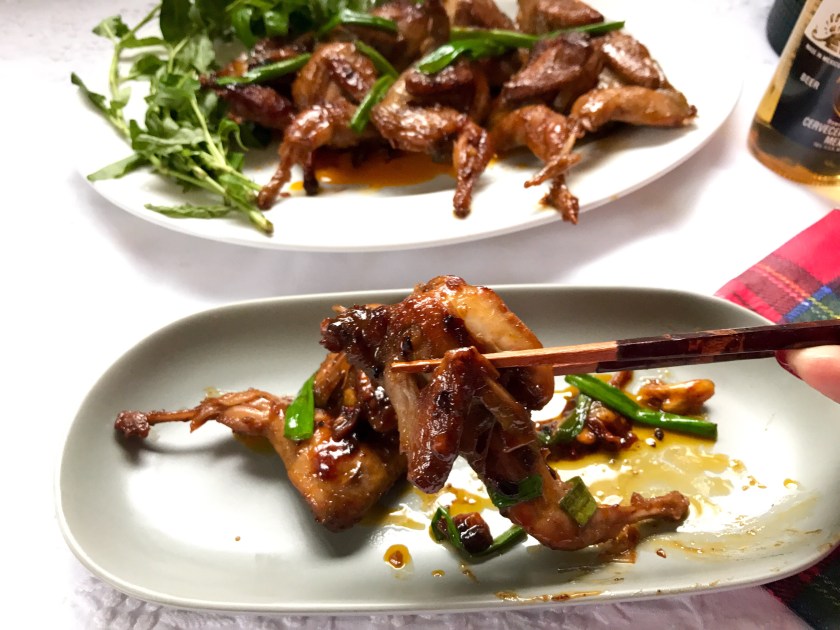
Five Spice Roasted Quail / Chim Cút Rôti

Chim Cút Rôti or Five Spice Roasted Quail is a common appetizer in many Vietnamese restaurants. Quails are marinated for at least a few hours, then pan fried and covered in a sticky sweet and salty sauce. This is not a dish for date night as you will end up using your fingers to eat the quails. However, the mess is worth it for this finger licking treat.

Difficulty: Easy / Serving: 4 / Time: at least 3 hours to marinate and 30 minutes to cook

Ingredients

6 quails (You can find frozen quails at the Asian supermarket.)

1/4 teaspoon of Five Spice seasoning

1 tablespoon diced onion

2 and 1/2 tablespoons minced garlic

1-2 cloves of garlic

1 1/2 teaspoon chicken bouillon powder

6 tablespoons of coco rico soda

3 tablespoons soy sauce or Knorr liquid seasoning

1 and 1/2 tablespoon of sugar

1/2 teaspoon sea salt

1/2 teaspoon ground black pepper

1 and 1/2 tablespoons + 1 teaspoon of vegetable oil

1/2 teaspoon of annatto oil (optional)

A few stalks of cilantro (garnish)

A few stalks of scallion (garnish)

img_8165

Directions

Cut the quails in half.

Season the quails with 1/2 teaspoon of chicken bouillon powder, 1/2 teaspoon of sea salt, 1/4 teaspoon of Five Spice seasoning, 2 tablespoons of soy sauce, 1 tablespoon of minced garlic, 1 tablespoon of diced onion, 1/2 teaspoon of ground black pepper, 1/2 tablespoon of sugar and 1 teaspoon of vegetable oil. Marinate the quails for at least 3 hours in the fridge or if possible overnight.

Heat a large pan with 4 tablespoons of vegetable oil and 1 and 1/2 tablespoons of minced garlic. Once the garlic turns golden brown, sear the quails. Rotate the quails so that each side is cooked in the garlic oil until they form a golden crust. Remove from the pan and set aside.

img_8148

Make the sauce in a bowl by mixing 1 tablespoon of soy sauce, 1/2 tablespoon of sugar, 6 tablespoons of coconut soda and 1 teaspoon of chicken bouillon powder.

Wipe the pan down with a paper towel. Heat the pan on high with 1 tablespoon of vegetable oil and 1-2 cloves of garlic to flavor the oil. When the oil is heated, add the sauce to the pan. Add the quails and coat the quails with the sauce.

img_8152

img_8155

Allow the quails to simmer for a few minutes until the quails have absorbed all the sauce. Add 1/2 teaspoon of annatto oil for color. (see below for directions on how to make annatto oil)

img_8163

*Make annatto oil:

In a small pot, add 1 cup of corn or vegetable oil and heat on high. Add 1 stalk of scallion to the oil. When the scallion starts to brown, turn off the heat and take it off the stove. Let the oil cool for 1 minute. Add 1/3 cup of ground annatto to the oil and stir. Using a strainer, strain the oil into a bowl and discard the annatto powder. We will only need a small portion of this oil for the recipe, store the rest for later use. This oil will last for weeks in the fridge.

Serve the quails with a side of rice or lettuce.

img_8716

img_8714

For more recipes, visit our EAT page or Recipe Index.

Authors: Susan Tran and Chau Hoang

Restaurant Review: Pagu – Japanese Spanish Fusion (Boston,MA)

I had an opportunity to visit Boston for the weekend and Pagu was on the top of my list for dinner. Boston has recently seen a surge in restaurants exploring fusion cuisine and Pagu is a promising star. My friends and I made a reservation for Friday and were asked to put a deposit of $25 per person for the reservation. This was something new to me, as a required deposit was more prevalent at ultra-exclusive restaurant where a meal can easily costs a few hundred dollars. Pagu has average pricing, which made this policy a bit perplexing. Once we arrived, we were quickly seated at a table far removed from the kitchen bar that we had requested. After speaking with the host, we were promptly moved to the kitchen counter. This is a seating area surrounding the beautiful open kitchen where one can watch the magic happen.

For our meal, we selected a few different tapas to share and they were either hit or miss. The service was attentive overall and the staff tried to accommodate the diners’ needs. The chefs working in the open kitchen put on a silent orchestrated cooking show to impress the guests. The cocktails were also creative and… very strong. This was a good start to the dinner.

Dish #1: Sea Scallop with Meyer Lemon and Shiro Shoyu

This was a well-executed dish that affirmed our excitement for Pagu. The citrus punch elevated the scallop sashimi and we all enjoyed the tease for the next dish.

img_0333

Dish #2: Cheesy Wafflato with Smokey Mozzarella and Caramelized Shallots

We commented that this dish would be perfect for a Sunday tailgate. The melted mozzarella oozed out of the potato waffle as we bit into them. The only negative was that the waffle could have been crunchier as it was on the softer side.

img_0337

Dish # 3: Pan Con Tomate + Boquerones

The anchovy and roasted red bell pepper dish was simple and standard for tapas. It tasted like the one that I just had in Spain.

img_0338

Dish #4 Pan + Avocado + Ikura

This creamy avocado toast topped with salmon roe was an unexpected and well thought-out combination. The salty salmon roe contrasted with the buttery avocado and the hint of sake mixed with miso completed the flavor medley. I should have ordered more than one serving of this pintxo.

img_0339

Dish #5: Shiitake A La Plantxa

This vegetable dish was the undisputed favorite for our group. Perfectly cooked shiitake topped with sherry and an egg yolk, reminiscent of a tartar dish. There was so much to love about the salty mushrooms smothered in a creamy egg yolk on a crunchy baguette. I will be recreating this simple yet effective dish at home for my next dinner party.

img_0341

Dish #6: Oxtail Croquetas with Shitake and Vino Tino.

This croquet is a miss as the oxtail flavor was very subtle and was lost in the potato mix. All of the croquets were also scorching hot as my dinner companion found out as he burned his tongue eating one.

img_0343

Dish #7: Curry Crab Croquetas with Aji Amarillo and Coconut

This rendition of croquet was much better than the oxtail version, however, I found the crab and curry combo did not mesh as well as intended. When I bit into the fried curry ball, I got a hit of crab followed by strong curry and was left with an intense coconut aftertaste. Somehow I would imagine that the whole sequence should be mixed together and not in an actual queue.

img_0345

Dish #8: Squid Ink Oyster Bao with Noriola, Shiso and Purple Cabbage.

The baos are the highlight for Pagu and are well designed. I thought the squid ink flavor would be more prominent with this particular version, but the ink was use as a decoration. The star was the crunchy oyster filling and we all remarked how delicious it was.

img_0350

Dish #9: Braised Pork Belly Bao with Pickled Cucumbers, Fried Shallots and Peanuts.

The pork belly was fragrant and braised perfectly. I have been spoiled by the amount and variety of baos that are offered in NYC, but this one was slightly better than average for me. The combination of pickles, shallots and peanuts also gave the flavor of Vietnamese banh mi.

img_0352

Dish #10 & 11: Braised Oxtail Mazeman with Vidalia, Baby Carrots and Scallions and Uni Mazeman

Mazeman are “dried noodles” topped with various ingredients and drizzled with a sauce. These two dishes were disappointing, especially since the chef was renowned for her noodle pop up restaurants prior to opening Pagu. The oxtail mazeman was surprisingly bland and weirdly flavored. My dinner companion described it as the weird aftertaste that you get from using Splenda. The flavoring issue was more pronounced with the uni dish. We were unable to finish the noodles which rarely happens. Uni is my favorite thing to eat on earth so that was likely why I was more disappointed with this mazeman. It’s really hard to mess up uni. Uni has a strong taste that stands out on its own and somehow was fighting the sauce the whole time in this particular dish. Since we had an 8:45pm seating, the main chefs had finished their shift by the time they prepared our mazeman. I do not know how much of that timing impacted the noodles that we received.

img_0356

img_0358

Dish #11: Roasted Kabocha Ice Cream with Pan de Especias and Satsuma

Pagu redeemed itself with the creative dessert options. The kabocha ice cream had a custardy texture and was very airy. The crunchy bits accompanying the ice cream provided for a textural contrast and the citrus slices lightened up the kabocha ice cream.

img_0360

Dish #12: Black Sesame Tofu with Hojicha Syrup, Tofu Foam and Sesame Tuile.

Tofu as a desert is one of my favorite ingredients and this rendition was no exception. This nutty mousse was simple and delicious. The sesame tuile added another layer of nuttiness. I would come back just to eat the desserts at Pagu.

img_0362

Pagu is a new restaurant with a creative and promising menu that still has some kinks to work out. Perhaps our mazeman dishes were a fluke. Overall, the restaurant has enough variety that one can sample different tapas to form their own opinion of this new restaurant. We would not hesitate to come back to try to the other dishes on another night. Maybe we will get lucky with a different noodle dish and get the main chef to cook it.

Overall Rating: 3.5 / 5

For related articles, visit the TRAVEL page or the World Travel Index.

Author: Chau Hoang
Featured photo courtesy of Pagu

Beef Noodle Bowl with Soy Marinade

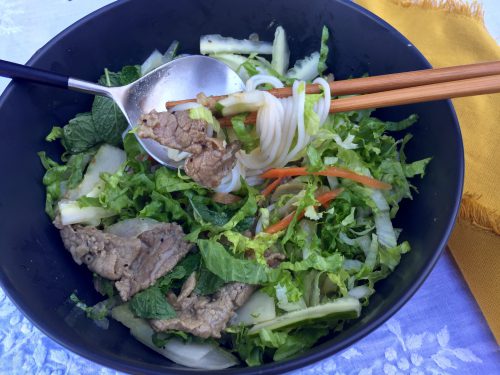
Vermicelli noodle bowl is a simple dish that has endless variety. In today’s post, we will be making a version with thin slices of beef marinated with a simply soy and oyster sauce. This is an easy meal to make for one or for a large group very quickly.

Ingredients:

1/2 pound of beef eye round or similar steak cut

1/2 tablespoon of soy sauce

2 tablespoons of coconut soda

2 tablespoons of oyster sauce

1 and 1/2 teaspoon of chicken bouillon powder

1 cucumber

1 carrot

1 Romaine lettuce or green of your choice

A handful of mint

3-4 tablespoon of minced garlic

1 tablespoon of diced onion

1 Thai chili (optional)

1 lime

1-2 stalks of green onion

Sea salt

Ground pepper

Sugar

1 bushel of vermicelli noodles

Directions:

Slice the beef as thin as possible.

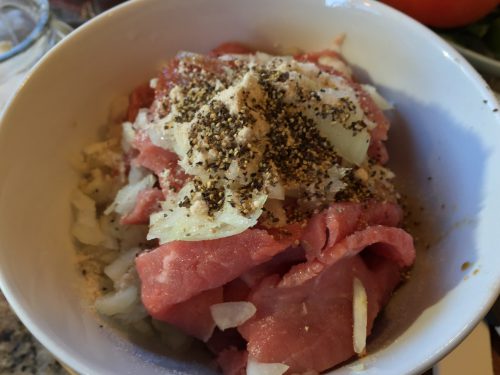
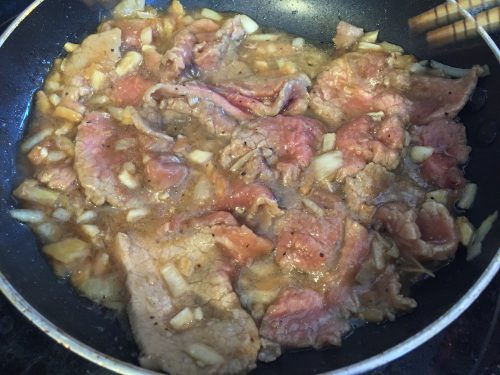
Marinate the beef for 15 minutes with 1/2 tablespoon of soy sauce, 1 tablespoon of diced onion, 1 tablespoon of garlic, 1 teaspoon of sugar, 1/2 teaspoon of chicken bouillon powder and 1/2 teaspoon of ground pepper.

img_6378

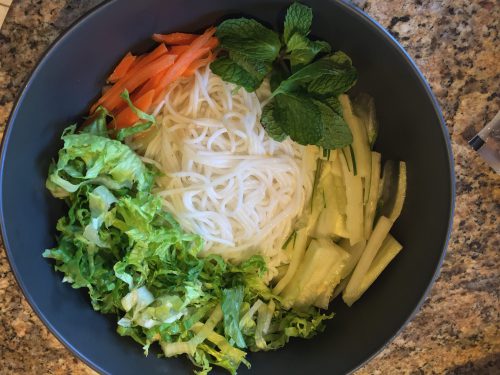
Julienne the cucumber and lettuce. Shred the carrot.

Boil the vermicelli noodles according to directions. Strain and rinse with cold water when the noodles are al dente.

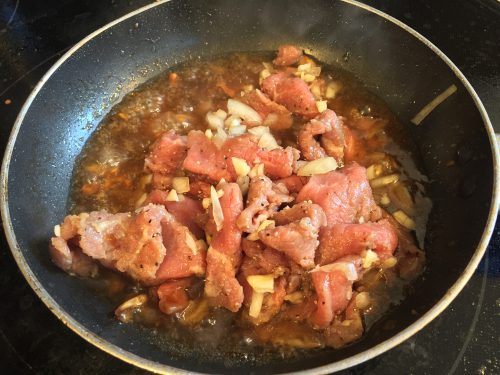
Heat a pan on high with 2 tablespoons of oil and 4 clove of minced garlic. Once the garlic turns golden brown, add 2 tablespoons of oyster sauce, 2 tablespoons of coconut soda, 1 teaspoon of sugar, 1 teaspoon of chicken bouillon powder and 2 tablespoon of water. Stir and let it simmer for 1 minute.

Add the beef slices and cook until they are cooked. Turn off the heat and add 1 teaspoon of ground pepper.

img_6537

img_6542

In a bowl, add the noodles, a handful of lettuce, carrots, cucumbers and mints.

img_6539

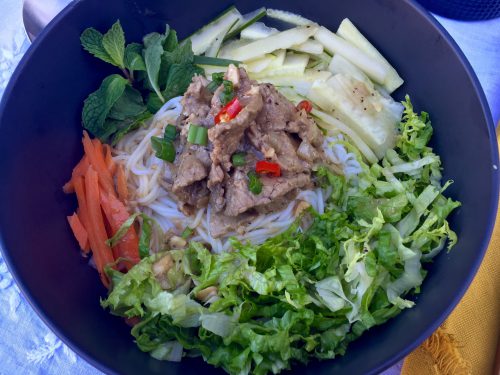
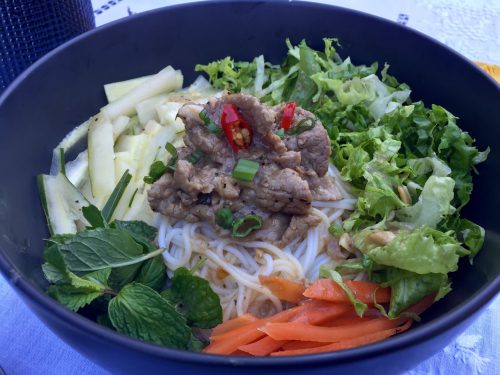
Top with the beef and the pan juice. Garnish with some diced green onions. Mix the ingredients together before eating.

img_6569

img_6592

img_6632

The beef is delicious on its own so often time, I will just make the beef portion and eat it with rice for dinner.

For more recipes, visit our EAT page or Recipe Index.

Authors: Susan Tran and Chau Hoang

Nils Holger Moormann’s Micro Cube Living

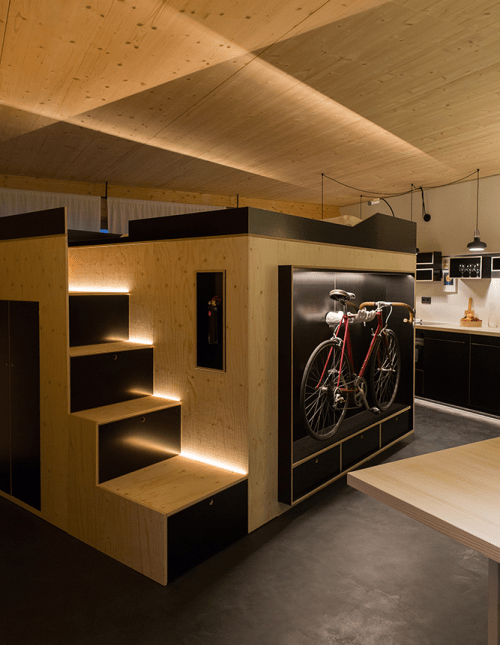
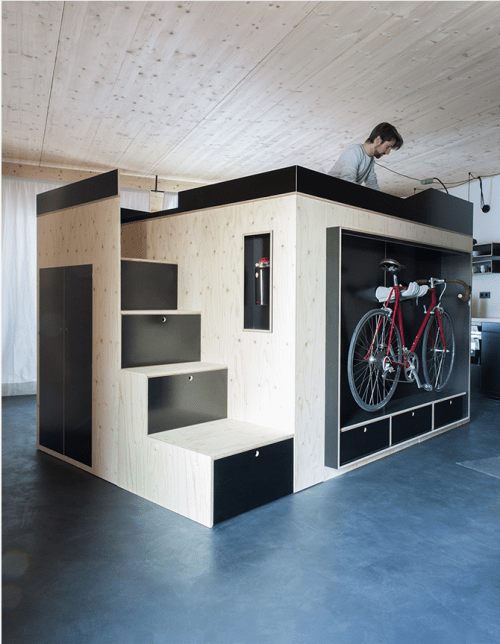
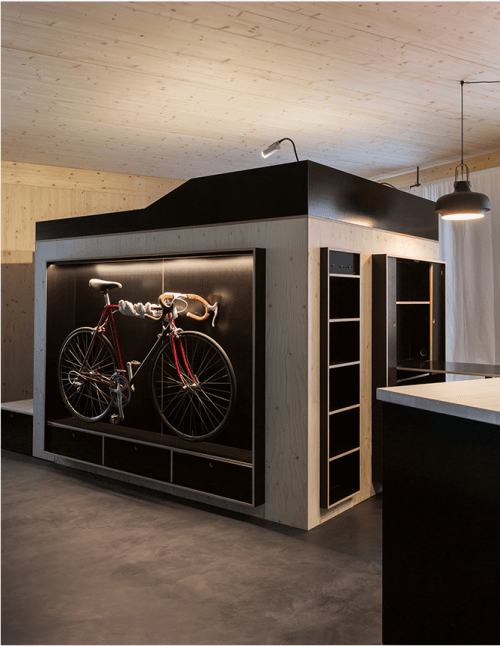
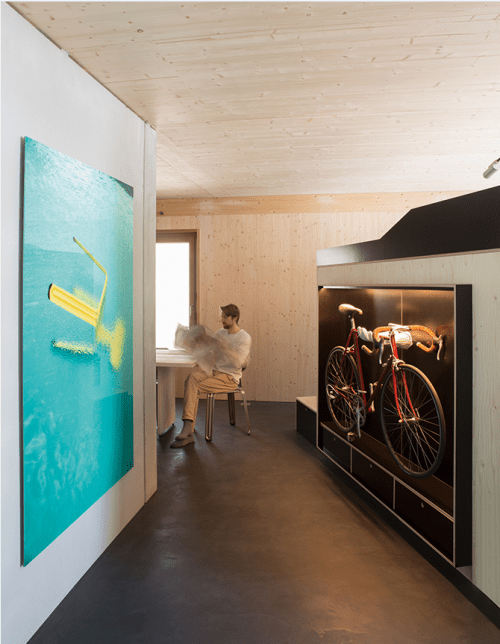
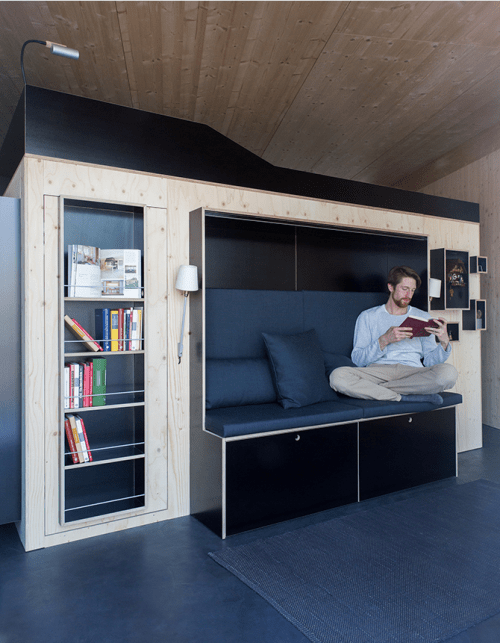
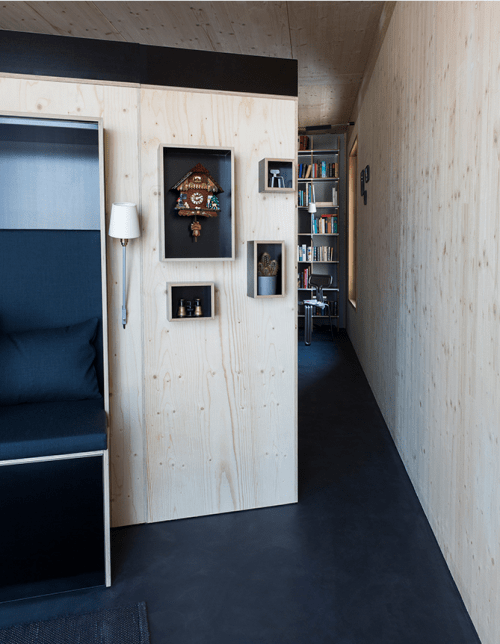
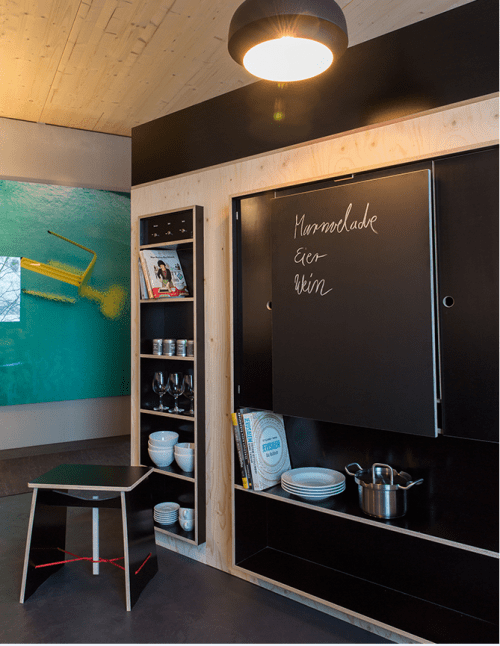
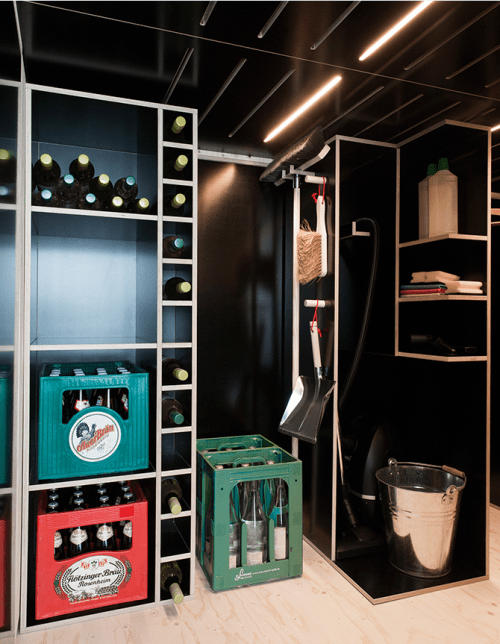
I recently discovered Nils Holger Moormann, a German design company named after its founder that offers amazing modern interior ideas and furniture. In order to address the rising cost and decreasing size of living space for the new generation, Moorman created KammerspielThis is a cube with a room-within-a-room concept. The cube is meant to fit in a middle of a square studio size dwelling where each side of the cube represents a living area. This prototype can be the model for the next generation of micro living.

The lofted bed takes advantage of the high ceiling and the stairs double as storage space.

2

Side 1 contains the storage staircase to the loft and also an additional closet.

1

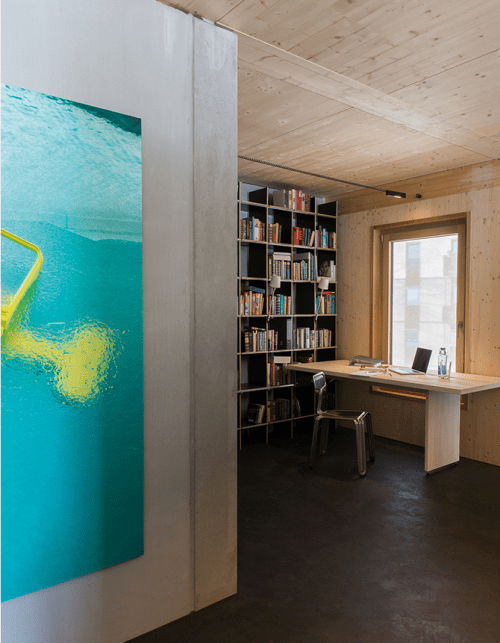
Side 2 houses a bike in this version. This can easily be converted into additional storage or a mini office space.

4

12

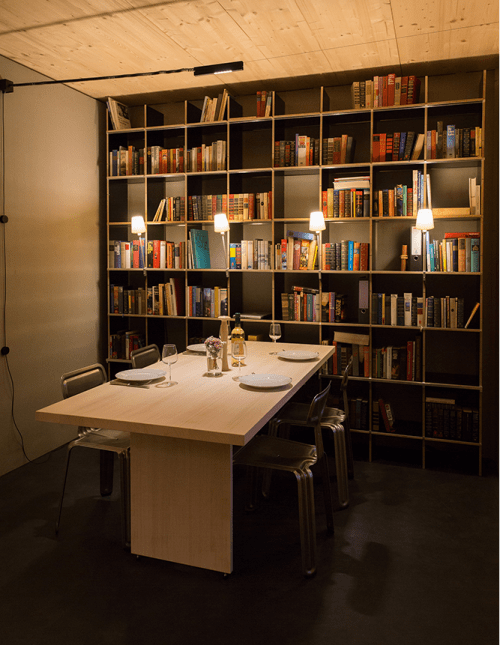
Side 3 of the cube acts as a living space with a built-in sofa.There is additional storage underneath the seat. You can simply add two folding chairs and a coffee table to create a living room when you have guests.

3

14

15

Side 4 becomes the kitchen and dining area with a collapsible table for two and a pantry. In this example, the appliances are built onto the opposite wall and thereby creating a separate kitchen and dining area.

5

9

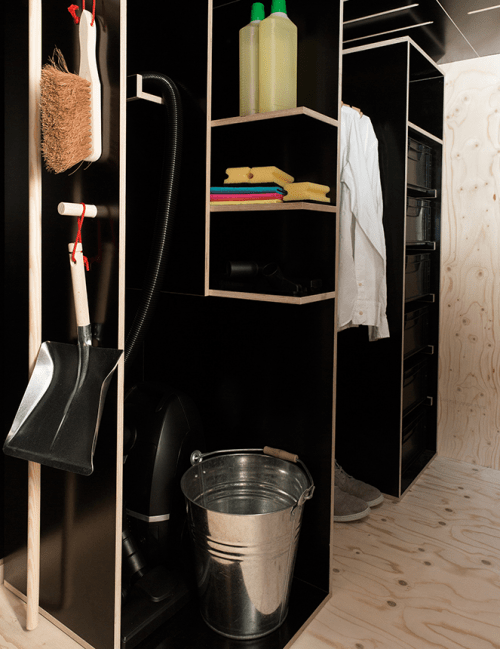
The interior of the cube offers spacious storage area and hides clutter.

6

7

This model also takes advantage of the room walls to create each separate “room” in this  apartment.

13

11

Overall, this is an inventive way to maximize space, although I recognize that this concept may not fit into a non-square room. Moorman is an interesting company that I will continue to follow and I hope Moorman continues to impress with its creativity and ingenuity.

For related posts, visit our DESIGN page.

Author: Chau Hoang

Photos courtesy of Nils Holger Moorman

Sautéed Cabbage with Shrimps

An easy dish that takes less than 30 minutes to prepare is sweet cabbage sauteed with jumbo shrimps. This dish is served with a side of rice for a satisfying and healthy meal.

Difficulty: Easy / Serving: 4 / Time: 30 minutes

Ingredients:

10 jumbo shrimps

2 lb. of cabbage

6 tablespoons of diced yellow onion

1/2 teaspoon of sea salt

1/4 teaspoon of ground black pepper

1/2 + 1/4 teaspoon of sugar

1 1/2 teaspoons of chicken bouillon powder

1 cup of low sodium chicken broth

3 stalks of scallions

Vegetable oil

img_8827

Directions:

Cut the cabbage leaves into 2 inch squares.

img_8830

Dice 1 whole onion.

Cut 3 stalks of scallion into 2 inch segments.

img_8837

Remove the shell while keeping the tail  and remove the veins from the shrimps. Butterfly the shrimps without cutting completely through it.

img_8840

Bring a pot of water to a boil and blanch the cabbage leaves until they soften.

img_8850

Season the shrimps with 2 tablespoons of dice onion, 1/4 teaspoon of sea salt, 1 teaspoon of chicken bouillon powder, 1/4 teaspoon of ground pepper and 1/2 teaspoon of sugar.

img_8847

Heat a large pan on high with 3 tablespoons of vegetable oil and 2 tablespoons of diced onions.

img_8853

When the onions turn translucent and golden, turn the heat to medium and add the shrimps and 1/2 cup of chicken broth. Saute until the shrimps turn white but not fully cooked, remove and set aside.

img_8864

Wipe the pan down and heat it with 2 tablespoons of vegetable oil and 2 tablespoons of diced onion. When the onion browns, add the blanched cabbage leaves. Season with 1/4 teaspoon of sugar, 1/2 teaspoon of chicken bouillon powder and 1/4 teaspoon of sea salt. Toss for 1 minute to incorporate the ingredients. Add 1/2 cup of chicken stock and mix.

img_8867

Once the chicken broth reduces by a third (approximately 5 minutes), add the shrimps and scallions. Toss all the ingredients together and turn off the heat.

img_8873

Serve this dish with a side warm rice for an easy meal.

img_9659

img_9549

For more recipes, visit our EAT page or Recipe Index.

Authors: Susan Tran and Chau Hoang

Taro and Ribs Soup / Canh Khoai Sườn

Winter in the northeast is especially harsh so my body craves comfort food. One healthy and simple dish is taro and ribs soup or canh khoai sườn. Marinated pork ribs and taro are boiled in water and chicken stock until they are tender and juicy. The result is a deep yet healthy soup that is simply eaten with a side of rice.

Difficulty: Easy / Serving: 4 / Time: 45 minutes

Ingredients

1.5 lb. of pork ribs cut in 2 inch segment length wise

1.5 lb. of taro cut into 1 inch cube

1/4 teaspoon of ground black pepper

1 tablespoon + 1/2 teaspoon of sea salt

1 teaspoon of chicken bouillon powder

1/2 teaspoon of minced garlic

1 tablespoon of diced onion

1/2 teaspoon of fish sauce

3 rock sugar

2 cups of low sodium chicken broth

Cilantro (garnish)

Green onion (garnish)

img_7955

Directions

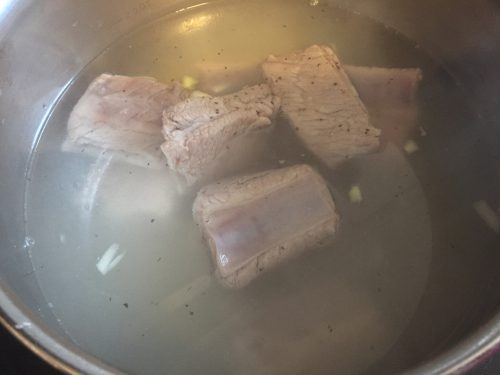
Start by cleaning the ribs. Boil a small pot of water with 1 tablespoon of salt. Once the water comes to a boil, blanch the ribs so that the outside are cooked. Remove from the pot and rinse with water. Discard the liquid.

Marinate the ribs with 1/2 teaspoon of salt, 1 teaspoon of chicken bouillon powder, 1/4 teaspoon of ground black pepper, 1 tablespoon of diced onion and 1/2 teaspoon of minced garlic.

img_8045

Bring 6 cups of water to a boil in another pot. Once the water boils, add the marinated ribs and 2 cups of chicken broth to the water. Allow the ribs to cook for 25 minutes on a low boil.

img_8047

After 25 minutes, add the taro, 3 rock sugar and 1/2 teaspoon of fish sauce and let them cook for another 15-20 minutes until the taro is softened. You should be able to poke through the taro easily with a fork when it is fully cooked.

img_8065

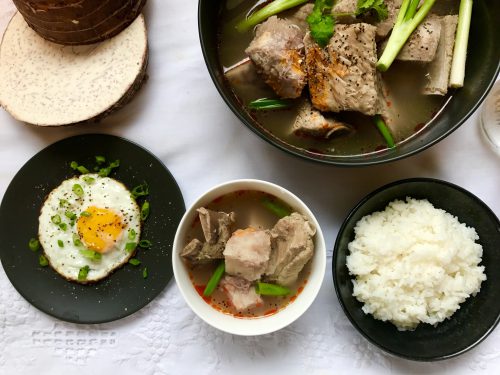
Serve this soup with a side of rice.

img_8729

img_8726

For more recipes, visit our EAT page or Recipe Index.

Authors: Susan Tran and Chau Hoang

Tiny Homes Trends

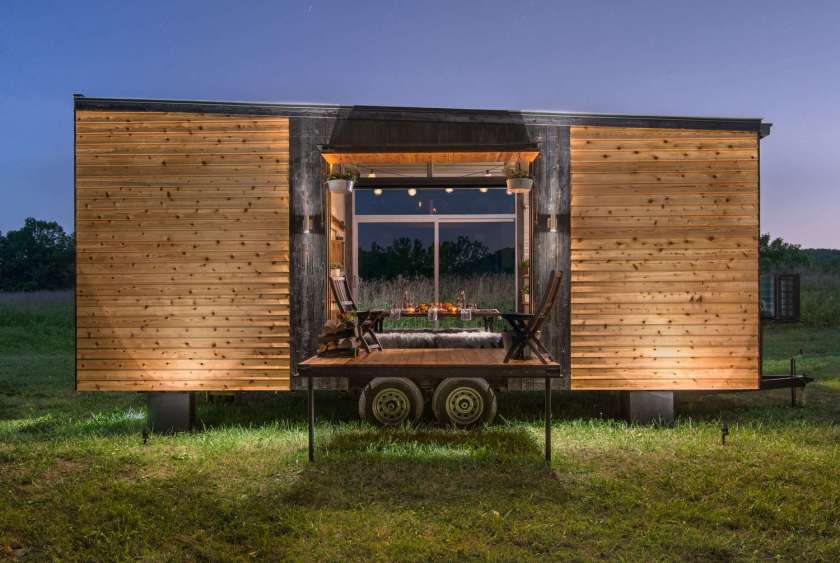
Tiny homes, which are defined loosely as a dwellings that are approximately less than 900 square feet, have been increasingly common over the last few years. This movement is driven by concerns for the environment and a desire for financial security and greater freedom. The size of a tiny home contrasts with the average American house at approximately 2,000 square feet or more. Tiny homes also come in various shapes and sizes but are generally less than $100,000. The price tag depends on whether the structure is built by the owner or by another builder and by the quality of the materials and finishes. The movement has been so popular that there are endless YouTube videos and TV shows that showcase these small spaces.

tinyhouses-infographic-1000wlogo

Source: The Tiny Life

Some key trends have emerged over the past few years. There is usually a lofted bed area but most have eschewed the ladder system for smart built-in stairs with storage solutions. The second trend has been to have multi-functional furniture or transforming furniture. This allows for the resident to maximize the small square footage. The third trend has been to keep a simple color palette and move away from the heavy all-wood look. The light colors gives an illusion of additional space. The fourth trend is to make the most of your outdoor space. Often time the outdoor space is as large as the home itself, depending on where the house is located. These decks can double as an outdoor living space when the weather permits. The fifth trend has been to locate these tiny homes in a community setting whereas in previous years, many of the houses are often isolated and off the grid. The community setting allows for shared resources and a larger communal space for those needing extra room outside their tiny homes. The sixth trend is to make it luxurious with premium materials. Since the square footage is limited, it does not cost as much on a per square foot basis to add premium materials to the build.

Tiny homes require organization and a lot of creativity. This is not a home for everyone but for those who do not need a lot of processions to live day to day. The smaller financial freedom makes these homes perfect for the millennial generation. This is also an opportunity to have a small vacation home in the country without the high maintenance expense or price.

Here are some inspirational videos for tiny house and see how the trends discussed above are incorporated into these homes.

For related posts, visit our DESIGN page.

Author: Chau Hoang

Featured photo: New Frontier Tiny Homes

Essential Stock: Pork Bones

Pork bone stock is one of the most versatile building block of Vietnamese soups. This stock takes less than 1.5 hours to make and freezes well. It is advisable to make big batches of this stock to put in the freezer. When you are ready to make soups such as Phnom Penh Noodle Soup or Hủ Tiếu Nam Vang, defrost the stock and this will cut your cooking time in half.

Difficulty: Easy / Servings: Approximately 7-8 quarts depending on the evaporation / Time: 1 hour and 10 minutes

Ingredients:

8.5 quarts of water

3 lb. of pork neck bones

1 teaspoon of salt

2 teaspoons of rock sugar


Directions

A. Prepare the bones (5-10 minutes)

Fill a large pot with enough water to cover the pork bones. Once the water comes to a rolling boil, add the pork bones and cook for 5 minutes so that the impurities and blood can be drawn out of the bones.

img_4030

Remove the bones and rinse clean. Discard the water.

img_4035

B. Prepare the stock (1 hour)

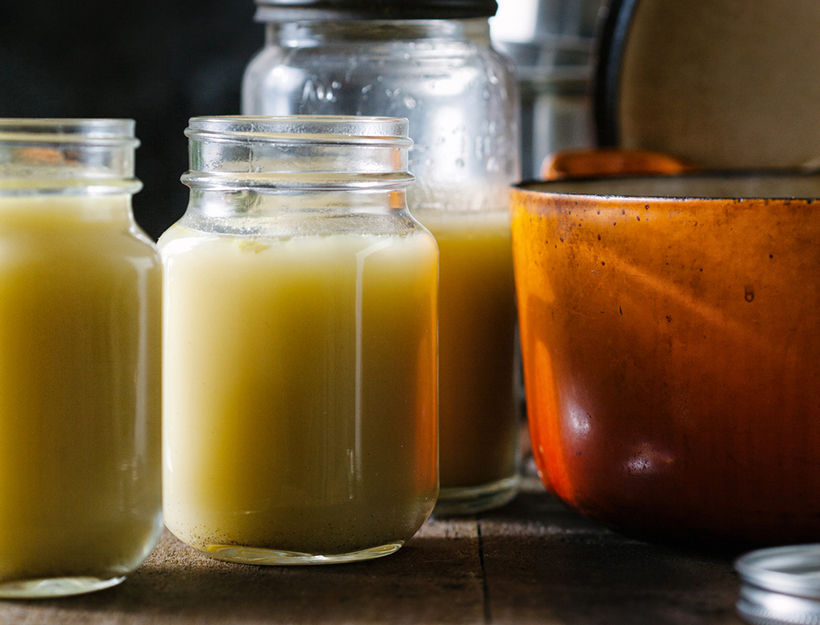
Fill a large stock pot with 8.5 quarts of water. Add the clean bones, 1 teaspoon of salt and 2 teaspoons of rock sugar to the water. Skim any impurities that float to the top. Boil the bones for 1 hour. After 1 hour, remove the bones and strain the broth. Use right away or freeze the stock for later.

img_4037

img_4047

Now that you have the base of the soup, try our noodle soup recipes.

For more recipes, visit our EAT page or Recipe Index.

Authors: Susan Tran and Chau Hoang

Featured photo: Goop.com